The double screen horns set are a great ATO where an offense can get a guard coming off of a staggered double screen to give them space to create offense. After running the double screen horns sets a few times, the defense will start adjusting on how they are guarding this. Some options for a defense are to double the ball off of one of the two screens, switch the screen, or play a drop coverage with a hedge combination. These are not the only ways to guard the double screen.
Once the defense adjusts to the double screen, the offense then needs to counter the adjustment by doing something just a little bit different to catch the defense guarding an action that is not occurring anymore. This is a coach using one action to score. Then when the defense changes, the coach has another action to exploit the change in the defense.
By changing the double screen in a horns set, the offense has a lot of different options to use to attack a defense. This keeps the defense guessing and never being in a position of comfort because as soon as the defense thinks it knows what is happening the offense changes. The defense will adjust to take away an action which the offense needs to counter by attacking the space the defense just opened up to stop the initial action.
This ATO should be ran after running a double screen horns set a few times. Wait until the defense changes to stop the double screen and then try this ATO. The space the defense will open to stop the double ball screen should be available to get an offensive player open by moving into this space. And that is what this ATO is doing.
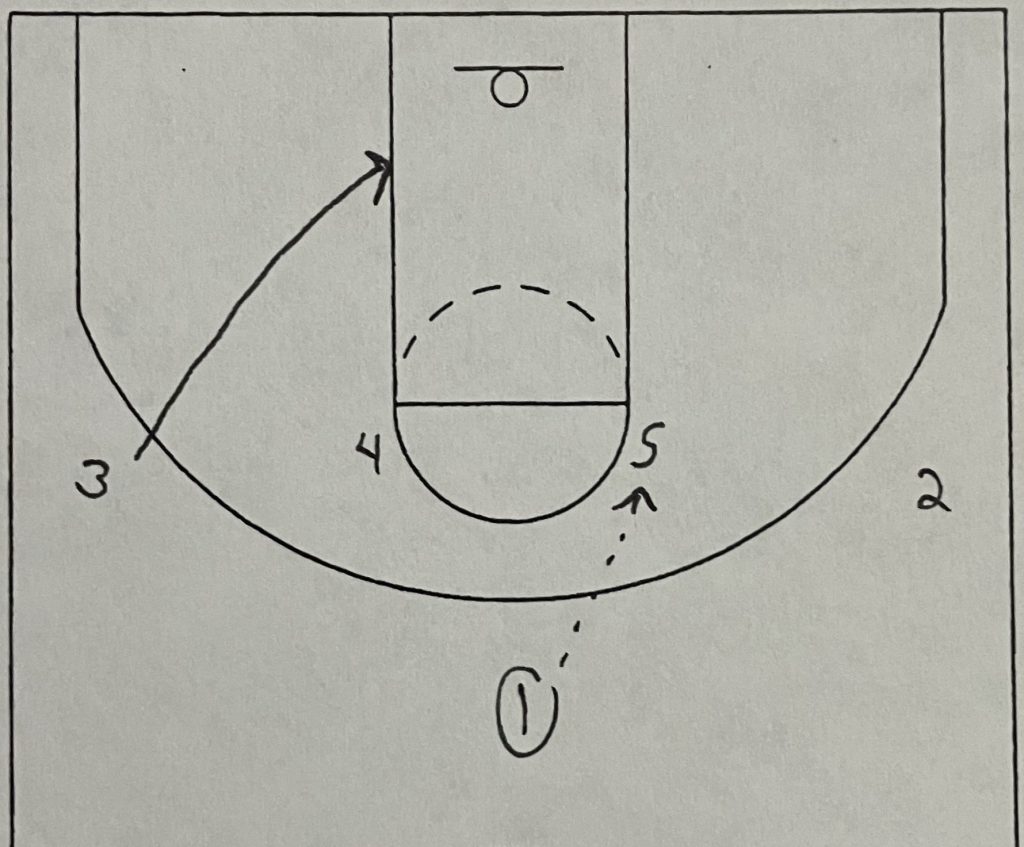
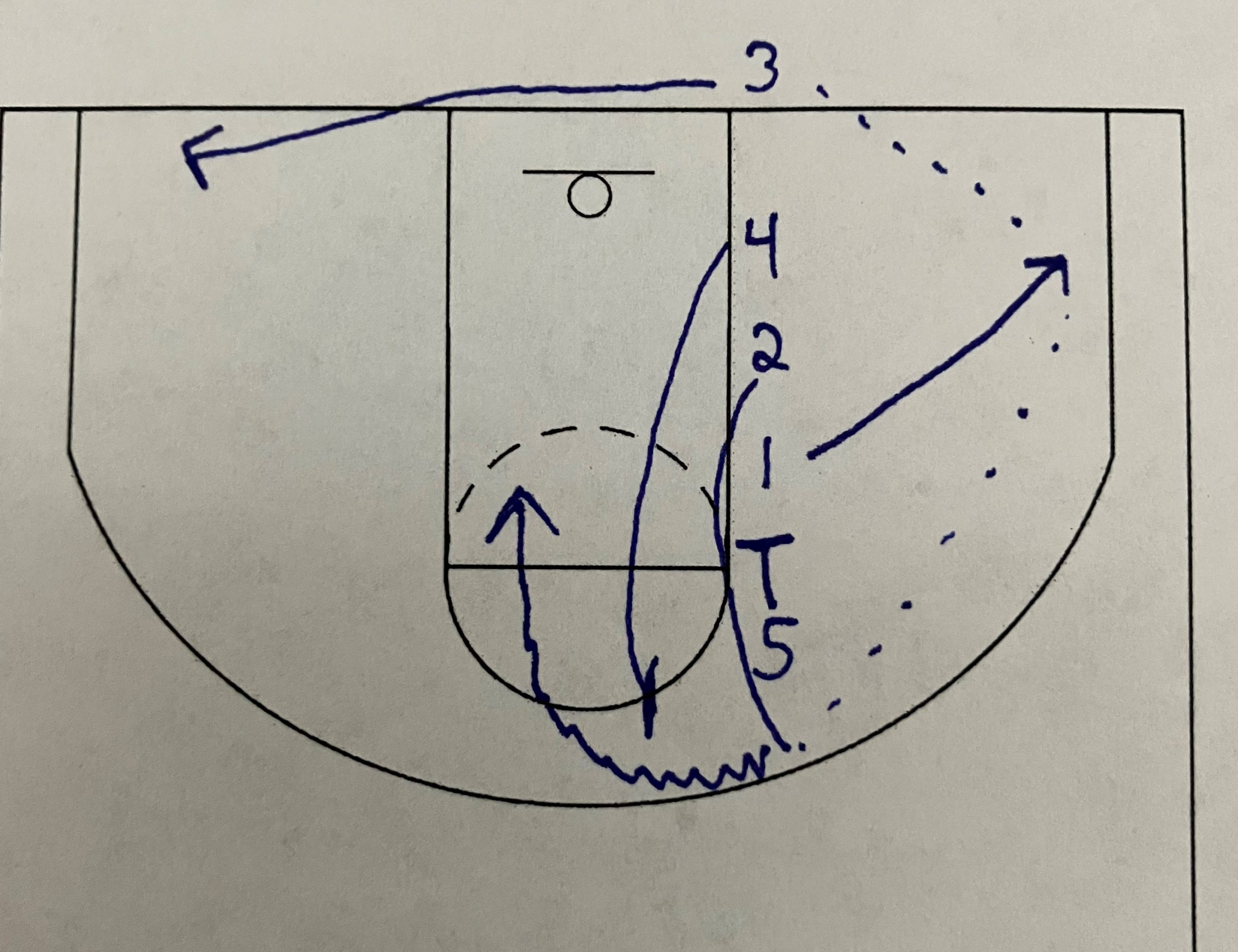
The ATO starts in a 1-4 High Set. The point(1) enters the ball into the center(5) at the elbow. The backside wing cuts to the basket. This is the forward(3) cutting backdoor. This option may not get many easy baskets, but it is possible to score off of this cut immediately. The center(5) needs to be opening up to the basket and looking for the cut as soon as they catch the ball.
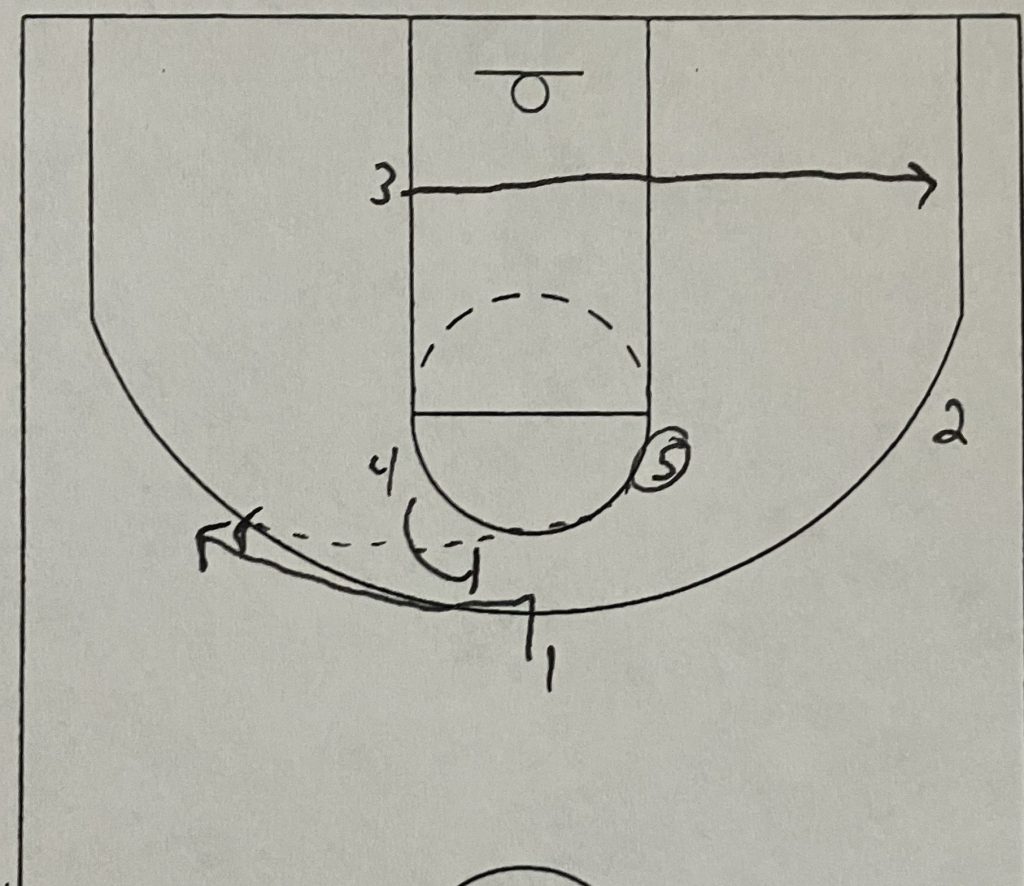
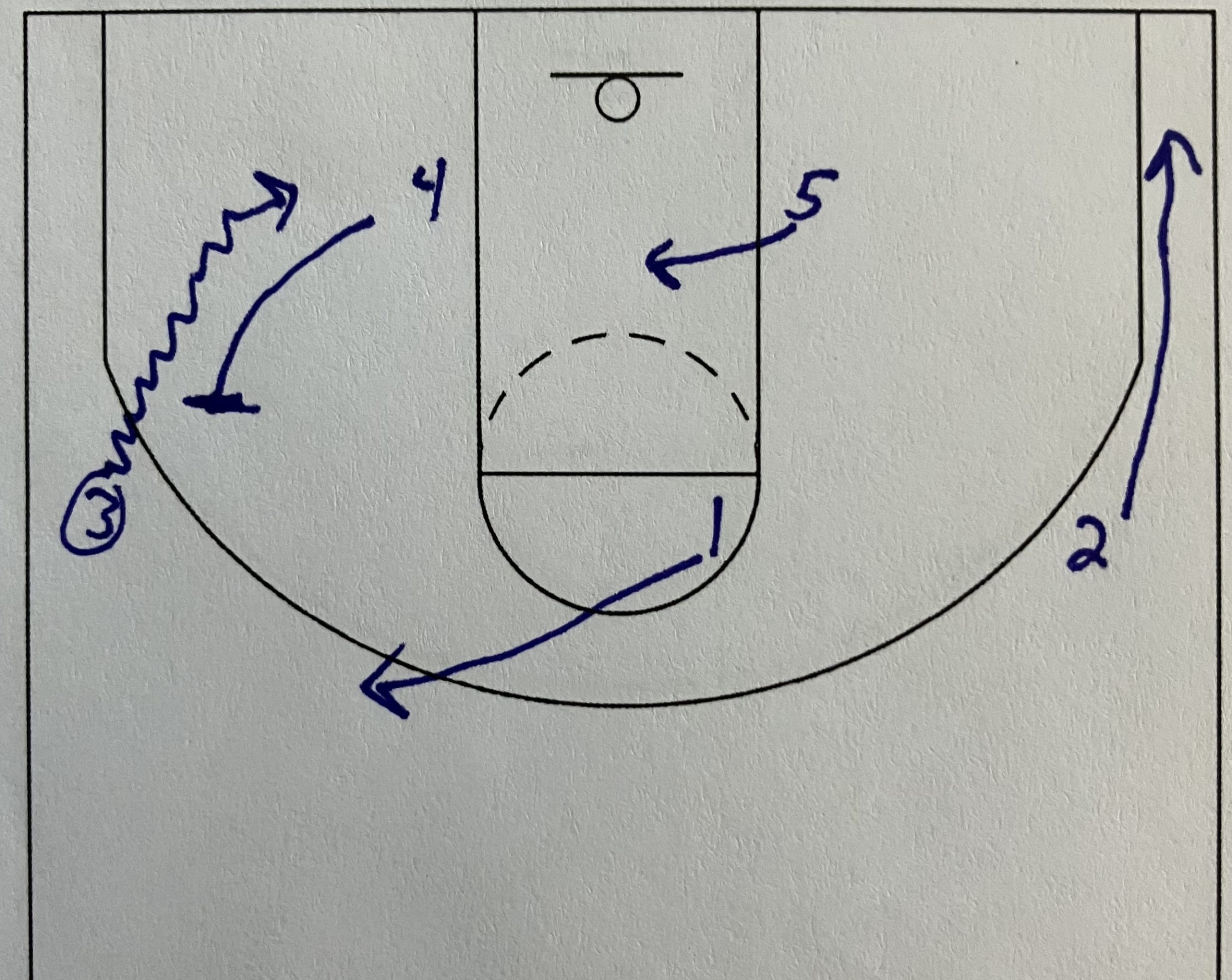
The forward(3) cuts to the basket and clears out to the corner. The point(1) steps down and then runs a flare cut using the big(4) as a screener. The center(5) needs to open to the forward(3)’s backdoor cut because of the possible backdoor pass but it also puts the center(5) in good position to see the flare pass they will be making for the ball to go back to the point(1) on the wing. The offense is now overloaded on the backside giving the point(1) plenty of space to attack the defense and basket next.
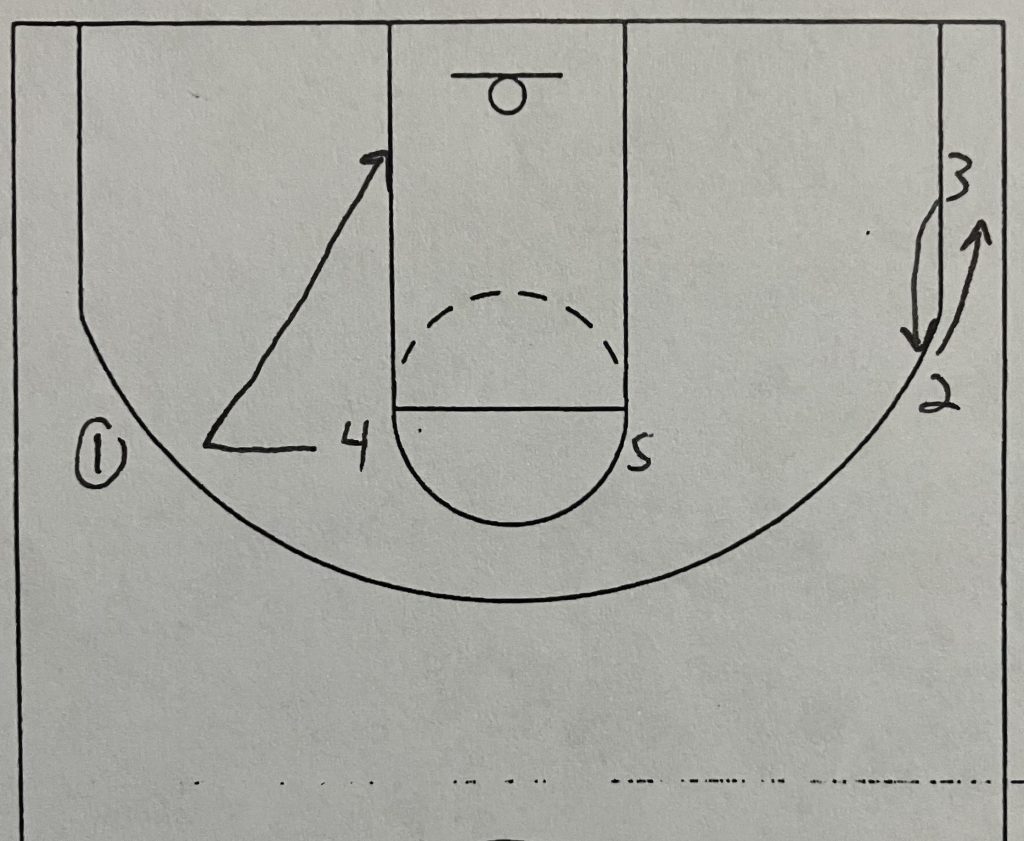
The big(4) is running a slip screen. The big(4) moves like they are going to be setting a ball screen for the point(1). As soon as the big(4) gets in position for the ball screen, they are slipping straight to the basket. The point(1) is reading the big(4)’s defender. If the defender steps out into a hedging position, then the big(4) should be open on the slip.
The forward(3) has cleared to the corner so there should be no help defense coming from the backside. The big(4) slips and if the point(1) makes the pass, then it should be an easy layup for the big(4). This slip screen only works if the offense has already set some horns screens already. The defense has to give credibility to the horns double screen because the offense has established that pattern already. Once the defense is playing to stop the horns double screen, then this ATO can work by slipping the first screen in the double screen.
As the big(4) is slipping the screen, the guard(2) and forward(3) are interchanging on the backside wing and corner. This interchange is to try and occupy their defenders with some movement to distract them from the slip screen. If the guard(2) and forward(3)’s defenders are having to move around each other because of the interchange, then they are not in position to come over and help on the slip screen.
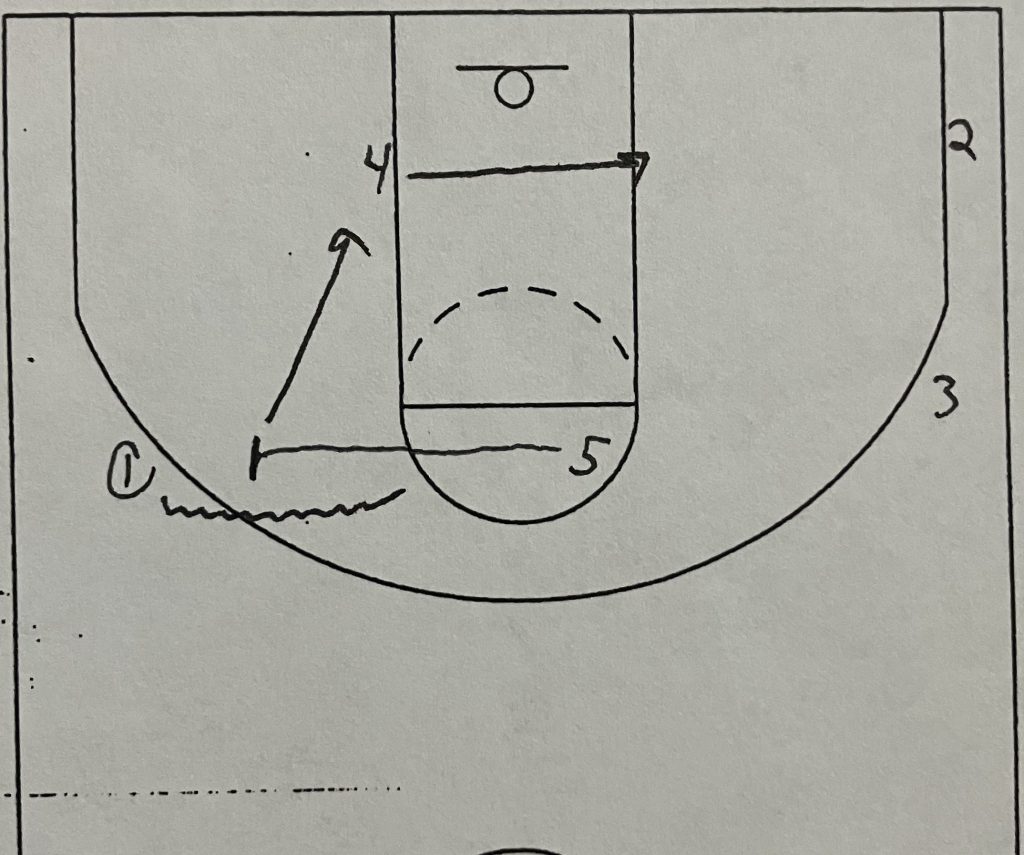
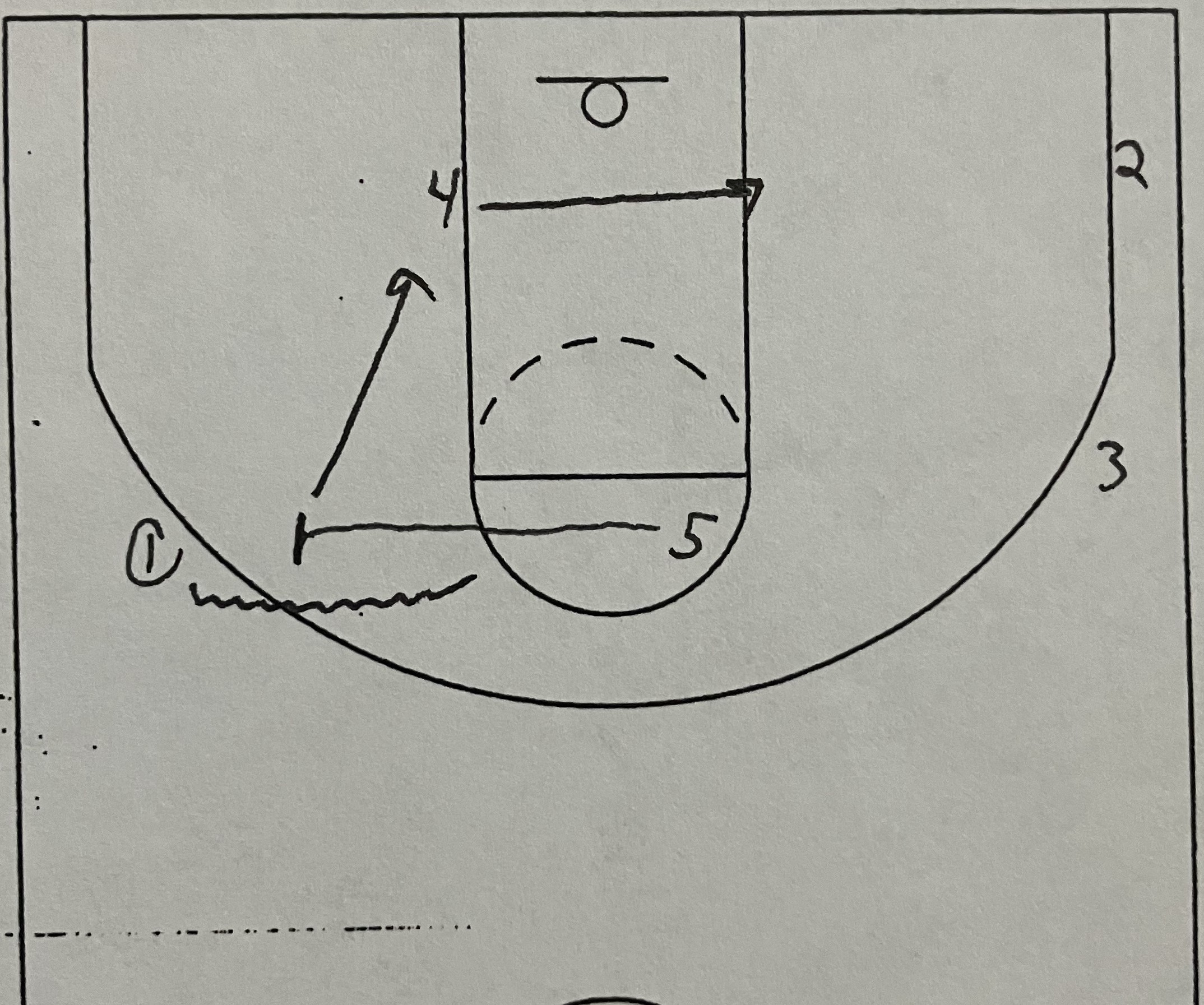
If the slip screen is not open, then the center(5) is coming over right after to set a ball screen. The point(1) and center(5) are running a pick and roll. The big(4) is moving across the lane to occupy their defender to try and take them away from stepping up and helping on the pick and roll.
The point(1) is coming off of the ball screen and is looking to score or to create the chance for somebody else to score. The point(1) can attack the basket, stop and shoot the mid-range, or look to pass to somebody else for a shot. The point(1) has the big(4) cutting across the lane. The center(5) is rolling to the basket. And the guard(2) and forward(3) are waiting on the opposite wing and corner for a kick out pass. The forward(3) could even be running a banana cut behind the point(1) for a flip back pass if that is something you coach or your team does.
Conclusion
The double screen horns set are a great action for any age group and any team. However, the defense will eventually adjust to stop that action. Now this ATO quick hitter can be added to counter what the defense does to stop the double screen horns action. This is being 1 step ahead of the defense. As soon as they change to stop an action, the offense is changing to take advantage of what the defense just did.
This ATO has the possibility to get multiple shots through the entire play. The center(5) can hit the backdoor cut by the forward(3) right off the bat. The point(1) can use the flare screen to get open and a shot. The big(4) has a chance to score on the slip screen. And lastly the point(1) has multiple options coming off of the ball screen set by the center(5). This is a great play to add to any playbook but one that is best for any team running any type of horns double screen to start.