There are a ton of dribbling drills out there. Many of them you can find on this website. There are additional items being used in drills such as cones or a smaller ball that make it harder for a player to dribble. By making a drill more difficult, the player learns how to dribble better in order to complete the drill. Over time players become better at dribbling through these drills.
There are other drills that work on dribbling with both hands. Things like dribbling with two basketballs force the player to dribble with both their right and left hand. This will help a player because they will be able to go both directions in a game. A player that can only go right or left is easier to guard because the defense can force that player to go in the direction they are not wanting to go.
Those types of dribbling drills are great and they work. I use them and will continue to use them. But, coaches can also simplify a drill to also increase the skill of the player. It does not have to be this elaborate drill with a bunch of fancy items to help a player get better. Sometimes the simple can be the most effective.
One of the biggest weaknesses that I see today with players is the inability to create space without attacking the basket. Players are good when they are just working towards getting in a spot to get a shot off. But players struggle to create space in a way that is not looking to score but just to relieve pressure from the defense.
The back dribble is the least utilized dribble in basketball. It is not worked on because it does nothing to score. It creates space and relieves pressure. It is vitally important for any guard who dribbles a lot to have this dribble mastered so they do not get rushed in a game.
The other thing I am seeing used less and less is the chance of pace dribble. Going from a sprint to a walk while dribbling. Changing pace makes it difficult for any defender to stay attached to an offensive player. A guard who can change their pace is very difficult to guard but that aspect of the game is being lost. I see too many players who get pressured respond by just lowering their head and attacking the basket. When there is no change of pace, the defender can work to get back in front or the defense can rotate another player in front.
So, how do we as coaches work on the back dribbles and the change of pace dribbles in a way that the players learn the moves and then can apply them in a game? How do we teach players to create space, relieve pressure, and still be under control? This drill is one of the ways I teach it to my players.
Full Court 1 v 2
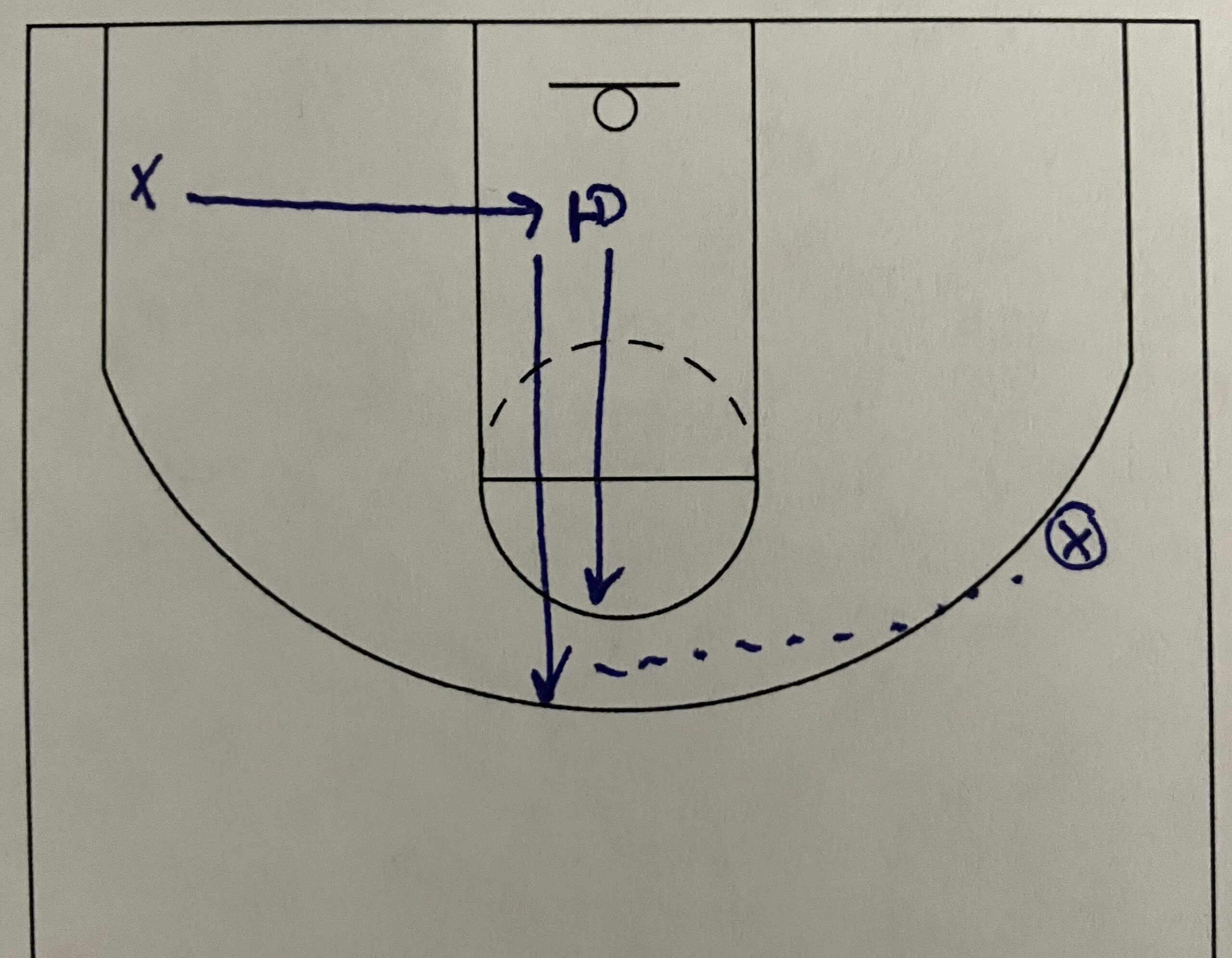
This drill is a simple 1 versus 2 full court drill. One player is on offense with the ball. Two players are on defense. The defenders are defending full court and are trying to create a turnover. The offensive player is trying to score. Simple.
When the drill begins, most players just bury their head and take off dribbling at full speed. And this is not successful. They lose the ball. The defense gets steals or touches on the ball. After a time or two, players will start to adjust what they are doing because the full speed attack is not working. This is when you as a coach need to start teaching.
The players are struggling and are looking for help now. How do I get around 2 players? The back dribble and change of pace is what will work. The players are in a position ready to listen and learn. They will understand what you mean when you say to create space and use the back dribble to help get away from the defender. Once they get space, they can try and attack one of the defenders to get past them.
This drill is designed to make the players learn without the coach explaining every little detail. The players will learn from trial and error. They will struggle at first because they are going against 2 defenders. As the drill continues, the coach will be able to stop for teaching moments to really have the players understand how to create space using a back dribble or change of pace. As the players start to use those things, they will start to see success.
As the players succeed, they will be more relaxed as they continue to beat that double team. This calmness translates into games because they will not panic when they start to get double teamed. They know how to create space to relieve the pressure. Now with teammates, the players will need to create just enough space to make a pass. This drill will make the games easier because practice has been made harder than what they see in a game.