What is the 1-3-1 Press?
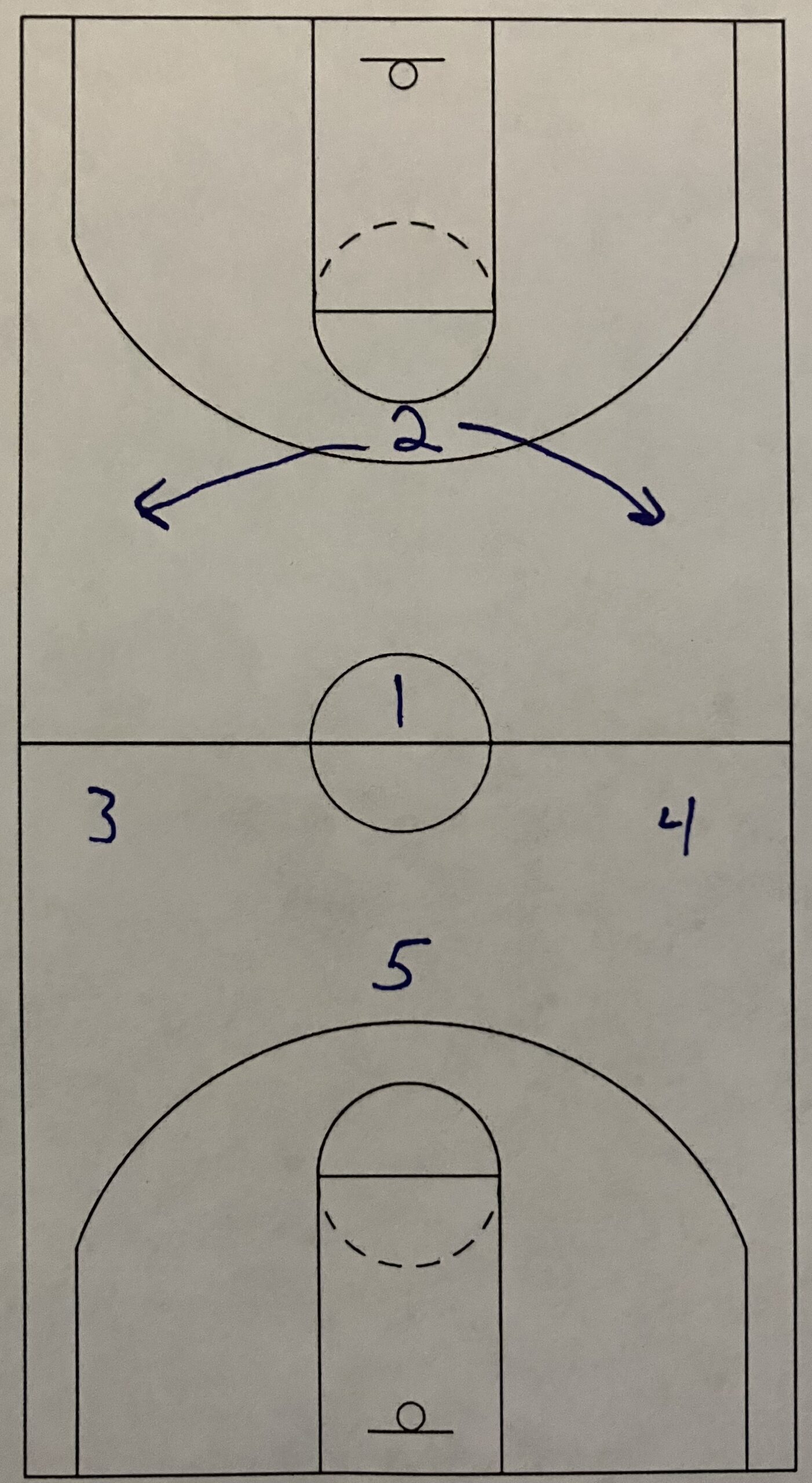
A 1-3-1 Press is an extension of the 1-3-1 half-court zone defense. The 1-3-1 press extends the defense usually out to 3/4 of the court. Since it is an extension, the defense is able to press and then drop straight back into a 1-3-1 half court defense. The defensive responsibilities of the half-court defense are basically the same as the 1-3-1 press. This helps players because they are doing the same things but just covering more of the floor.
The 1-3-1 Press tries to get the ball to the sideline to trap with the point and wing right after the ball crosses the half-court line. The 1-3-1 Press is looking to trap in the two corners by the half-court line where the offense is at the biggest disadvantage. The press also keeps a player in the middle of the court to prevent any middle passes from being made.
It is an aggressive press by having 4 players up past half-court to start the press. This leaves long over the top passes and diagonal passes as the hardest passes to defend. When using the 1-3-1 press, the defense is looking to get deflections and steals. It is a good press to use when behind and needing to get back into the game.
What is a 1-2-1-1 Diamond Press?
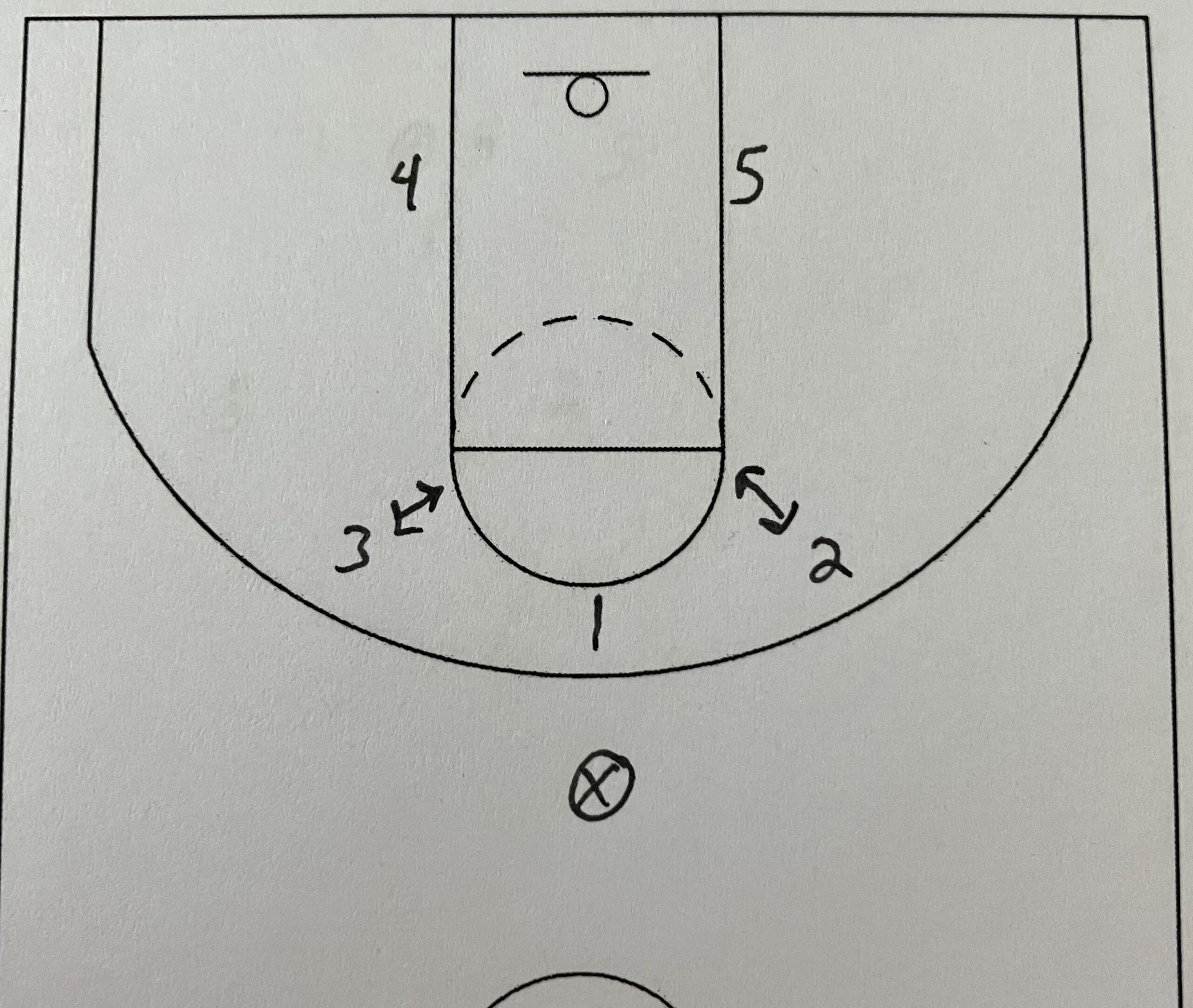
A 1-2-1-1 Diamond Press is a very aggressive trapping press. It is a press that attempts to create as much chaos as possible leading to offensive turnovers. The 1-2-1-1 Diamond Press has a defender guarding the inbounds pass. Two players are on the elbow looking to trap the entry pass with the inbounds defender. One player is at half-court and one player is all the way back.
The point defender is guarding the ball out-of-bounds. They are trying to get a deflection on the entry pass. If the offense is able to make an inbounds pass, then the point defender and the ballside elbow player are trapping. The backside elbow player is rotating to the middle. And the middle defender is rotating to the ballside sideline. The back defender is looking to steal any long cross-court pass.
The 1-2-1-1 Diamond Press is aggressive and tries to put the offense in spots for them to make mistakes against the press. The 1-2-1-1 Diamond Press does not read and react to the offense. It tries to dictate to the offense what they can and cannot do. The press is going to trap as soon as the ball in passed into the floor and continues to trap until the ball crosses half-court.
Best Team Personnel for a 1-3-1 Press
The team personnel for a 1-3-1 Press is the same personnel as the 1-3-1 half court zone defense. The keys to the press and half-court defense to work are the same for the 1-3-1 zone. That is why a team that runs a 1-3-1 half-court zone would be wise to have the 1-3-1 press as their first press installed.
The front player in the press needs to be going 1000 miles per hour. They can never stop. This player is going to get tired. They are chasing the ball sideline to sideline. They are trying to keep it from reversing as much as possible. The taller the front player is, the better. But they need to be moving and chasing at all times. The key is they have to be in the right spot for the trap when the wing comes up. That is the biggest job of the front player.
The wings need to be long and athletic. Short wings are going to allow teams to throw over the trap. They also need to be smart. They are the players initiating the trap. They have to rush at the right time or the press will not work. These two wing players are the key to the 1-3-1 press. The wings have to be long, athletic, and smart.
The back player needs to be fast and anticipate well. The back player has to get to every over the top or diagonal pass. The 1-3-1 press is aggressive meaning the long passes could be open. The fast back player is the key to preventing those long passes over the top. They also need to anticipate the wings rushing the ball for the trap. They need to move with the wings to prevent the sideline pass before the trap is there. This is going to be the fastest player on the team.
Best Team Personnel for a 1-2-1-1 Diamond Press
The success of a 1-2-1-1 Diamond Press comes down to mainly two defenders. The first is the point defender who is guarding the in-bounds pass. The second is the middle defender who starts at half-court. These two defenders are a big reason why the 1-2-1-1 Diamond Press either succeeds or fails.
The point defender in a 1-2-1-1 Diamond Press is the initial defender guarding the in-bounds pass. They are wanting to create pressure even before the offense gets the ball into the court. They are also half of the first trap that traps as soon as the ball is passed in. The more active this point defender is, the more likely the defense is going to get a steal.
The point defender can also benefit from being a long defender. The taller this point defender is, the harder the in-bounds pass will be and the better the first trap is going to be. The ideal player for the point defender is a quick, stretch big(4). A player who has the size of a post player with the speed and quickness of a guard.
The 2nd most important player in the 1-2-1-1 Diamond Press is the middle defender. This player should get most of the steals on bad passes out of traps. They need to be able to move sideline to sideline. They also need to be a very smart player who can anticipate what the offense is going to do. The ability of the middle defender to be in the right spot at the right moment can make the 1-2-1-1 Diamond Press a turnover machine.
The middle defender is supposed to stop any passes going up the sideline after the initial in-bounds pass. That means they have to be able to get to the sideline fast enough to stop that 2nd sideline pass. However, a smart defender who can read the offense can time the sideline pass and get steals by arriving just in time for the pass to be stolen.
Aside from the sideline pass, the middle pass also defeats the press. An exceptional middle defender will be able to anticipate and guard both the sideline pass and the middle pass until one of the front defenders is able to drop back into the middle. This kind of reading, reacting and anticipating is hard to find in a player. The defenders who can do all three make the 1-2-1-1 Diamond Press extremely hard to play against.
When to Use the 1-3-1 Press?
The 1-3-1 Press is best used to extend the 1-3-1 half court zone to be more aggressive on defense. This will force the offense to play against the 1-3-1 defense for a longer period of time. This increased time gives the defense more time to get deflections and steals. It is going to help to speed up the offense as well. Offenses that start playing faster than they want too are more likely to turn the ball over.
The 1-3-1 Press is trying to get steals. It is going to be best used to come back when a team is behind and needing extra baskets to get back into the game. It is going to speed up the offense which should lead to more shots taken and more points scored. So, the 1-3-1 Press can help to give the defense more chances at scoring the points necessary to make a comeback.
The 1-3-1 Press can also be used against a team with either short guards or poor ball handling players. The 1-3-1 Press makes passing hard for the offense so short guards will have trouble seeing through the press to know where and when to make a pass. The aggressiveness of the press is also going to cause problems for teams with poor ball handling. The 1-3-1 press makes the guards have to do a little more with the ball and if the opponents are unable to do the extra ball handling, then it could lead to turnovers.
When to Use a 1-2-1-1 Diamond Press?
The 1-2-1-1 Diamond Press is best used in two situations. First, it is a great press to change the tempo of the game from a slower pace to a faster pace. Tempo can have a huge effect on the game. The ability to change the tempo can be a major reason for why a team is able to win a game. If the tempo of the game is too slow, then the 1-2-1-1 Diamond Press is a great way to increase the tempo of the game.
The second great use of the 1-2-1-1 Diamond Press is to create more traps and hopefully more turnovers. The 1-2-1-1 Diamond Press can be used when behind an opponent to try and make a comeback. The aggressiveness of the press can cause the opponent to get trapped and throw bad passes. Bad passes can be stolen and steals can be converted into easy points. This is a great press to use to make a comeback late in a game.
Advantages of a 1-3-1 Press Over a 1-2-1-1 Diamond Press
1) Easier Transition from Press to Half-Court Defense
The 1-3-1 Press is a great press in trying to get steals. But one of the biggest strengths of the 1-3-1 Press is the ability to drop straight back into a 1-3-1 Trapping Zone Defense or a 1-3-1 No Trapping Zone Defense. The 1-3-1 Press is an extension of the 1-3-1 Half Court Zone Defense. This means the players can drop straight back into the half-court defense without having to leave their position in the zone. There will be no player having to overlap or interchange when moving from the press to the half-court.
One of the biggest problems any press can have is the transition from the full court press to the half court defense. Players are deciding when to abandon the press and retreat. If they leave too early, then the press will not work well. If they leave too late, then they leave openings for the offense to attack. A good press needs a good transition or it gives the offense too many chances once the press is beat.
The 1-3-1 Press is able to drop straight back into a 1-3-1 Zone, so the offense does not have the openings some other presses are going to give. The 1-3-1 Press can be aggressive ball side and drop on the back side to give even more protection in the back of the press. The backside wing is supposed to drop anyway, so the rim protection should always be there.
The 1-2-1-1 Diamond Press is very hard to execute in the transition. It can be a very high risk-reward press. If the Diamond Press can get a steal, then it leads to easy points. However, if the offense breaks the press, then it normally leads to a player advantage for the offense like a 2 on 1 or 3 on 1.
To counter the bad transition of the 1-2-1-1 Diamond Press, some coaches have a 1 or 2 trap rule then retreat. They are trapping the first pass. Then they have rules in place for when the ball is passed out of the trap. Some coaches teach to retreat back to half-court if the ball is passed after the 1st trap. This limits the ability of the offense to get easy baskets when they beat the press.
Other coaches will have rules in place for the 2nd trap. Depending on the passing of the offense, a 2nd trap is attempted. After this 2nd trap, then the defense needs to drop into a half-court defense or the offense will have numbers attacking the rim.
The 1-2-1-1 Diamond Press struggles in the transition because it does not have a half-court defense set up in the same player formation. This means the defenders are either scrambling to find their matchup in a man to man defense. Or they are crossing back and forth to get into their position for a zone defense. The ability to transition from a 1-2-1-1 Diamond Press back into a half-court defense can determine whether the Diamond Press is useful or not.
2) Less Running
The 1-3-1 Press cuts down on a lot of running that other presses have to have in order to be successful. The 1-3-1 Press can play more of a ¾ court and allow the offense to bring the ball up a portion of the court before really trying to trap the ball as soon as it crosses the half-court line. This keeps players from having to chase the ball all over the court in the press.
The 1-3-1 Press can play back off the ball and just try to corral it into a trap area. This does not have to be an all out pressure style press. The defenders can wait for the right moment to rush for a trap. This keeps the defense from getting tired and can allow a defense to press without putting a lot of energy into the press.
This keeps defenders fresher and able to play longer stretches of time. A team with a smaller rotation of players can struggle to play a press because they just do not have enough players. An all-out pressure style press can wear out an offense but it also can make a defense tired at the same time. A team needs enough players to rotate in and out to keep players from wearing themselves out. The 1-3-1 Press can be used with the smaller rotation of players because the players are not having to spend so much energy in the press.
The 1-2-1-1 Diamond Press is the complete opposite of the 1-3-1 Press. It is all about energy. It is aggressive from the word go. It is guarding the entry pass and trapping immediately. The Diamond Press must have players running constantly to cover their areas. Anything less than a full sprint will not work.
The Diamond Press is built on running and covering a lot of area in a short amount of time. The coverage areas for the defenders can be sideline to sideline. It can be from the paint to the half-court line. This is a lot of area and players have to be sprinting from position to position or the Diamond Press will not work.
3) Can Slow Down an Opponent
The 1-3-1 Press can be used to trap to get steals and turnovers. But another reason why I like the 1-3-1 Press is because it can be used as a tempo control. It can be used not to trap but to slow the opponent down. A good transition opponent wants to get out and run but a good 1-3-1 Press setup can force an offense to slow down so they do not turn the ball over.
An adjustment a defense can make is to set up in the 1-3-1 Press but have a retreat call. This makes it look like the defense is going to be trapping but every player is going to keep the ball in front of them and slowly drop back as the offense brings the ball up the court. At no point is there pressure on the ball so the offense will never be rushed or in a bad position.
This retreating style of the 1-3-1 Press allows the defense to control the tempo of the game by slowing down the offense. Any opponent that wants to play fast will be forced to slow down or risk turning the ball over against a non-aggressive press. This style of a non pressure press will turn the game into a half-court game. A defense that wants to remove the transition ability of an offense now has the ability to do it without making drastic changes to the defense.
The 1-2-1-1 Diamond Press changes tempo but speeds up an opponent rather than slows them down. However, this works until it doesn’t. A 1-2-1-1 Diamond Press will speed the tempo of the game up. It works because most opponents are not used to playing at a faster tempo than a team looking to press.
But most teams will eventually run into a team that is either faster and quicker than they are or want to play at an even faster pace. When a 1-2-1-1 Diamond Press team finally plays one of these opponents then they are in trouble. When a defense is all about being up tempo and all out aggressive, then when that doesn’t work they do not have another option. When that does happen, then it turns into a loss for the defense.
Advantages of a 1-2-1-1 Diamond Press Over a 1-3-1 Press
1) More Aggressive
The 1-2-1-1 Diamond Press might be the most aggressive press, period. It is immediate and does not give the offense any time to rest. It is pressuring the in-bounds pass and trapping the entry pass immediately. This immediate action causes the offense to play fast or be trapped. It is aggressive and unrelenting.
The 1-2-1-1 Diamond Press forces the offense to play fast because it is pressuring the ball at all times and looking for a 2nd defender to come trap at every opportunity. The offense never gets a break or time to reset. The 1-2-1-1 Diamond Press wants constant pressure and puts the defenders in a position where they can apply that pressure.
The 1-2-1-1 Diamond Press is putting 4 defenders up the court and leaving only 1 defender back past the half court line. It tries to overload the offense with more defenders so not only does it get traps but it has enough defenders close to prevent a pass out of the trap. It is risky because if the offense is able to beat the pressure, then there is only 1 defender back. But the offense has to beat the pressure and that is not easy to do.
The 1-3-1 Press can be aggressive but it will normally wait until half-court to apply the pressure and trap. This allows the offense to get the ball around half-court before the pressure really starts.
This means the 1-3-1 Press is only using half of the court to apply pressure whereas the 1-2-1-1 Diamond Press is using the entire court. That difference in when to start applying pressure, makes a major difference in the aggressiveness of each press. The 1-3-1 Press can be aggressive but it is conceding half the court where 1-2-1-1 Diamond Press is using the entire floor to apply pressure and be aggressive.
2) Dictates Tempo
The 1-2-1-1 Diamond Press is a great press if a team is wanting to dictate the tempo of the game. The 1-2-1-1 Diamond Press is an aggressive press that forces the opponent to play fast. This press makes the game be played at a high tempo and fast pace. Teams that are wanting to play at a high tempo can use this press to help them achieve that tempo.
The 1-2-1-1 Diamond Press uses the entire court to play defense. This does not give any space on the court for the offense to be able to stop and take a second to reset or rest. Teams that are not used to playing at a high tempo can fatigue giving the defense a major advantage late in a game.
A high tempo is physically challenging but also mentally challenging because more decisions are having to be made. A tired player whether that is mentally or physically is apt to make more mistakes. The 1-2-1-1 Diamond Press uses this to its advantage. While an offense may break the press and get some easy layups, the 1-2-1-1 Diamond Press bets that the offense will tire and mistakes will be made.
So, the 1-2-1-1 Diamond Press is willing to give up some easy baskets as long as it is also getting some easy baskets. It bets that eventually the offense will fatigue first and they will make more mistakes as that happens.
The 1-3-1 Press can speed up a slow pace team or slow down a fast pace team but it can struggle to dictate the overall tempo of the game. The offense is given enough time and space to play either fast or slow. The 1-3-1 Press can influence the pace of play but an opponent can still play at the pace they want.
The 1-3-1 Press struggles to fully dictate tempo but it can do a good job of not allowing the offense to play at the pace they want. A fast tempo opponent can be slowed down but the opponent will still be able to play fast. But they will not be able to play as fast as they want. A slow tempo team will be forced to play faster than they want but it will still be a slower tempo game. The 1-3-1 Press does not dictate tempo but also does not allow the opponent to play at exactly the tempo they want.
3) Easier Conversion from Steal to Score
When running a press, a defense needs to have a focus on what the press is trying to accomplish. Some presses are just trying to slow down an opposing offense. While other presses are trying to create turnovers and earn extra possessions. I take the goal of creating turnovers an extra step by not just wanting to create turnovers but convert those turnovers into points. A press is most devastating when it is turning the press into an offensive scoring opportunity.
The 1-2-1-1 Diamond Press does an excellent job of converting turnovers into points. It is using the entire floor so the defensive players are closer to the offensive basket. And the players getting the steals are normally the guards so they can get the steal and immediately turn and attack the basket.
Also the point defender in a 1-2-1-1 Diamond Press is a stretch 4 most often so they are right next to the basket to get a pass and finish at the rim. The opposing team is going to have their guards up front so the stretch 4 of the press will be finishing against the point guard and off guard of the offense a lot of times. This is a serious advantage for the defense.
The 1-2-1-1 Diamond Press is an aggressive press which should lead to creating turnovers. But it is also set up in a way to immediately turn those turnovers into points. The players getting the steals are the guards so they can turn an attack right after the steal. The stretch 4 is right by the basket to get any pass right after a steal and score. All around the 1-2-1-1 Diamond Press is great at converting turnovers into points.
The 1-3-1 Press converts well from turnover to basket but it is more difficult than the 1-2-1-1 Diamond Press. The 1-3-1 Press is a ¾ court press and the traps are happening at half-court most often. This gives the offense half of a court to recover on any turnover. A fast opposing guard can make it more difficult to score even with a turnover because the fast guard can recover and cause the conversion to make a pass or two giving the other opposing players time to get back after the turnover.
The 1-3-1 Press has the point guard in the back so if they get a steal being in the back they have every player on the court in between them and the basket. That is not a great way to convert turnovers to points. The wings will normally have an easy time when they get the steal. But the stretch 4 up front or the center in the middle of the press could slow down the conversion time.
The stretch 4 up front of the 1-3-1 Press makes a big difference in how well the press converts steals to points. A bad ball handler will force that stretch 4 to stop and pass the ball back to the wings giving the opposing team more time to recover. Likewise, a steal by the center in the middle will need to pass to a guard before the press starts to attack the basket.
The little differences in where the two presses are set up and where the players are positioned cause a big change in the ability to convert steals into points. The 1-2-1-1 Diamond Press is set up perfectly to get an easy conversion whereas the 1-3-1 Press at times is good. But there are other steals that make it very difficult for the 1-3-1 Press to convert those turnovers into baskets.
Which is Better? A 1-3-1 Press or a 1-2-1-1 Diamond Press
Both of these presses are good presses and could be in any team’s defensive playbook. The 1-3-1 Press fits into a defensive system along with the 1-3-1 Trap and 1-3-1 No Trap half-court defenses. This gives the 1-3-1 Press a great system fit for any coach wanting to use the 1-3-1 defense. The roles and responsibilities of the 1-3-1 Press are the same as the 1-3-1 Half Court Defense just extended to a full court press. The install of the 1-3-1 Press is made much easier because of this.
The 1-2-1-1 Diamond Press is a very aggressive press that when executed correctly creates a lot of pressure on the offense and normally turnovers. It sets the tempo of the game and makes the offense have to play faster than they want to most of the time. It is a physically and mentally challenging press to play against. Any lack of focus by the offense can lead to a steal and easy baskets by the defense.
But which press is better? I have used and will continue to use both presses. I decide which press to use year in and year out based on the personnel of the team I have each season. Some years the team is better suited to play a 1-3-1 Press and other years the team is better at the 1-2-1-1 Diamond Press. Some years I have used both presses in the same season depending on the rotation of the players I have on the floor.
The difference between the two presses is the difference between an A- and a B+. It is razor thin. Each press does certain things better than the other. But which press is the overall better press.
I am giving the edge to the 1-3-1 Press. There is one reason why I am choosing the 1-3-1 Press over the 1-2-1-1 Diamond Press. The transition from full court press to half court defense is much easier for the 1-3-1 Press. The 1-2-1-1 Diamond Press does not transition from a press to a half court defense. At some point the players have to fully retreat back to a half court defense. This change can cause problems for the 1-2-1-1 Diamond Press if the offense can take advantage of the transition. That moment of transition can give the offense a chance to get an uncontested shot.
The 1-3-1 Press is one of the best transition presses from full court to half-court. The 1-3-1 Press simply turns into the 1-3-1 half court defense. The defenders stay in the same spots but just drop back to cover less of the floor. This never gives the offense an opening to attack the defense when they are not set. The transition from press to half court defense is very important. The 1-3-1 Press does it well whereas the 1-2-1-1 Diamond Press can be problematic in the transition. This is why I have to say the 1-3-1 Press is just slightly better than the 1-2-1-1 Diamond Press.