There are many different ways to guard a ball screen. One of the ways to guard a ball screen is to play drop coverage. Another is to hedge the ball screen. This ATO works well with exploiting a hedging ball screen defense. The hedge pushes the defender away from the basket and over their matchup. A well timed back screen used with a ball screen puts the defender in a spot that is hard to recover from.
This ATO can be ran every possession. It is a quick ATO. It does not involve a bunch of cuts. So, it can be ran right at the beginning of a possession. If it does not work, then the offense can still go into their primary offense right after the ATO.
The ball screen back screen action works really well. The defense has to drop down to defend it properly. If the defense does not drop, then this ATO should work. When the defense drops, then the offensive guards should have more space on the outside to attack the defense.
Once this ATO works a few times, a counter to the ATO can be used to take advantage of the dropping defense. This is the type of play that is very simple but can cause all kinds of trouble for a defense. It is quick and simple but can give defenses all kinds of problems in trying to stop it.
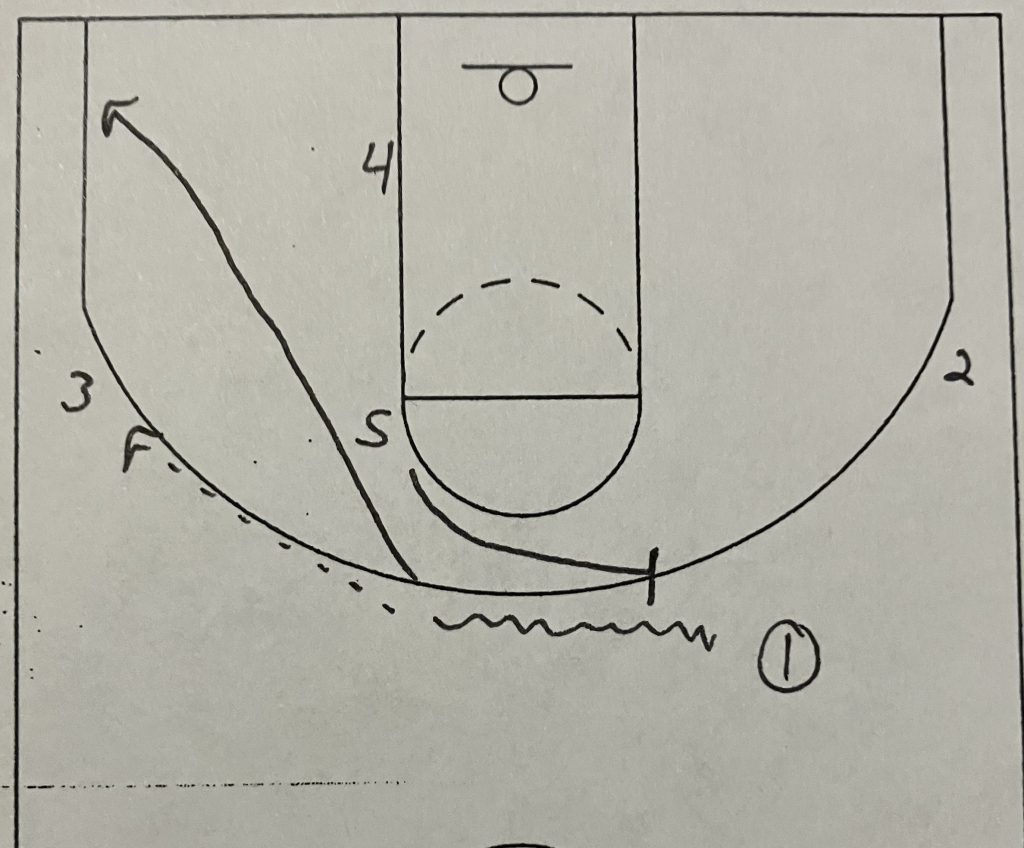
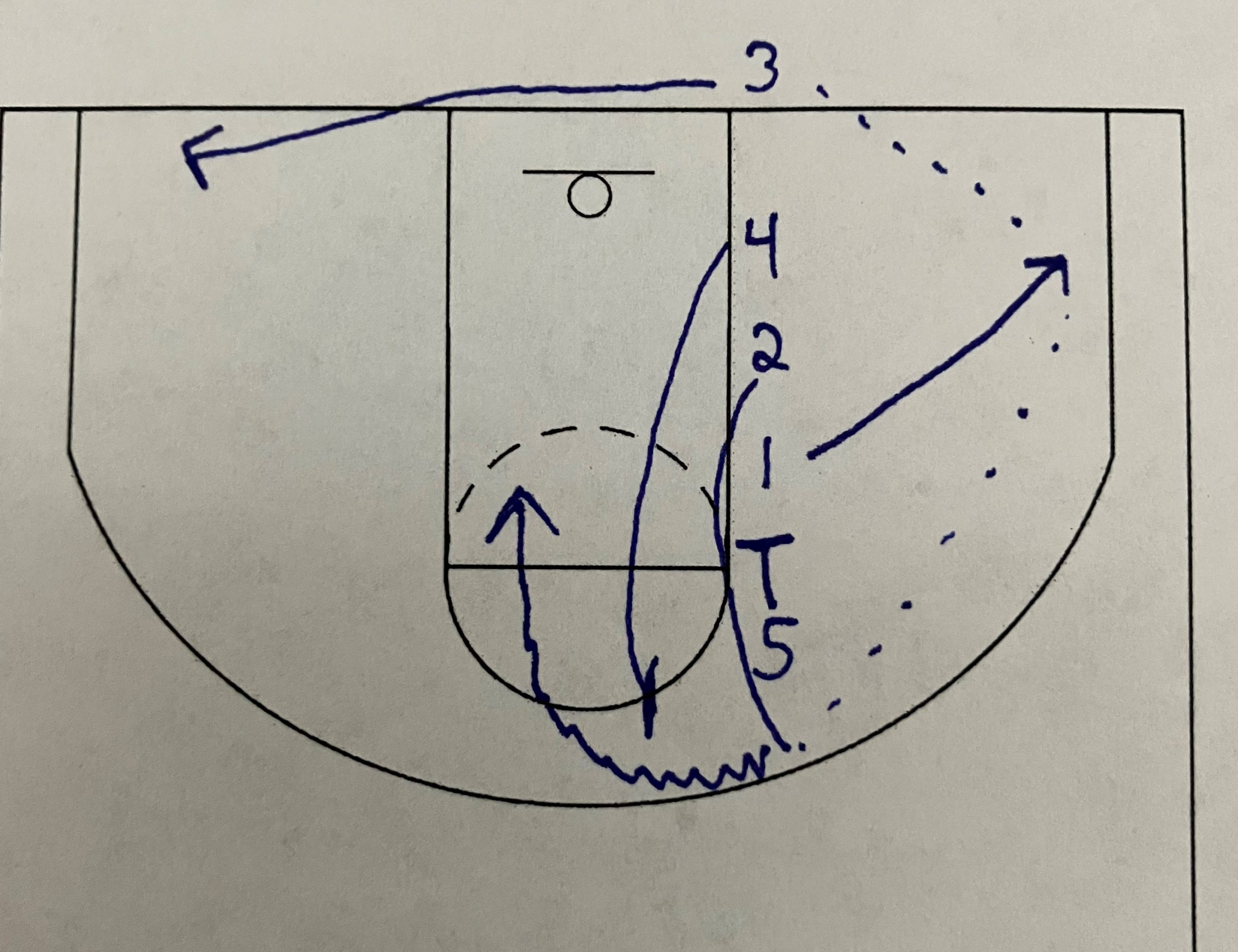
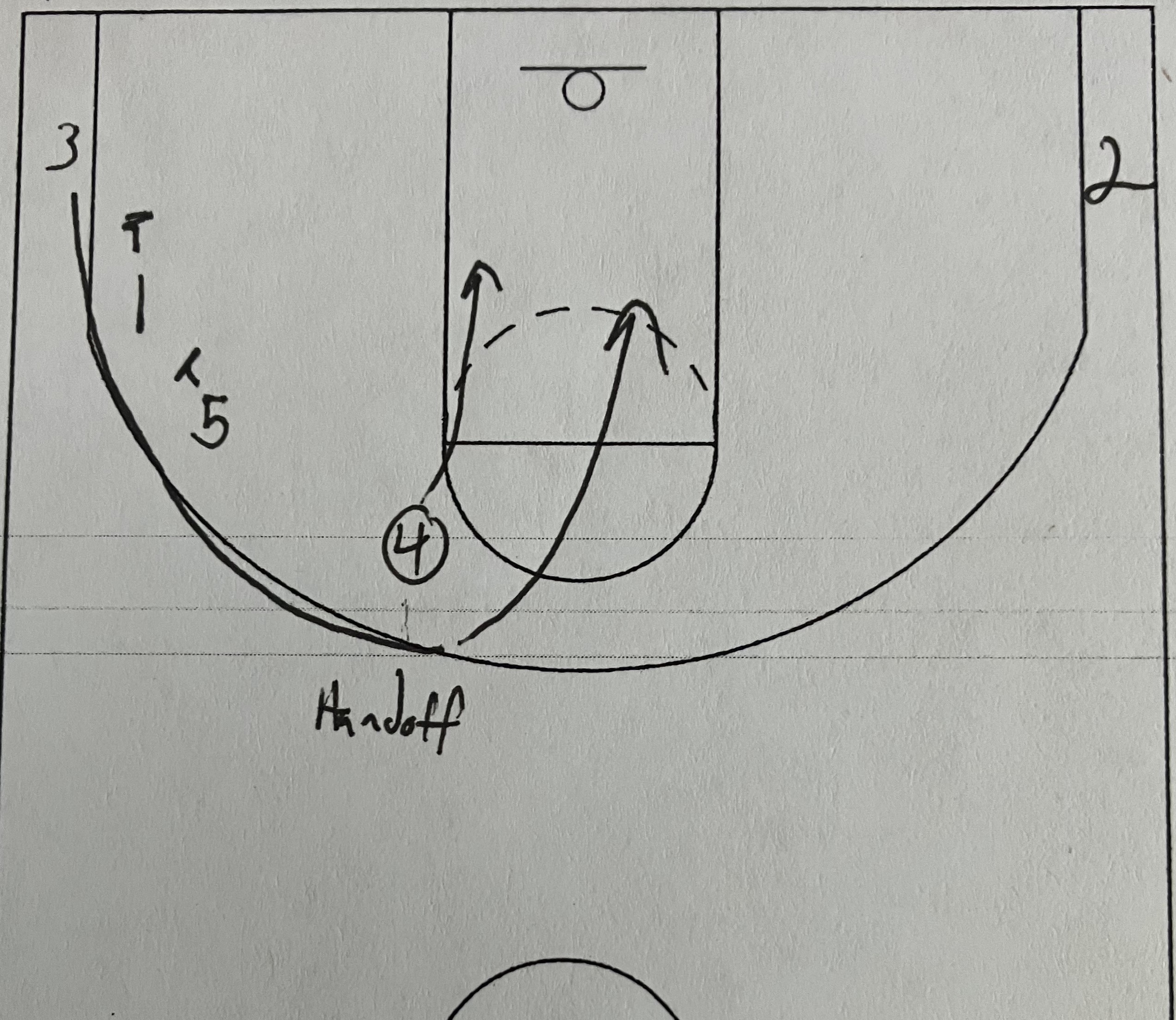
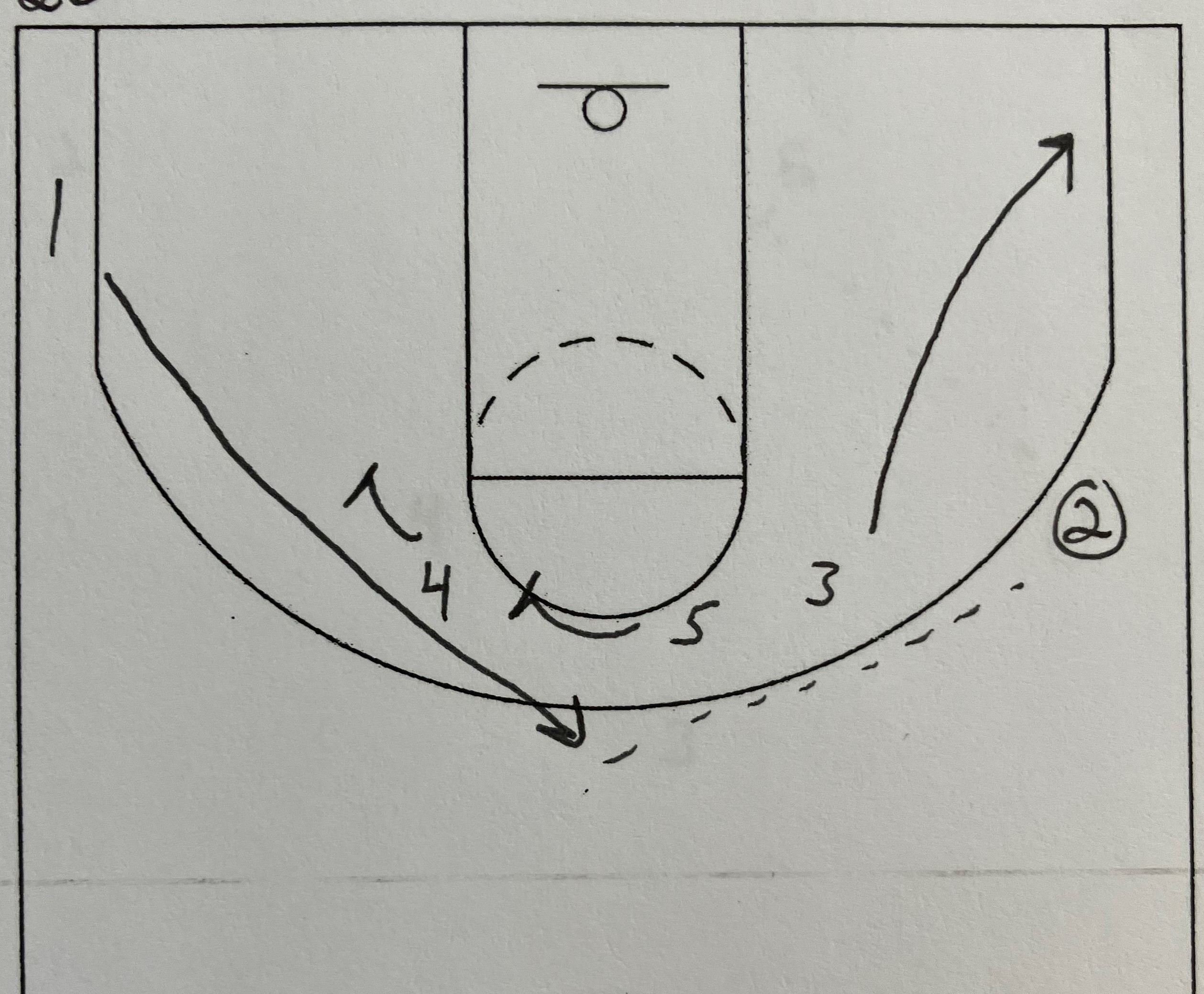
This ATO starts in a 1-3-1 formation with the center(5) and big(4) on the opposite side of the lane from the point(1). This spacing gives the screens better angles. The ATO starts with a ball screen by the center(5) to the point(1). If the point(1) comes off the ball screen wide open then they are trying to score. If the defense defends the ball screen in any way then the point(1) is passing out to the forward(3) on the wing. Once they make the pass, the point(1) is cutting to the ball side corner.
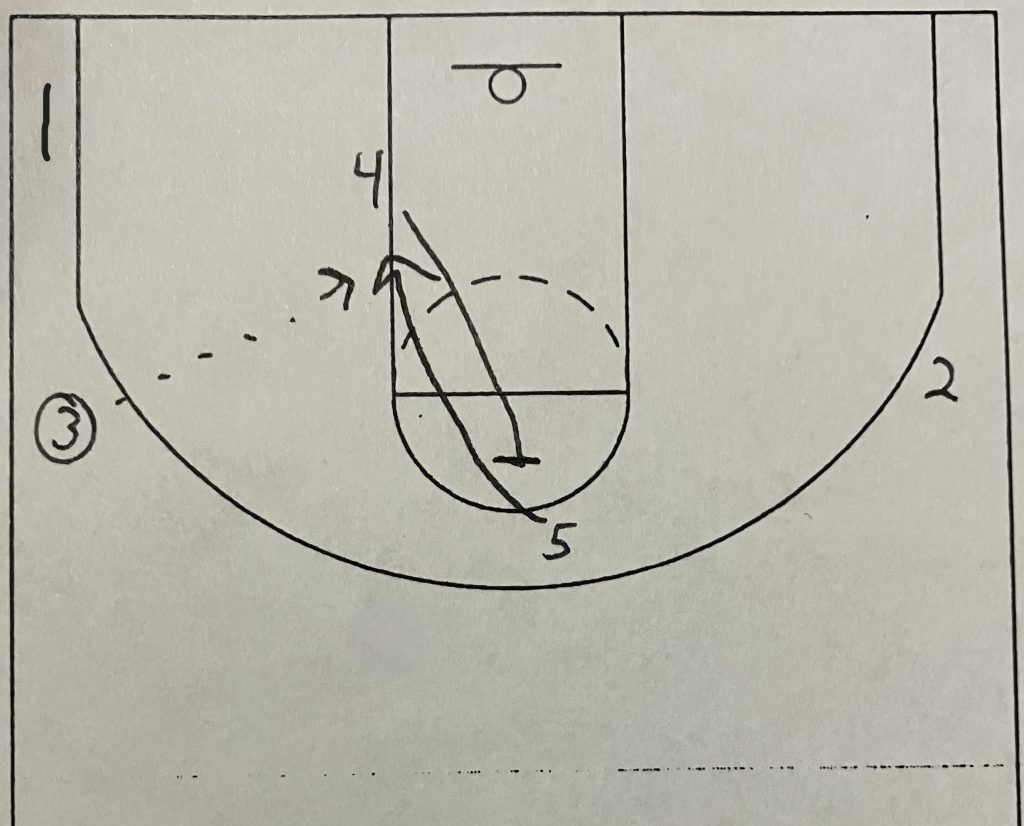
The timing of this ATO needs to be precise. The backscreen here by the big(4) to the center(5) needs to happen on the roll of the center(5) screen on the point(1). This backscreen helps the center(5) get open on the ball screen roll.
If the timing is off, then it makes the two screens be separate actions which gives the defense a better chance to defend both. If the timing is correct, then the ball screen flows straight to the back screen.
When the timing is quick then the defense struggles to defend both actions. If the defense hedges at all on the ball screen, then the back screen makes the recovery an even longer run giving the offense more time to get the center(5) open near the basket. If the defense does not hedge because of the back screen, then the point(1) has more space to attack on the ball screen. The ball screen to back screen action makes it hard for a defense to guard everything.
Counter Action
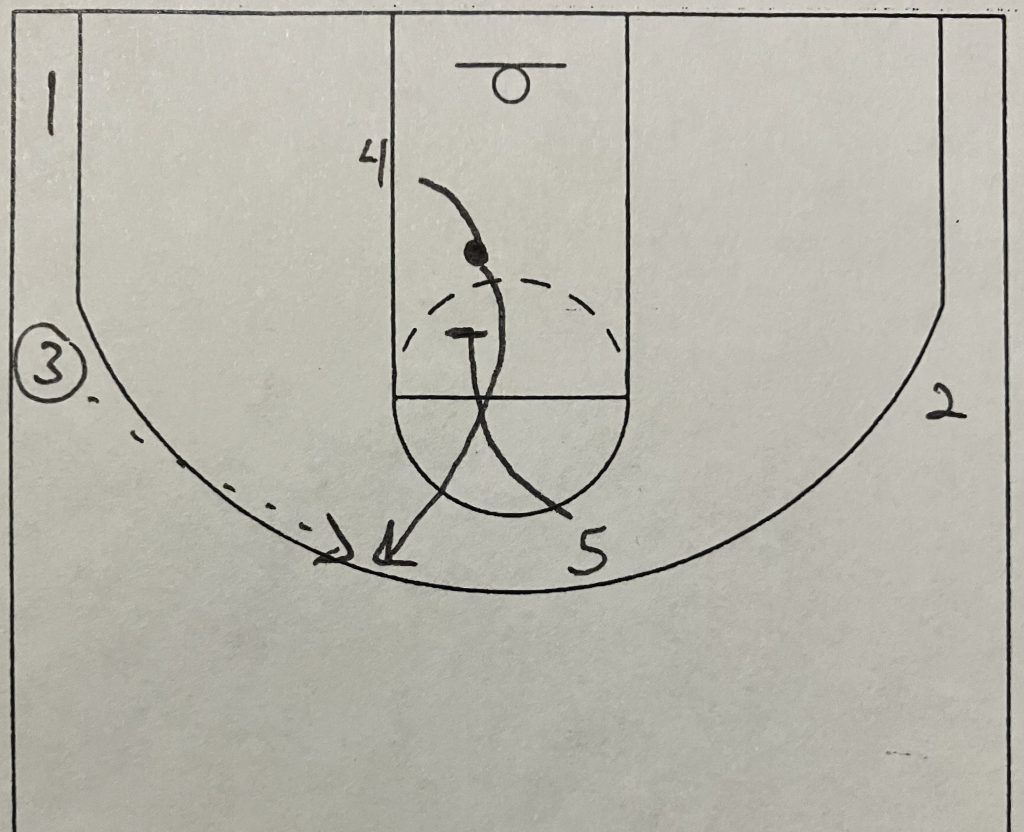
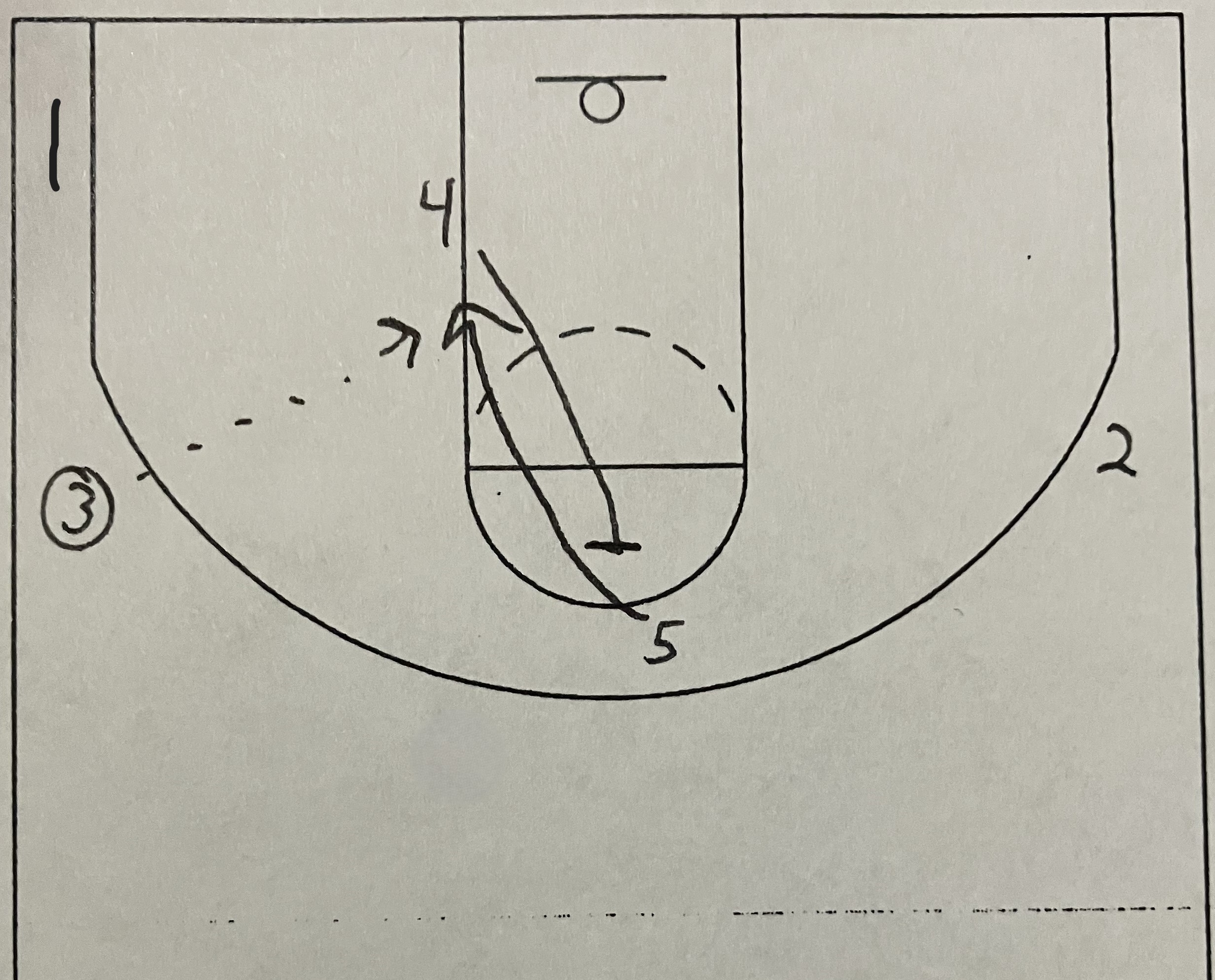
One of the ways a defense can choose to defend this ATO is to hard hedge but drop the big’s(4) defender. The big’s(4) defender stays back until the center’s(5) defender can recovery after the ball screen. This leaves the big(4) open right in the middle of the play.
In this coverage I have added a counter option to the ATO. Everything is the same until the backscreen. Instead of the big(4) setting a back screen, the center(5) will set a down screen. The big(4) and center(5) defenders are watching the center(5). Now the center(5) is screening to get the big(4) open at the top of the key. This simple change in screens keeps the defense unsure of how to defend the ATO.
This counter will only work after the initial ATO is ran a few times. Now as the defense adjusts to defend the initial ATO, this counter can be used to exploit the adjustment made by the defense. The change of screen gives the offense another scoring option without having to put in an entire new play.
The ball screen back screen option is a great way to put pressure on any defense. It can be used often as well. For the teams with a shot clock, it can still be done a lot because the action is quick and will not take up much time. This is one of my favorite actions because it is simple but also puts pressure on the defense. It can be ran every possession. And it forces the defense to work and think every time or the offense will get an open shot or a layup.