The flex offense is an old offense but I am seeing it used more and more every year. While teams are not using as their primary offense, they are using it at times as a secondary offense. I am seeing it used in college as well. Ed Cooley at Providence and Bruce Pearl at Auburn are both using variations of the flex offense.
The problem with the flex offense is that every coach knows how it works and with a little bit of practice every player knows what is happening. The continuity of the flex offense makes it great for offenses but also makes it easier to defend for defenses. A defense is going to know what screens and cuts are next and be able to move with the offensive player rather than having to react to the player.
Different variations and entries into flex are always a great addition to any team that is using the flex offense. These variations and entries can be subtle but just different enough to keep the defense from knowing exactly what is happening.
This ATO works right into flex but works as an ATO that could pick up a quick basket. If the offense does not get a quick basket then it works right into the flex offense and the offense can continue attacking within the flex offense.
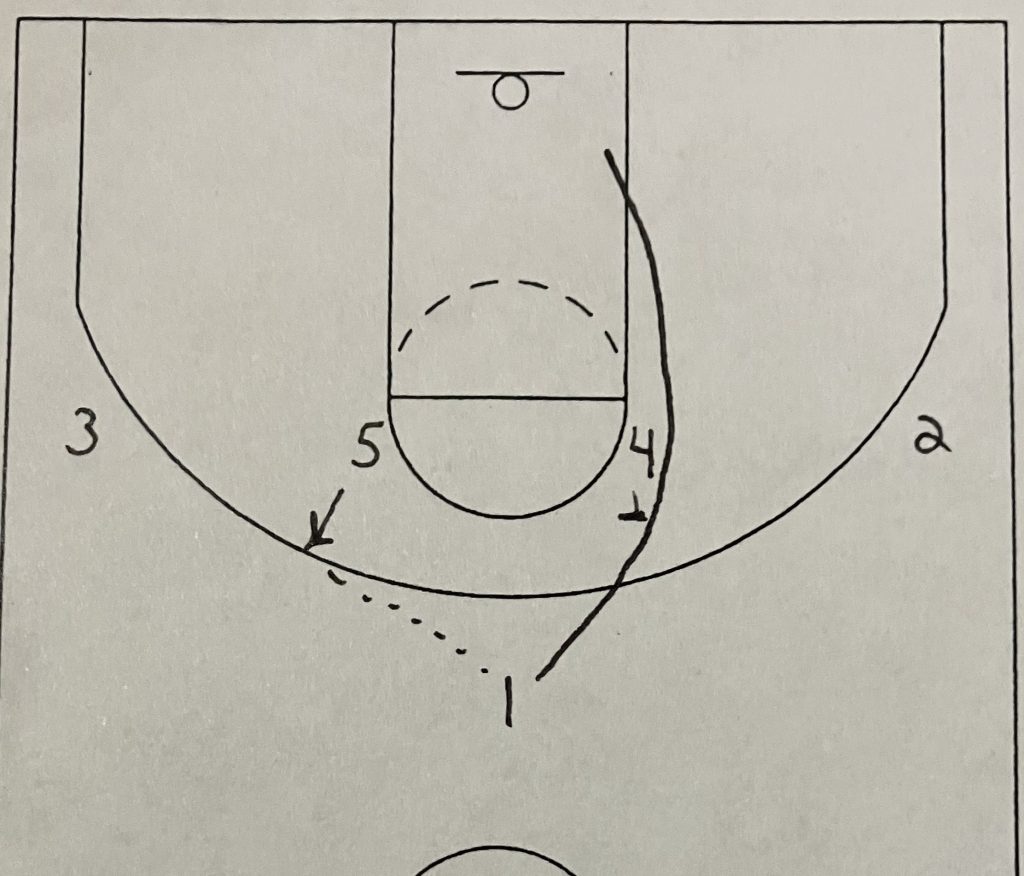
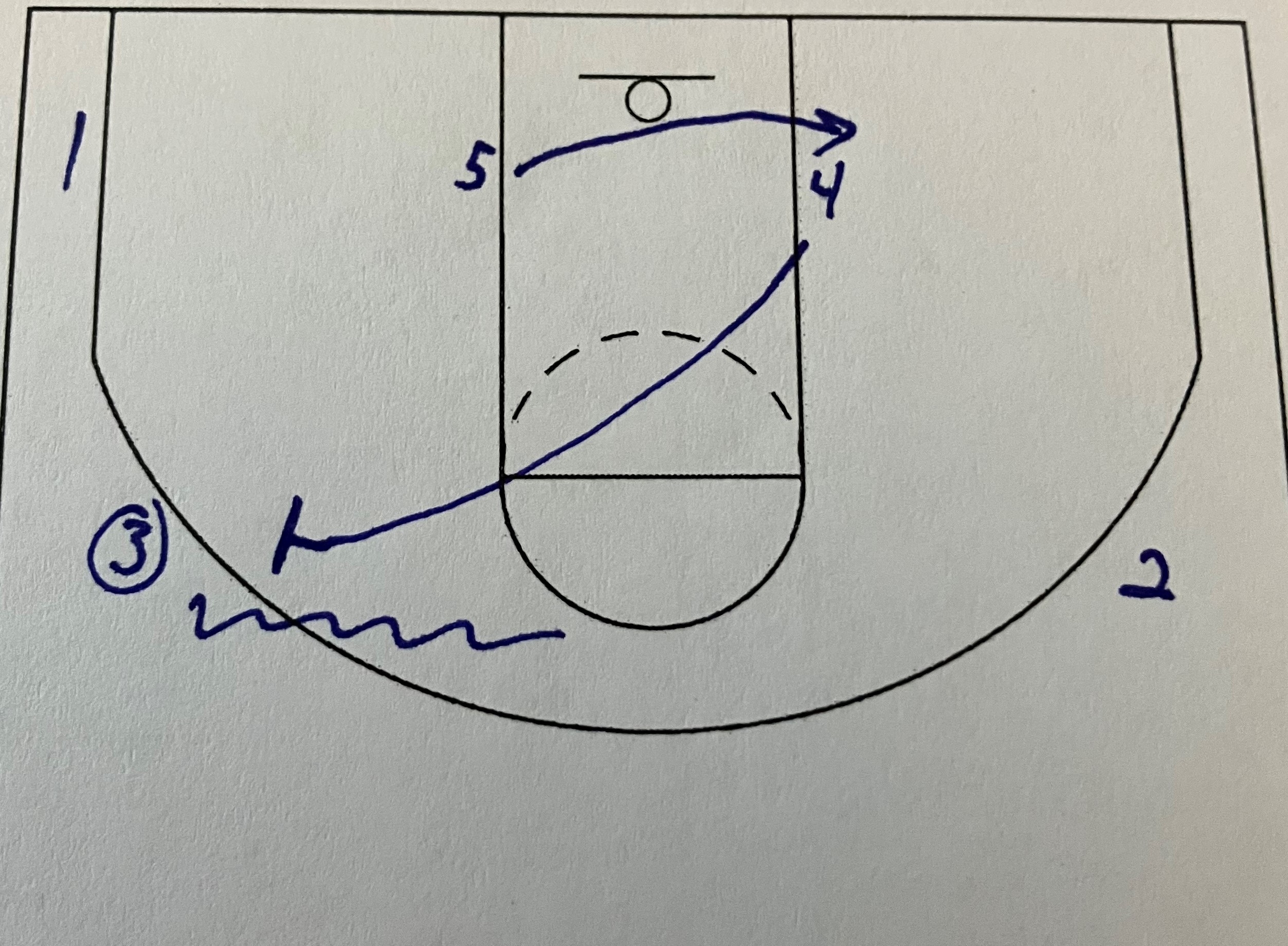
This ATO starts very simple. The point(1) enters the pass to the center(5). The big(4) steps up and starts a back screen for a smash cut by the point(1). A good screen by the big(4) can free up the point(1) enough to get the return pass from the center(5) for the easy layup. If the big’s(4) defender does not help on the back screen then there is nobody there in the lane to help. There is not a lot here but every once in a while it will get an offense a quick 2 points.
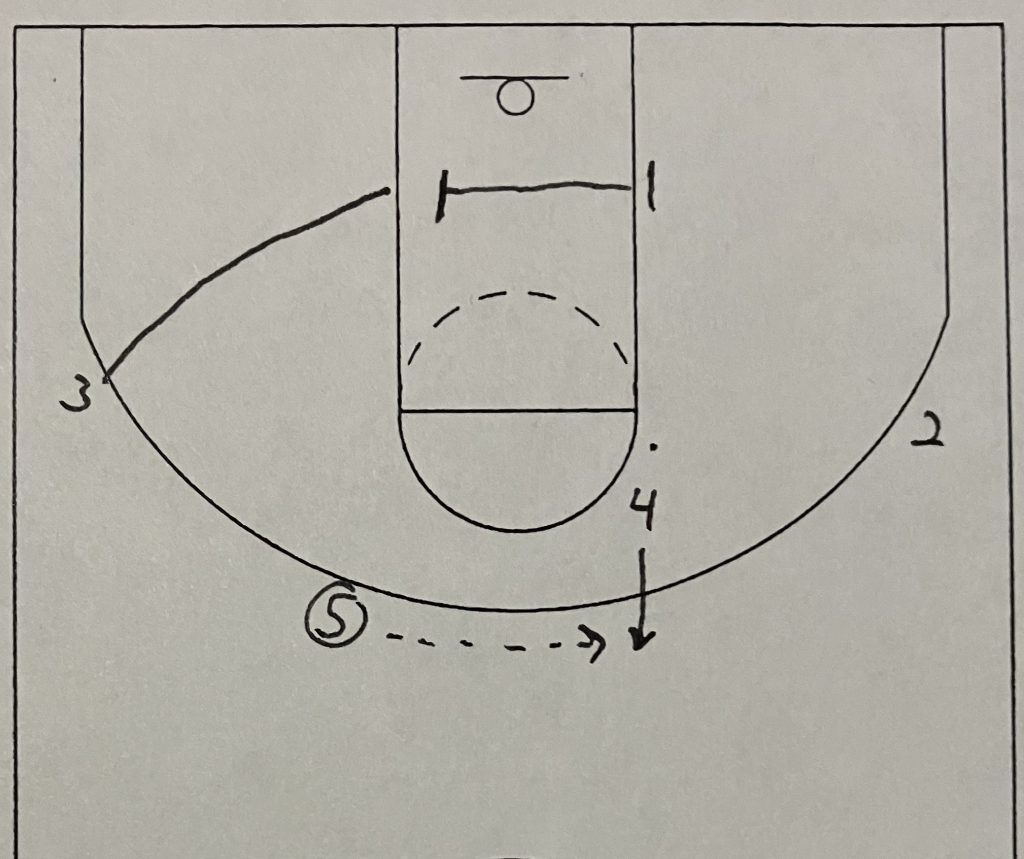
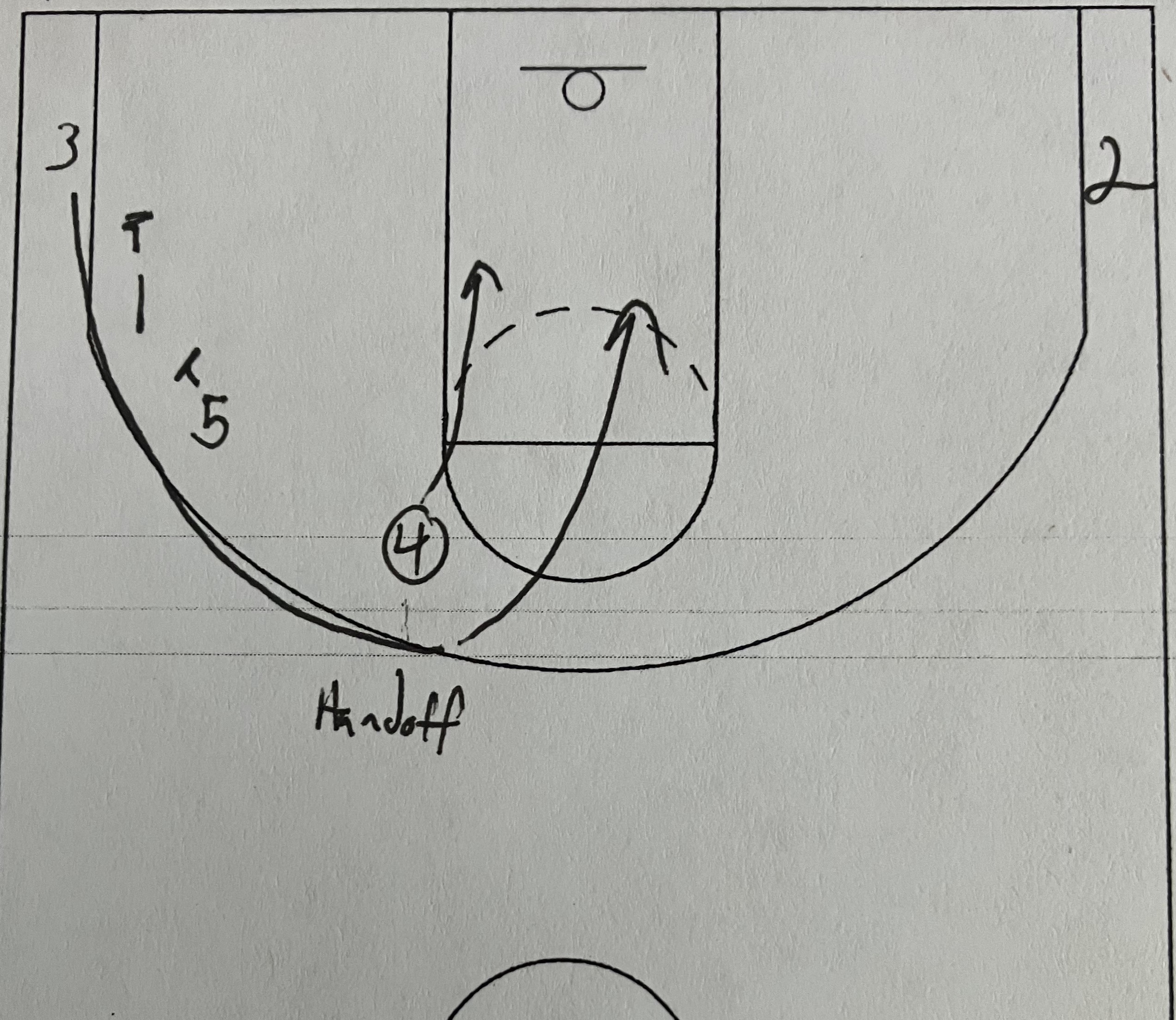
The center(5) passes to the big(4) after the back screen. As the pass is happening, the point(1) moves across the lane and the forward(3) comes to the block. This puts the point(1) and forward(3) both at the block.
This is starting to have the look of the flex offense. The ball is passed to one side. The block is filled opposite the ball. And the backside corner is cutting along the baseline coming to the ball. This is slowly working its way into the flex offense.
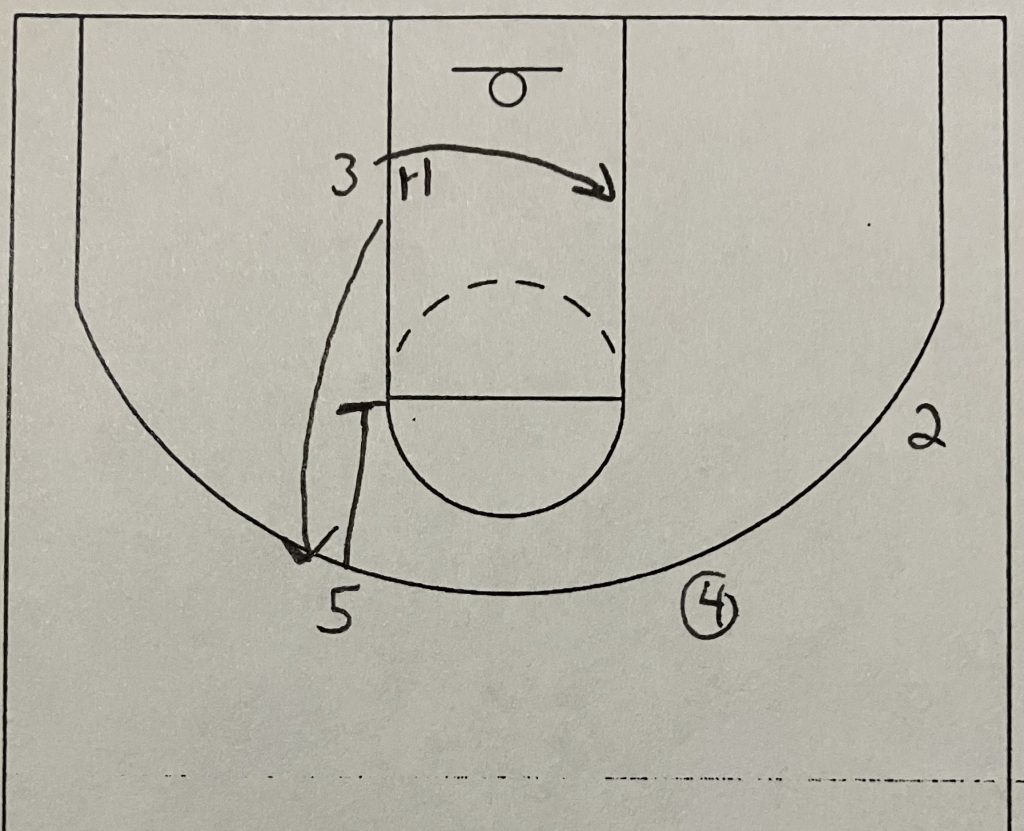
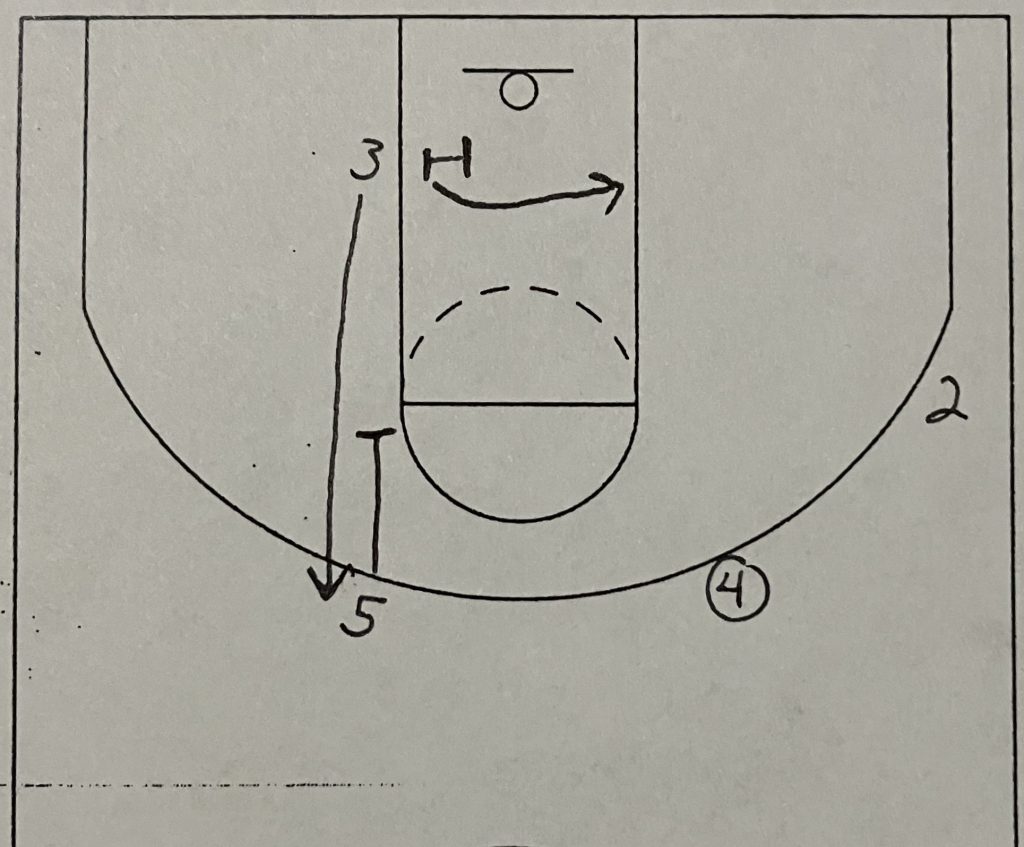
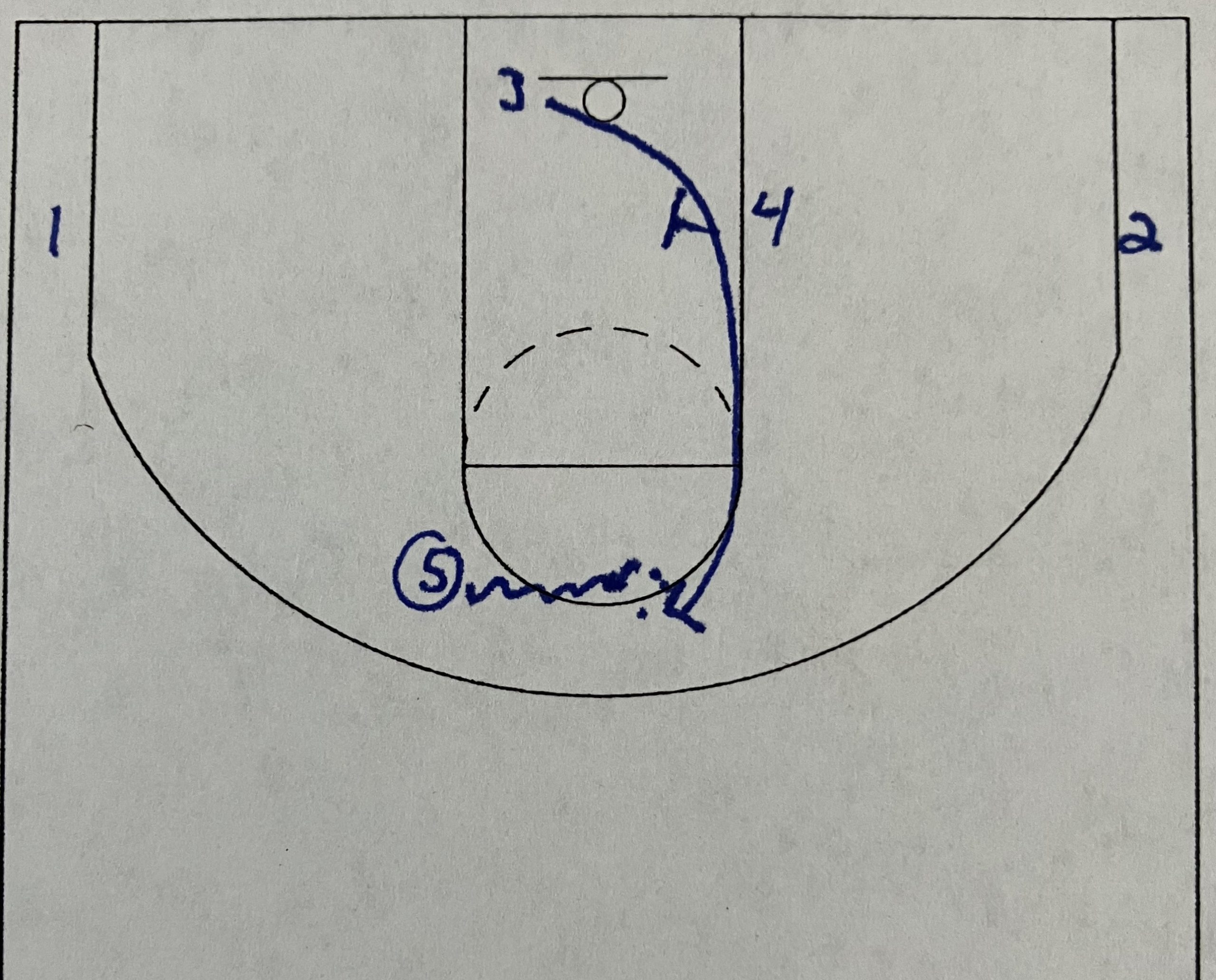
As the forward(3) and point(1) come together at the block, they can do one of 2 actions. Against the flex offense, the corner player cuts across to the ballside block using a screen at the backside block. This would mean the forward(3) cuts across with the point(1) setting a screen. This is the above diagram on the left.
However, a team can modify this cut if the defense overplays the flex screen. In the diagram on the right, this is the modification. Instead of the forward(3) cutting all the way across the lane they stop at the block. The point(1) acts like they are setting a screen and then reverses back to the ball. This little change can work if the defense is just playing the flex offense instead of guarding their players.
Either way the forward(3) or point(1) will cut to the ballside block. The other player will cut up the lane with the center(5) setting a downscreen. The point(1) can get open on this downscreen if their defender steps across the lane to help on the flex screen. This is another way to get the point(1) open without them having to have the ball in their hands.
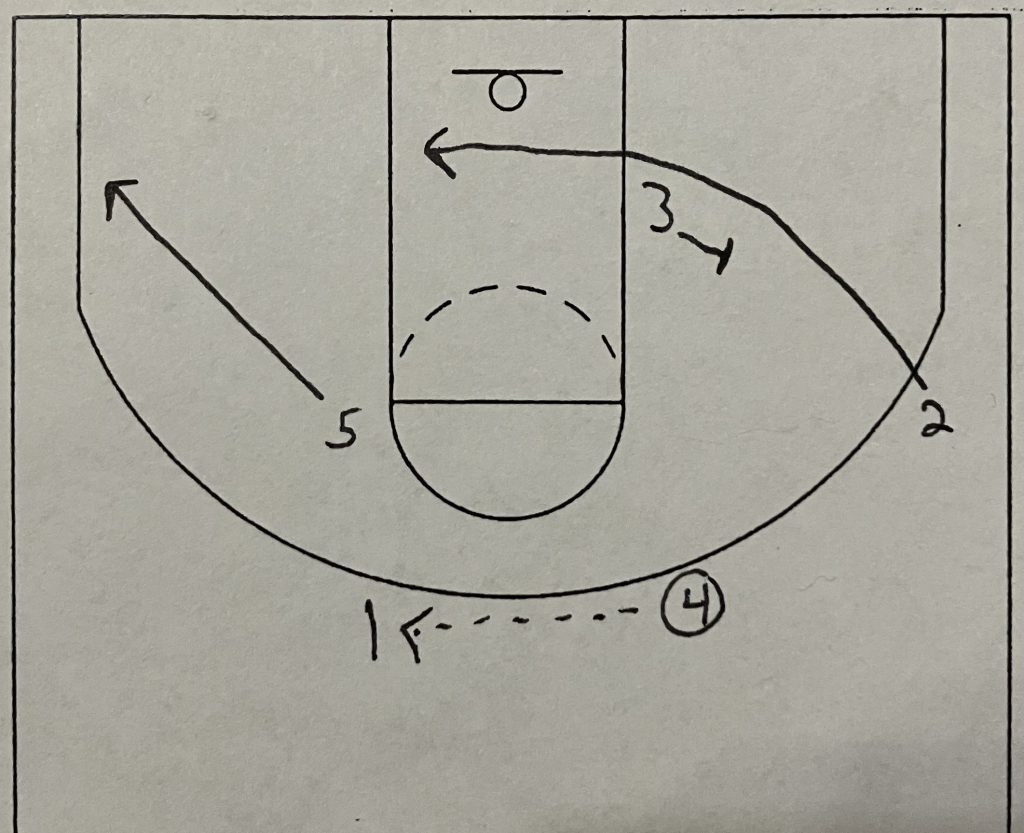
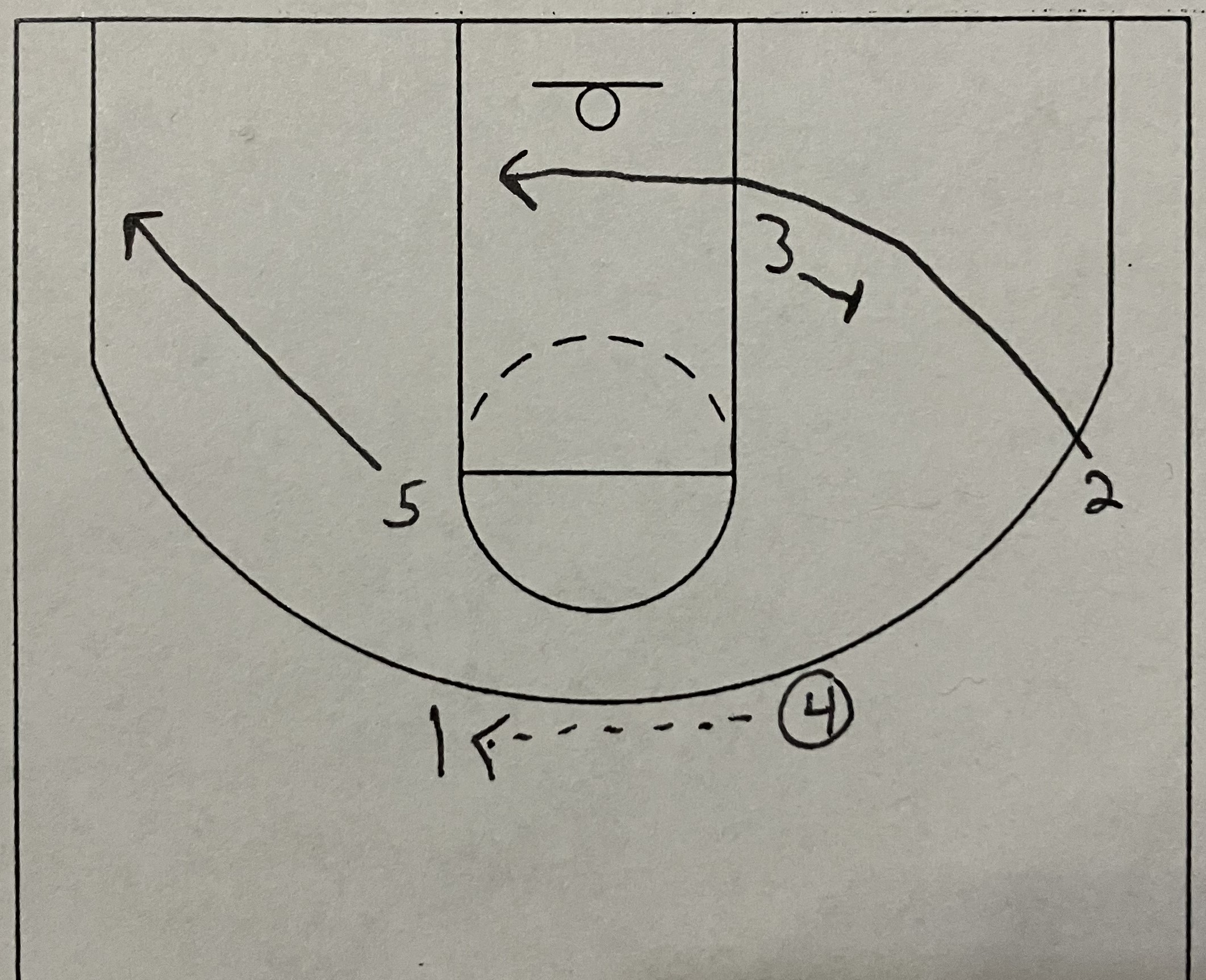
And now the ATO has turned into flex. The pass is made from the big(4) to the point(1). The guard(2) makes the flex cut using the forward(3) as a screener. The center(5) cuts out to the corner after the downscreen. Everybody is already in position and going right into the flex offense.
The flex offense is known so having little changes in the continuity or entry into the offense can give the offense an advantage if the defense is guarding the flex offense well. Little changes are enough to make the defense become more reactionary instead of jumping the cuts and screens of the normal flex offense.
If the flex offense is used by a team, having a few entries can give the offense a different look so the defense does not know exactly what the offense is doing. These little changes can be used to get a quick open shot because the defense is overplaying the normal continuity of the flex offense. If you are using the flex offense, then add this to your playbook and you will be surprised at how many open shots you are able to get early in the play.