Good movement on any BLOB play can get the defense moving in ways for them to have a miscommunication or breakdown leaving an offensive player open for a basket. This can be done with screens or slip screens or ghost screens. It can also be done with just tight cohesive cuts. Especially against man to man defense, tight cuts can have the defenders running into each other. It is a pick play without having to set screens.
The setup of the play is having all 4 players lined up across the foul line. This type of setup is one that a lot of teams use to slip one of the players behind the others for a quick 3 point shot. So, the defense is already looking for somebody to move behind when in reality all 4 offensive players are cutting to the basket. The defense anticipating the drop could have a defender in line with the offensive players waiting for the step back or even put a defender behind the line to begin with. For this BLOB, that defensive setup would be great.
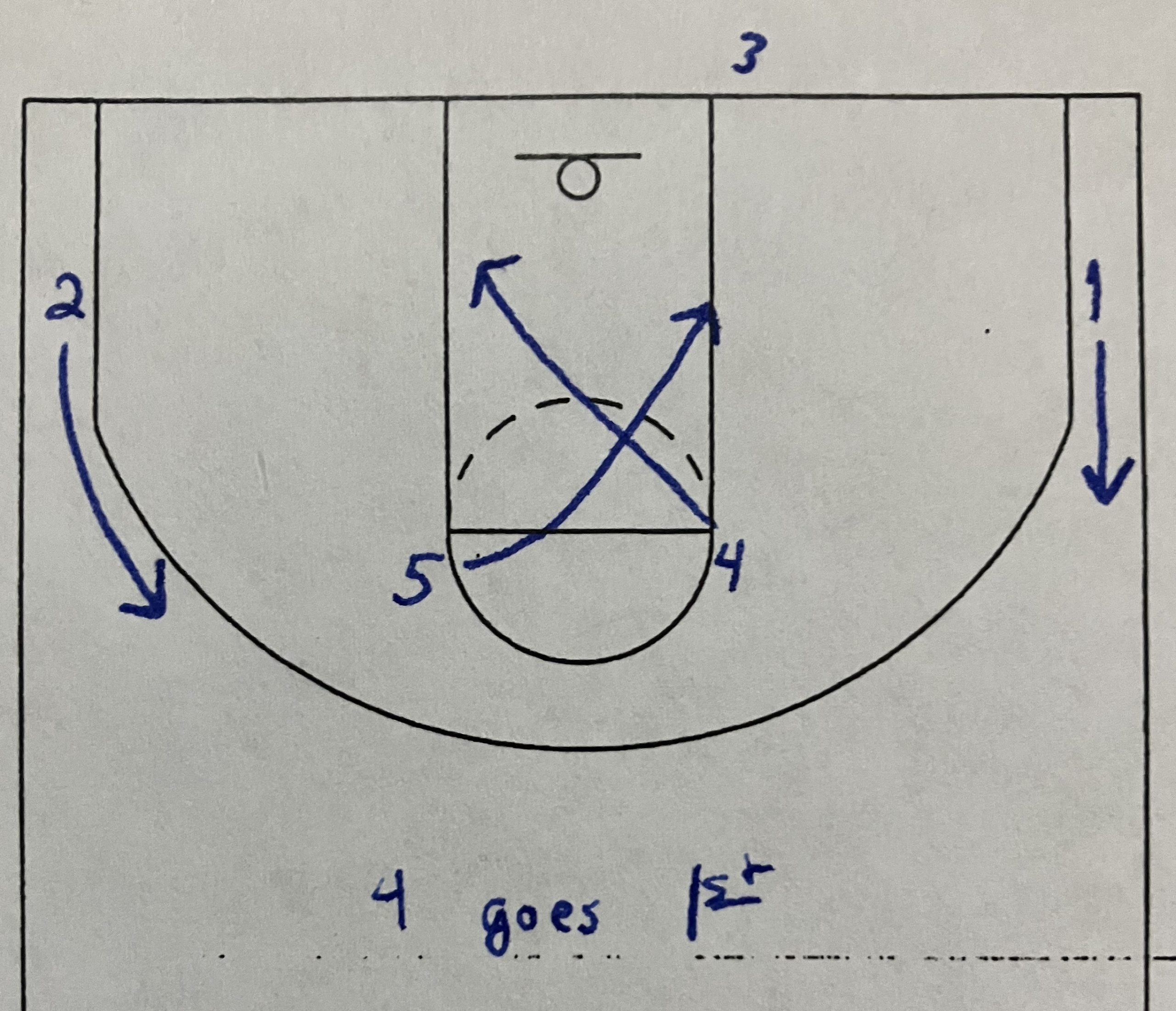
It is a quick play that requires precision and timing. There are 2 sets of cross cuts. The 2nd cutter has to wait for the 1st cutter to clear so they do not collide. But the 2nd cutter wants to be cutting right behind the 1st cutter to make it more likely their two defenders will make contact with each other. If the 2nd cutter goes too soon, then the offensive players run into each other and nothing will work. If the 2nd cutter goes too late, then the defense is able to move around each other because of the additional space created by waiting too long. When the timing is right, the defense will struggle to guard without letting somebody come open. And this cross cut happens twice.
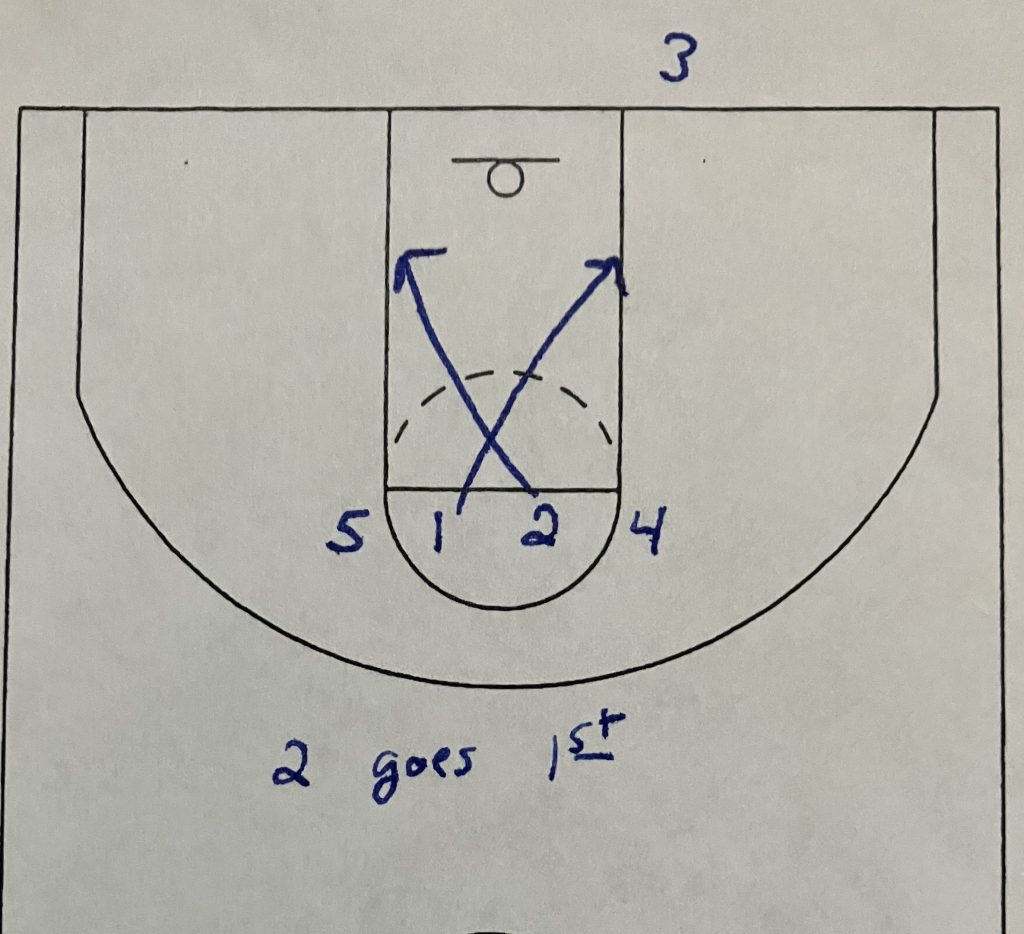
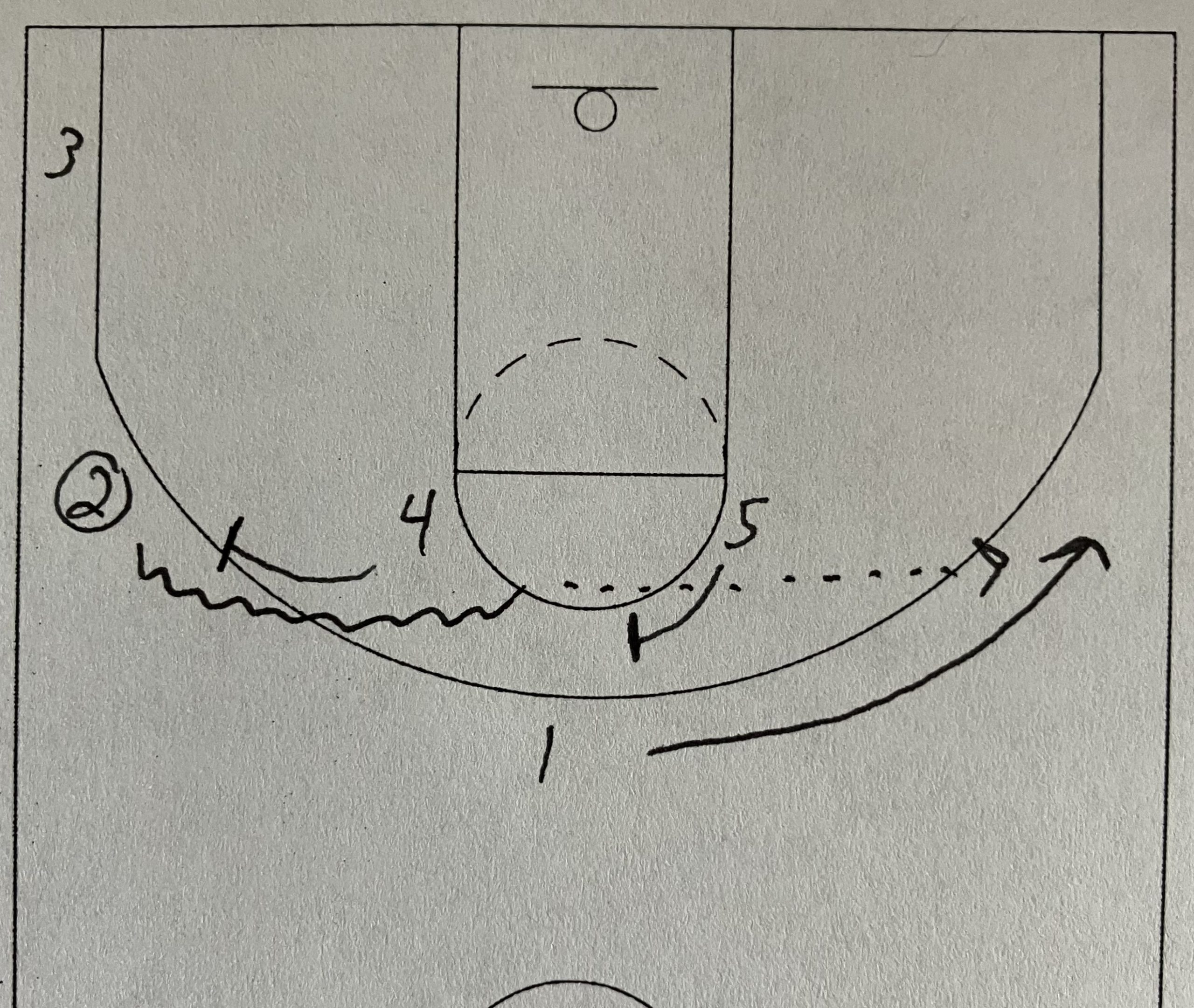
The four players are in a line shoulder to shoulder at the foul line. The center(5) and big(4) are on the outside and the point(1) and guard(2) are in the middle. On the start of the play, the guard(2) cuts first to the backside of the basket. The point(1) is cutting right off of the back of the guard(2). The point(1) should try to be as close to the guard(2) as possible without making contact. This closeness creates a screening action without setting a screen.
The forward(3) is making the entry pass to the 1st player that comes open. That could be the 1st cut by the guard(2) or the 2nd cut by the point(1). If neither of these options are open then the forward(3) waits.
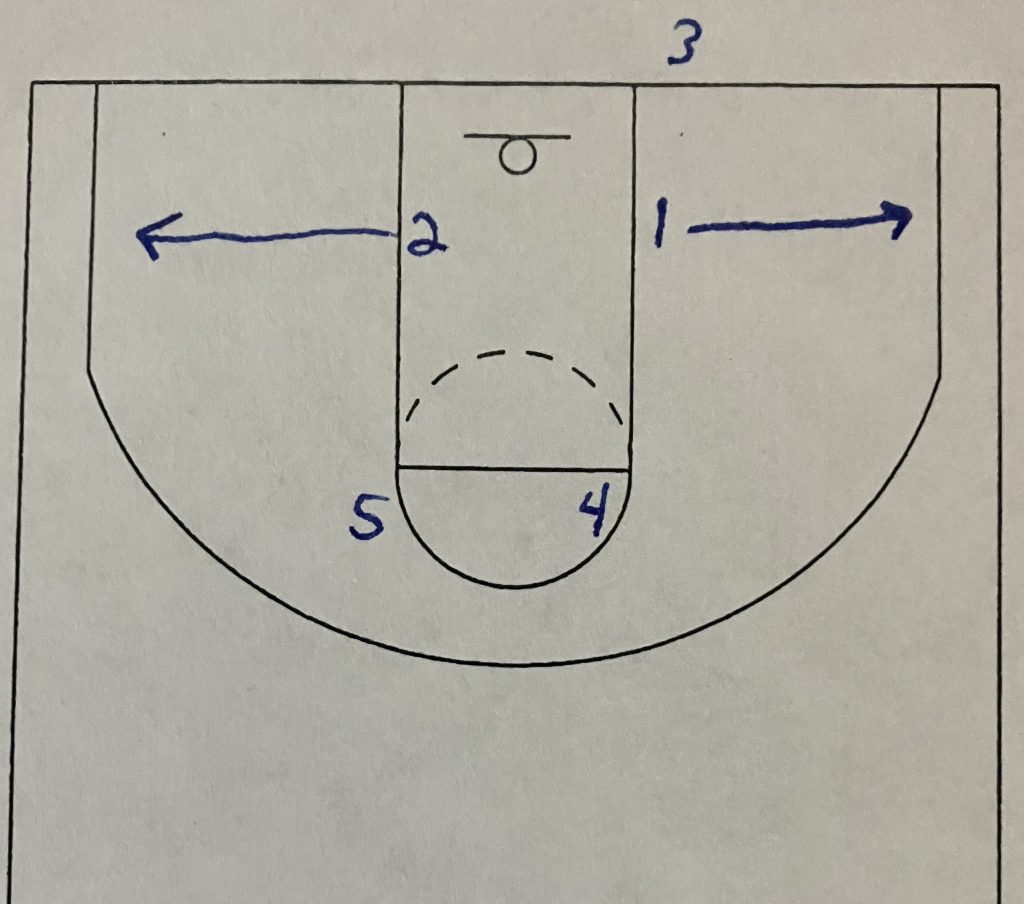
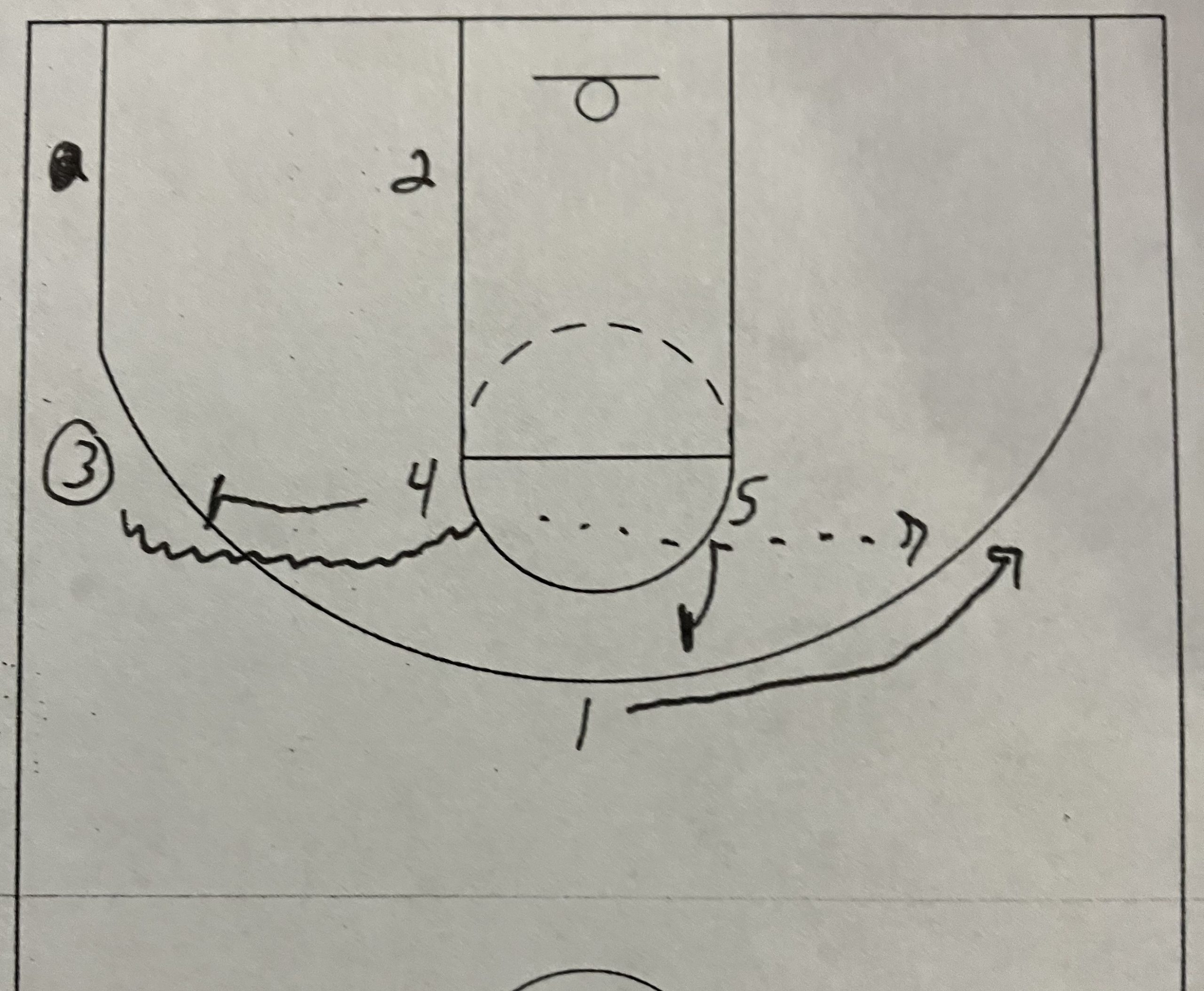
As the point(1) and guard(2) finish their cuts, they are continuing out to the corners. The cuts may get them open but if they don’t, then they need to clear out of the lane as quickly as possible. The big(4) and center(5) must wait for the point(1) and guard(2) to clear before they both cut. If the big(4) and center(5) cut too quickly then the lane is too congested for anybody to be open. The big(4) and center(5) have to be patient and allow the point(1) and guard(2) to clear out of the lane before they start.
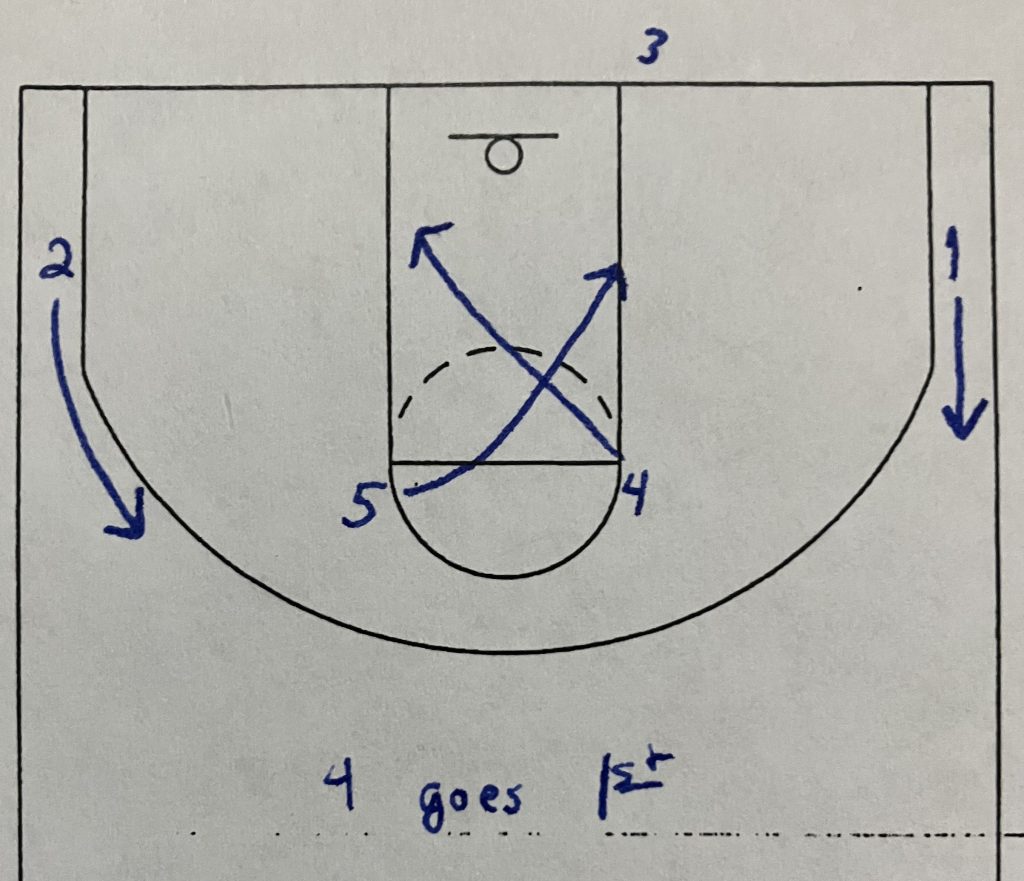
Once the point(1) and guard(2) clear out, then the big(4) is cutting first to the backside. The center(5) is timing their cut to be as close as possible to the big(4) without making contact. The hope is the center’s(5) defender will get naturally screened by either the big(4) or their defender and will not be able to make it across the lane leaving the center(5) wide open.
As the two post players are cutting the point(1) and guard(2) are lifting out of the corner in case the forward(3) does not have a pass open and needs to make a long pass to just get the ball in bounds. This also will lift their defenders giving more space to the baseline and block areas so the big(4) and center(5) do not have more people to worry about if they get the entry pass.
Conclusion
Plays do not have to be complicated. Something simple and easy can be effective when executed properly. The players crossing can cause problems for the defense in trying to fight through all the traffic. One defender is all that is needed to lose focus or get caught up in the traffic and the offense has somebody open. This could be a great play for the younger age groups. At the varsity high school level it may not work as well if the opponent has scouted the play and has the players ready for it. I would still have this in the playbook and run it just to see what happens with the defense.