The flex offense is slowly starting to come back into mainstream basketball. A few college coaches are mixing in some flex offense into their system. And I am seeing a lot of plays using flex concepts in baseline out of bounds plays or BLOBs. I am seeing more flex screen down screen combinations being used within a BLOB play or as the BLOB play itself.
This is one of those plays. The slight adjustment is the overload by the offense before setting the flex screen. The normal player position of flex is not used with this BLOB. The offense is overloading the ball side of the court before getting the flex cut to the backside where there will be no help because of the overload.
The overload is great in this play because the defense is going to be worried about the ballside activity with the BLOB. That leaves the backside of the court without any defender because of the overload by the offense. Now as the play unfolds, the offense can sneak the flex screen through before the defense has a chance to realize what is happening.
And if the flex screen does not work, then there is the secondary option of the down screen to finish the flex concept. This BLOB play is a great play to have in the playbook because it can be ran multiple times in a game. The defense will start to figure out the flex screen but then that will open up the down screen option for the offense. Once the defense starts one part of the play it should open up the second option. And now the defense has to figure out how to stop not just one movement but a 2nd option as well.
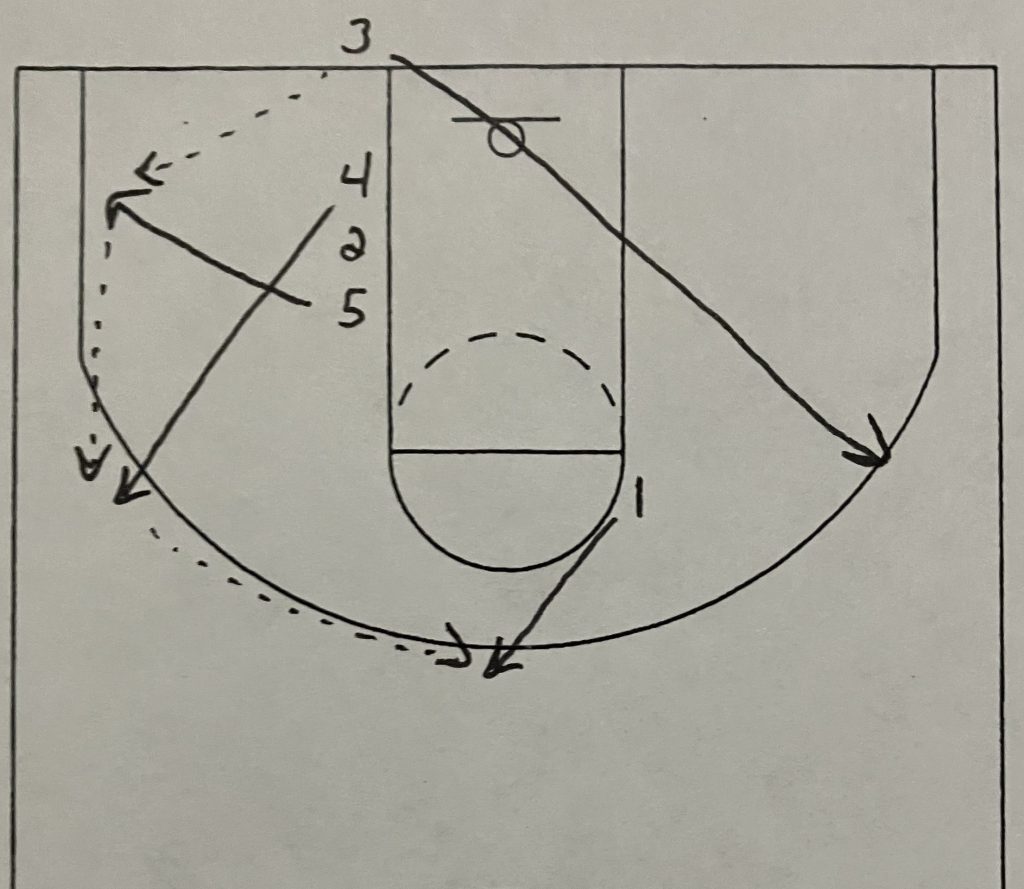
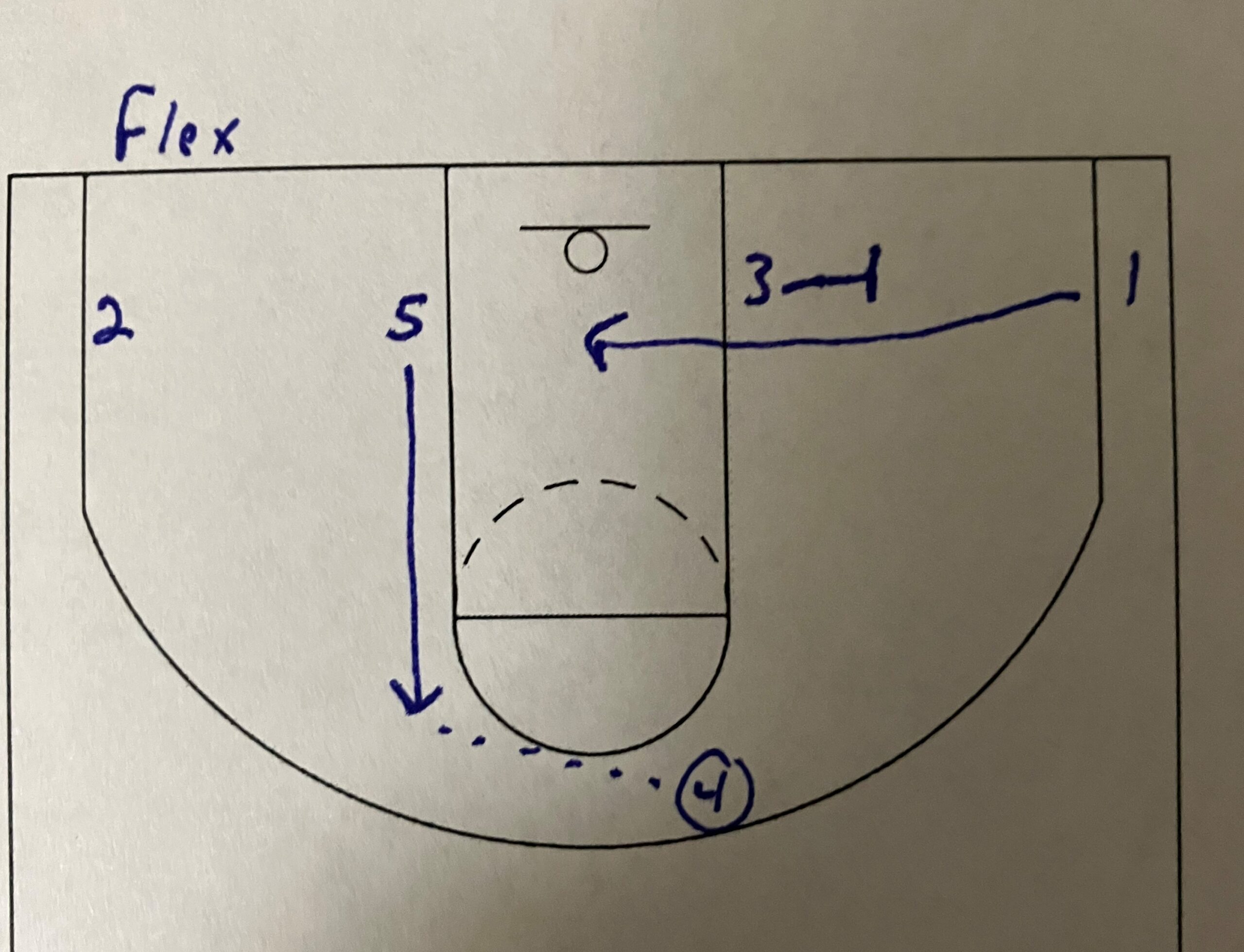
This BLOB play starts in a semi-stack formation. The point(1) is on the opposite elbow with the other 3 players in a stack in front of the ball. The big(4) is in the front, the guard(2) is in the middle of the stack and the center(5) starts in the back much like a normal stack play.
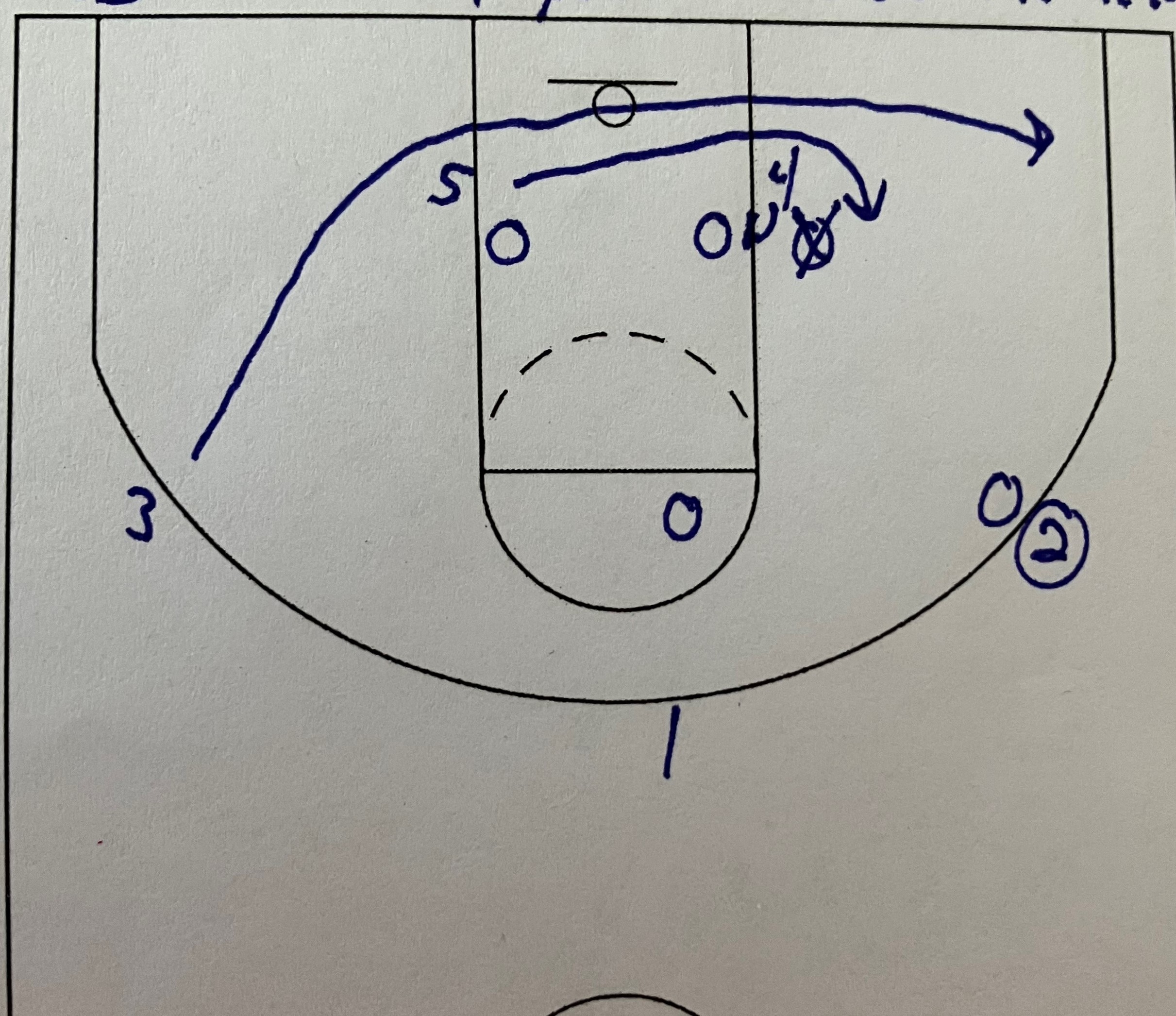
On the start the center(5) cuts to the ballside corner first. As the center(5) moves, the big(4) is cutting up to the wing. At this moment, the point(1) is the only player on the backside of the play and they are just on the opposite lane line. This is the overload set of the play. Right before the entry pass, every player is going to be on one side of the court leaving the backside quarter of the court completely empty.
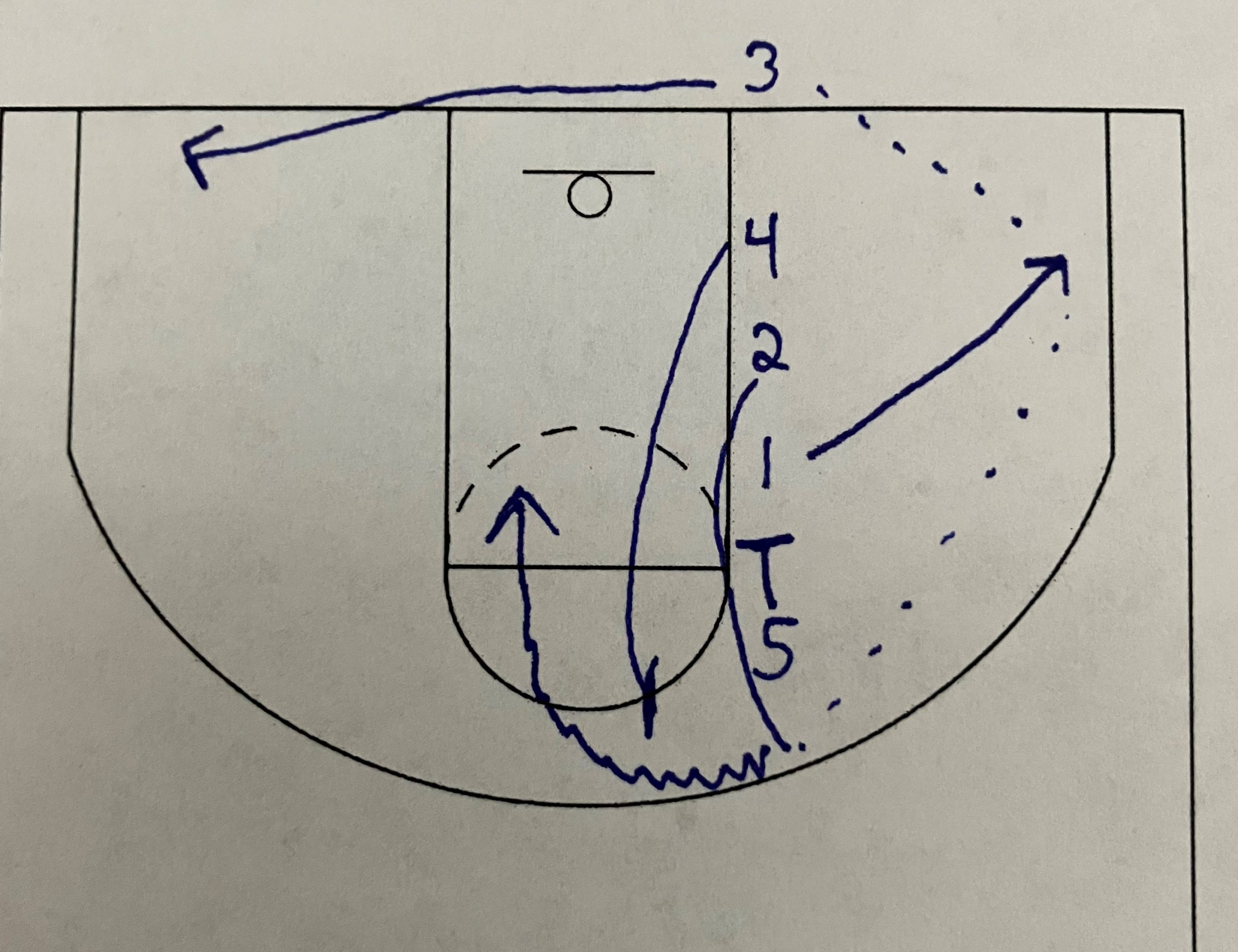
The forward(3) enters the ball to the center(5) in the corner. The center(5) passes the ball up to the big(4) on the wing who then passes to the point(1) at the top of the key as the point(1) cuts up to get open for the pass. The forward(3) is running to the backside wing after the entry pass. Now the ball is at the top of the key and every player is setup for the flex movements.
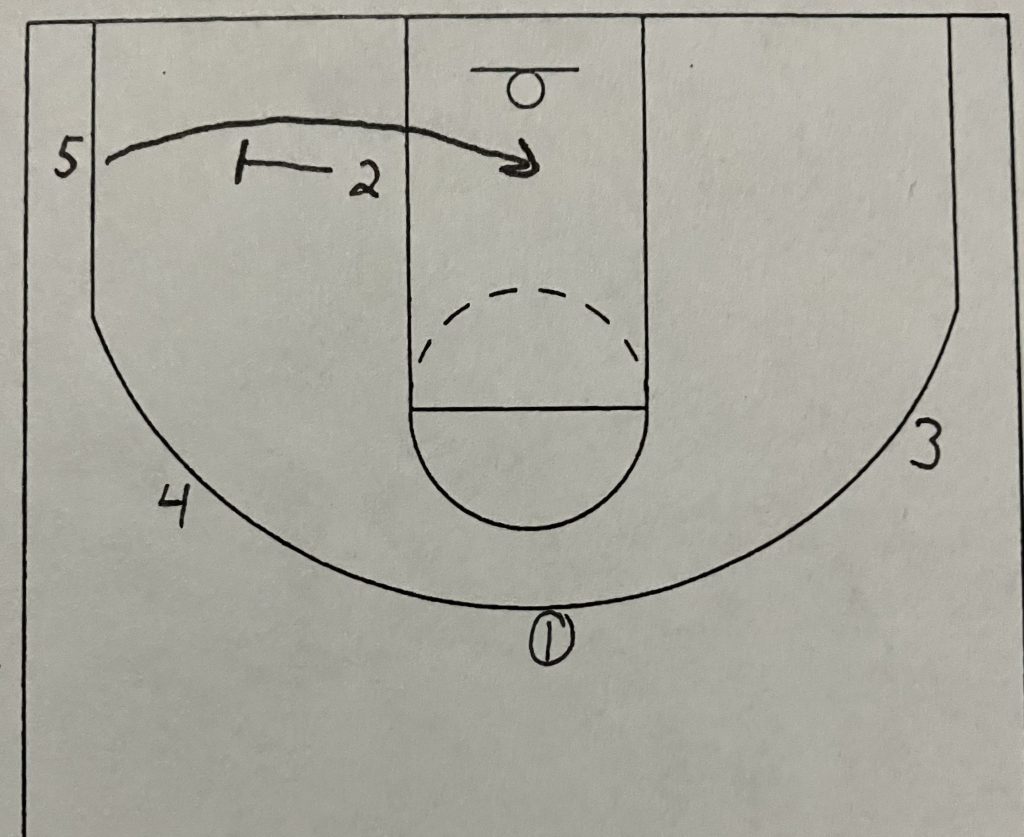
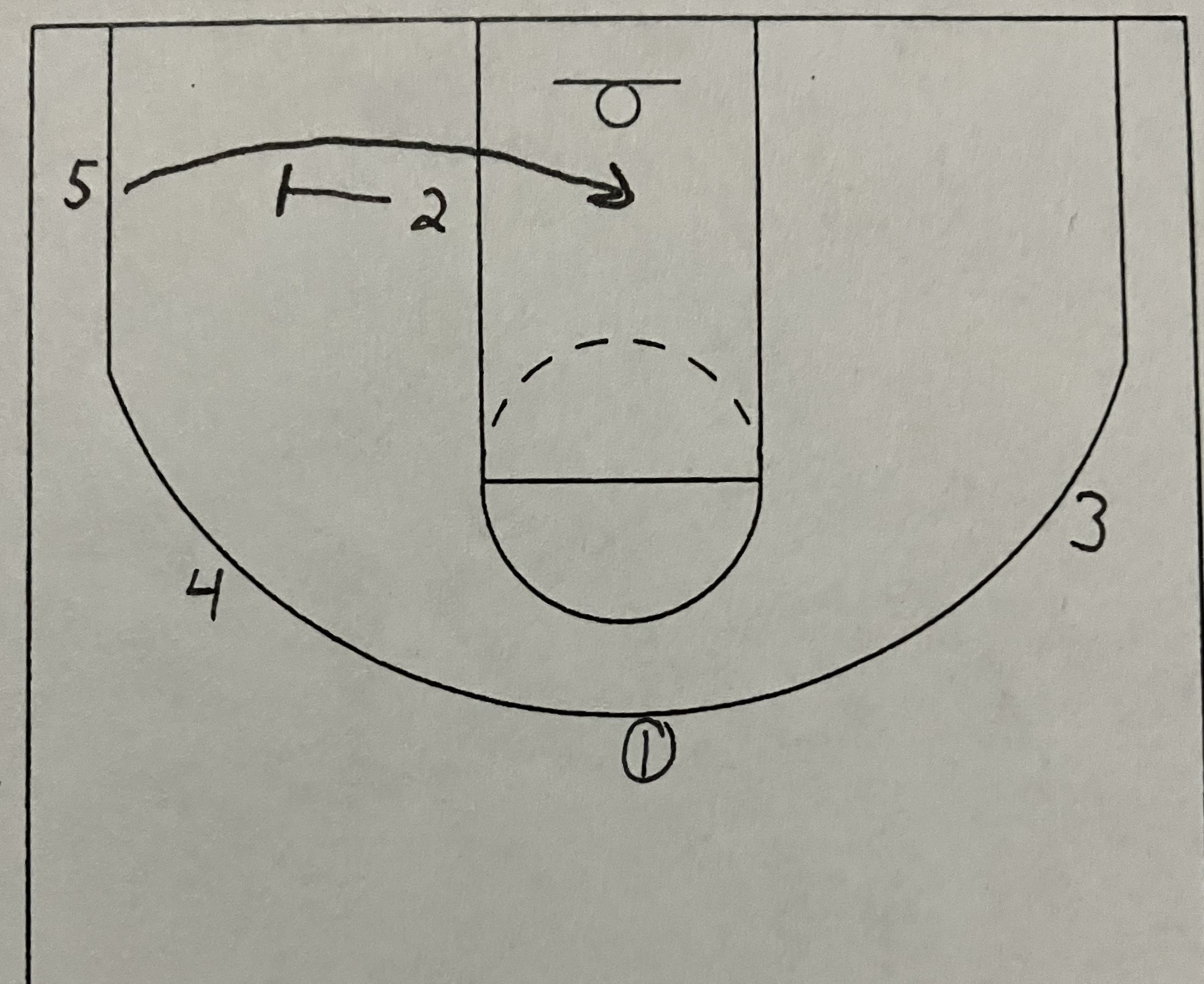
As the point(1) catches the ball the guard(2) who has not moved turns and sets a flex screen for the center(5). The center(5) cuts to the middle of the lane and eithers gets the pass on the cut or tries to post up in the lane. There should not be any help defense down low on the flex cut or post up.
The forward(3) defender should be chasing them out to the 3-point line in case the offense is swinging the ball all the way around the court. If that defender is not staying with the forward(3), then the point(1) should pass to the forward(3) for either a 3-point shot or a post entry as the forward(3) defender closes out to the ball.
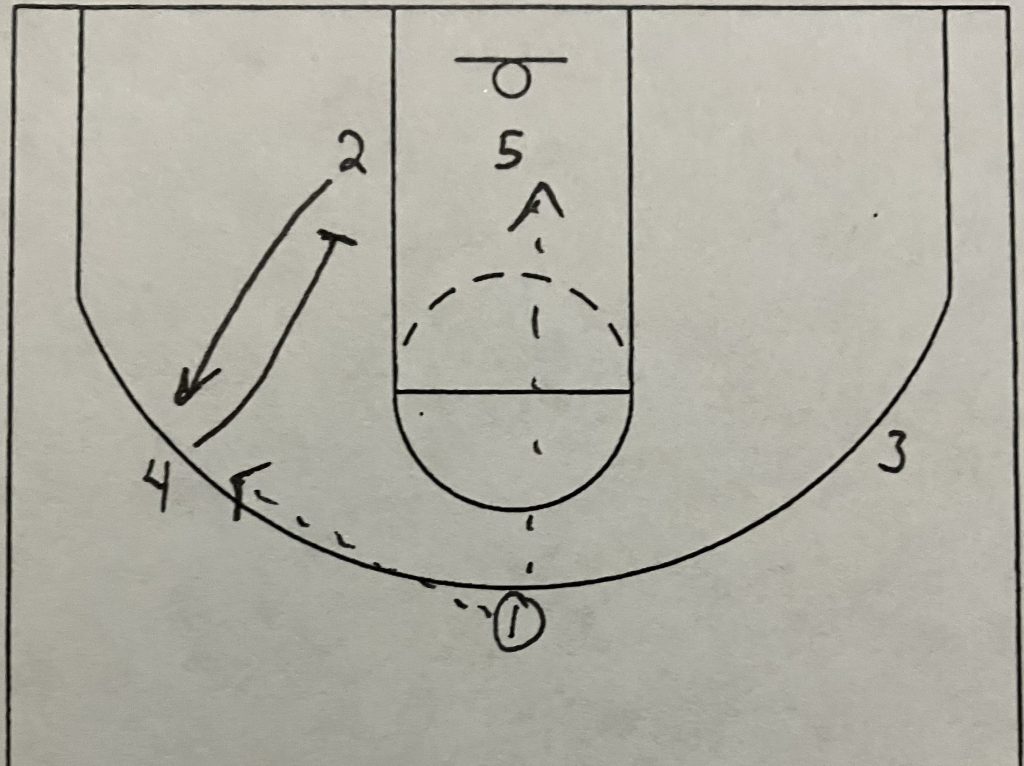
The point(1) is looking for the flex cut or post up by the center(5). But if that is not open, then the big(4) is setting a down screen for the guard(2) coming off of the flex screen. This is as traditional of a flex screen sequence as there is.
There is no backside help for the center(5). And if the guard’s(2) defender helps off of the flex screen, then the guard(2) should be running free coming off of the down screen. This simple flex concept is attacking the defense multiple ways while isolating the defense from being able to have help defense. Each defender is being put on an island and as soon as one of them makes a mistake the offense will have an advantage and should be able to score.
The flex offense is old but the concepts still work. In this BLOB, a couple of good screens and the offense is going to find open shots over and over again. When the defense adjusts to stop one action, the offense has another movement to get a different player open. This can be ran many times and work every time because of the many different options. If you run flex, then this BLOB is an absolute must to have in your playbook. If you do not run flex, then this flex BLOB play would be a new wrinkle to confuse the defense.