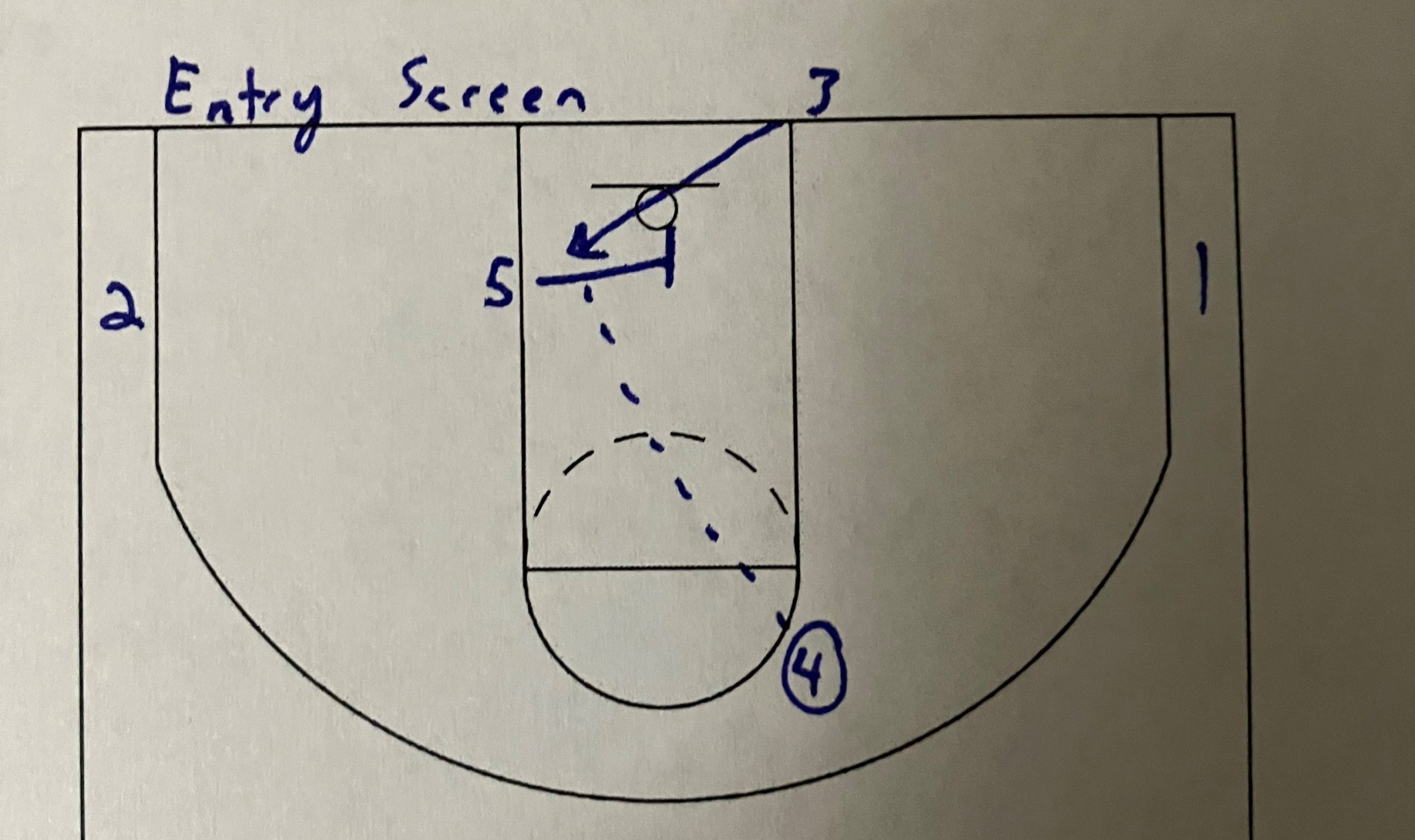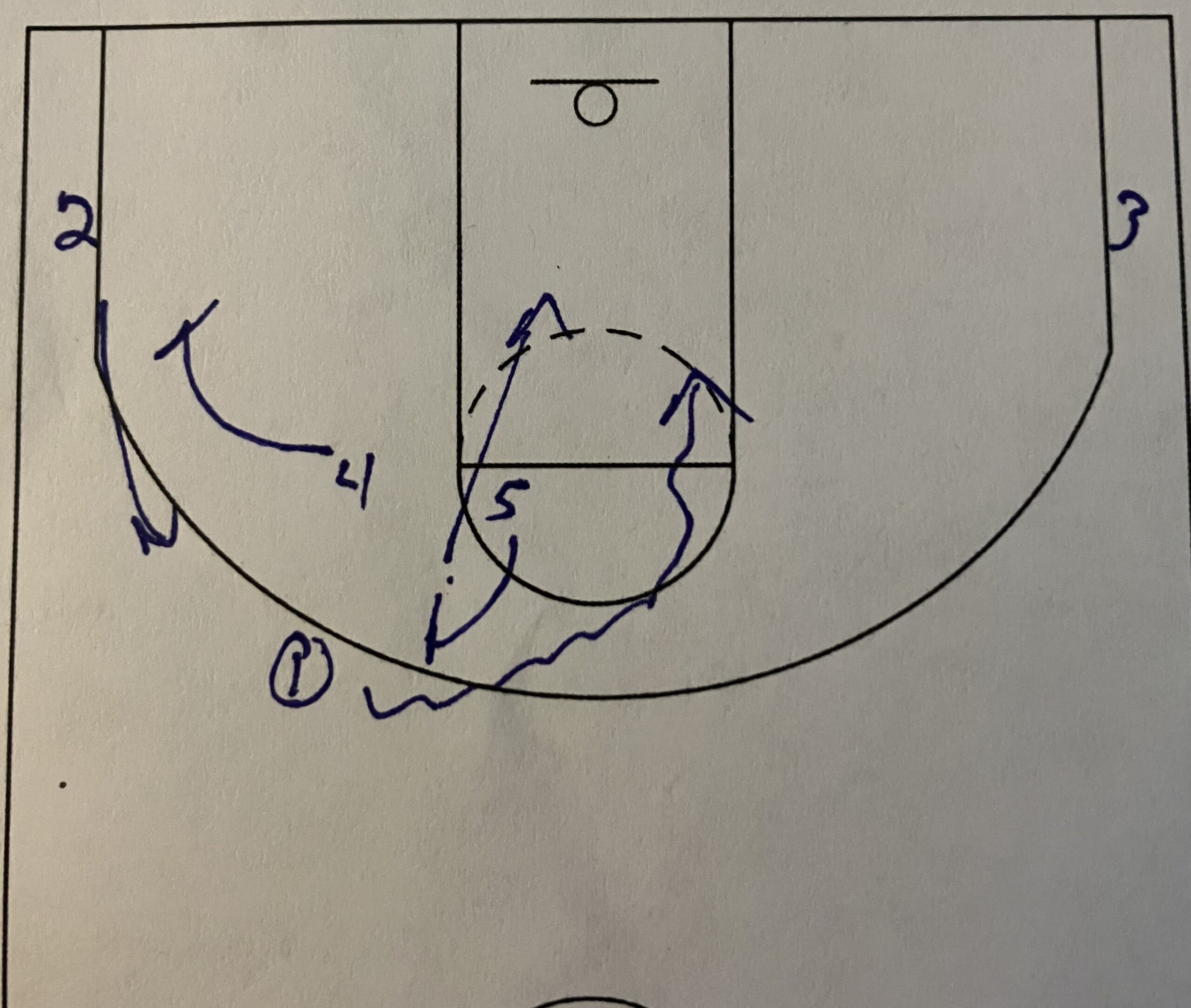
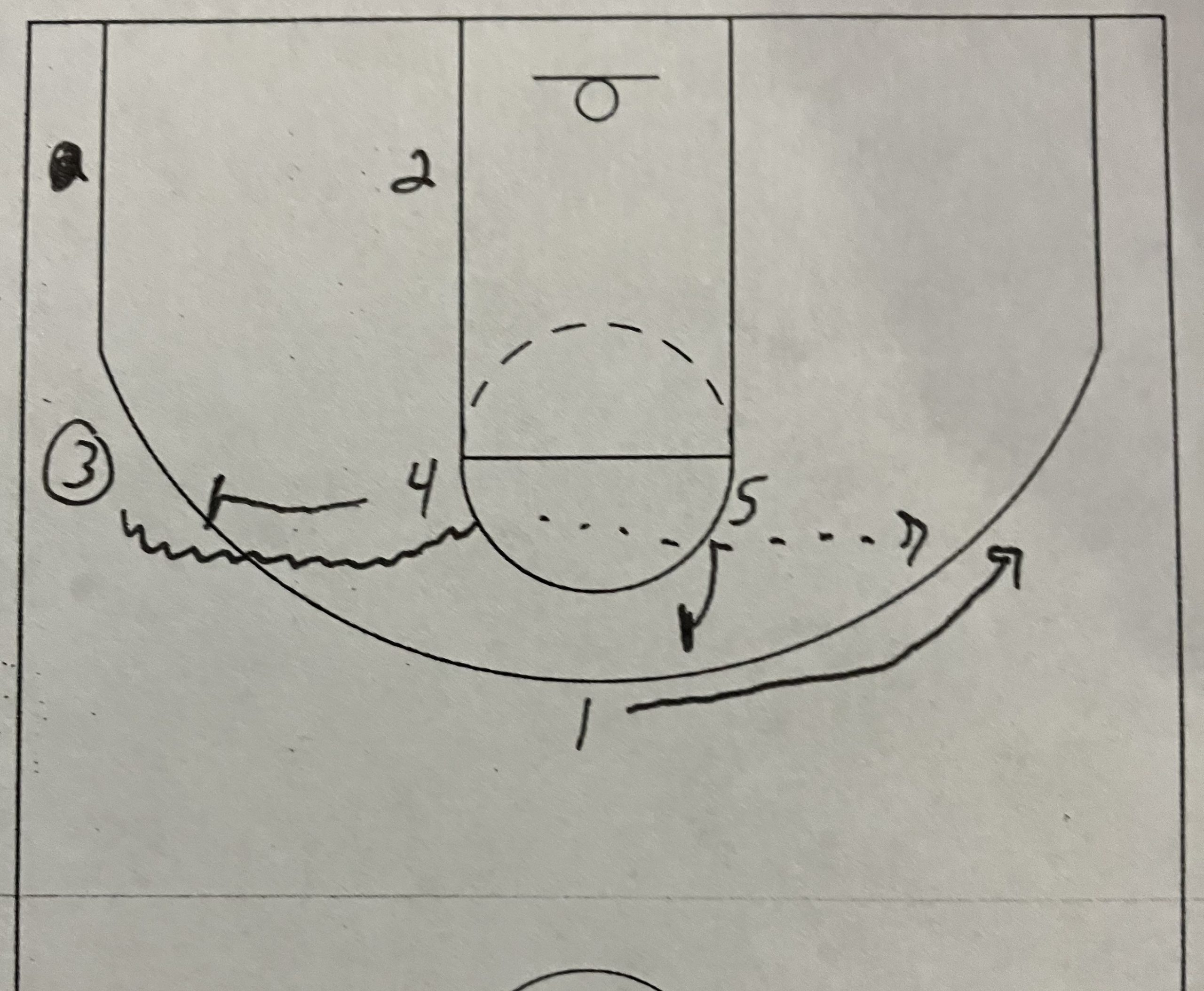
Sometimes a good action can be used numerous times a game. I really like this ball screen with a flare screen combination action. So, in trying to design some quick hitter or ATO plays for the action, I saw a couple of different entries into the movement. The multiple entries allows a team to keep running basically the same play but the defense is seeing different movements even though the end result is the same. This keeps the defense from knowing exactly what is coming.
The Quick Hitter(ATO) #36 is using an Iverson cut to get everybody in the right spots. By changing the entry pass and first cut, this ATO looks like a different play. But after the entry pass and 1st cut, the players are in the same positions although they are not in the same spots. This slight change gives the offense the chance to have multiple players using the action. Again slight changes to keep the defense from knowing what is coming.
Instead of using an Iverson cut, I have started this ATO with a backside UCLA cut. This gives the offense a chance to get an easy layup from the backside cut. More importantly it gets every player on the offense on the same side as the ball. This clears the backside area to allow the flare screen to be more dangerous. This puts the point’s(1) defender on an island as you will see. The offense then reads this defender and attacks the open area they do not cover.
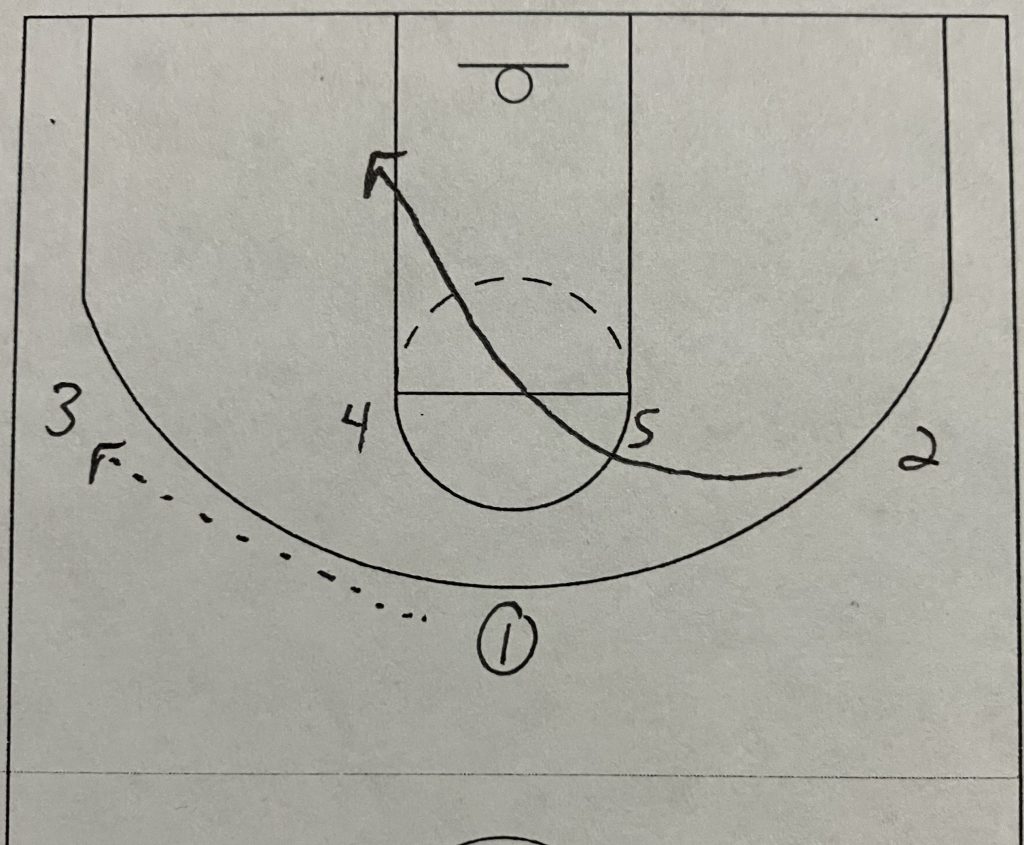
This play can be run to either side. If you would want your guard(2) to be in control of the ball and coming off of the ball screen then just flip everything.
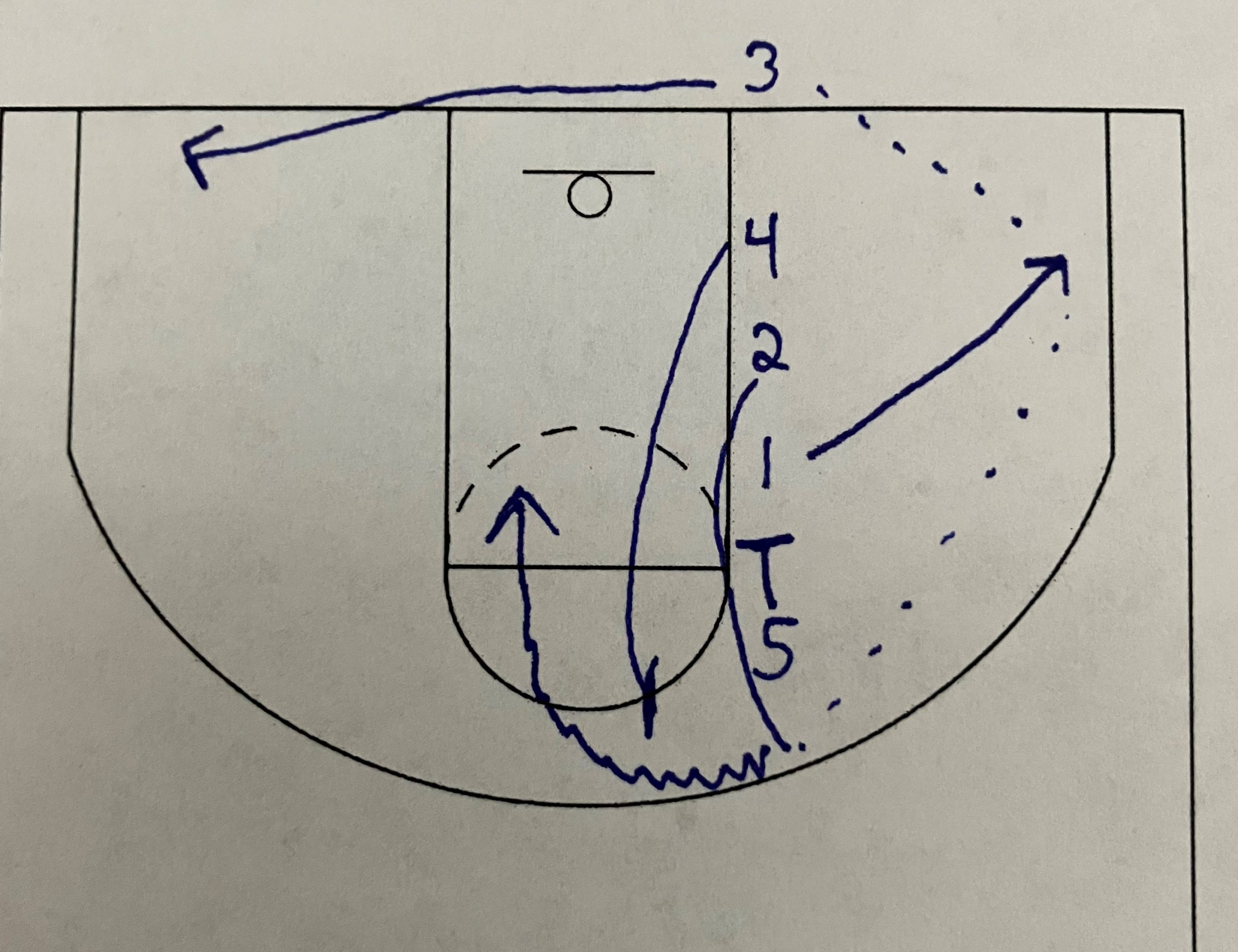
In the diagram above, the point(1) enters the ball to the forward(3). The guard(2) on the backside wing makes an UCLA cut to the basket. This does 2 things. First, it clears the backside of the court. This overloads the ballside. As the offense attacks, the backside is clear to get a player open away from the ball. Second, it can produce a rub screen and get the guard(2) open for an easy basket right under the rim. Sometimes the easy options can be the most effective.
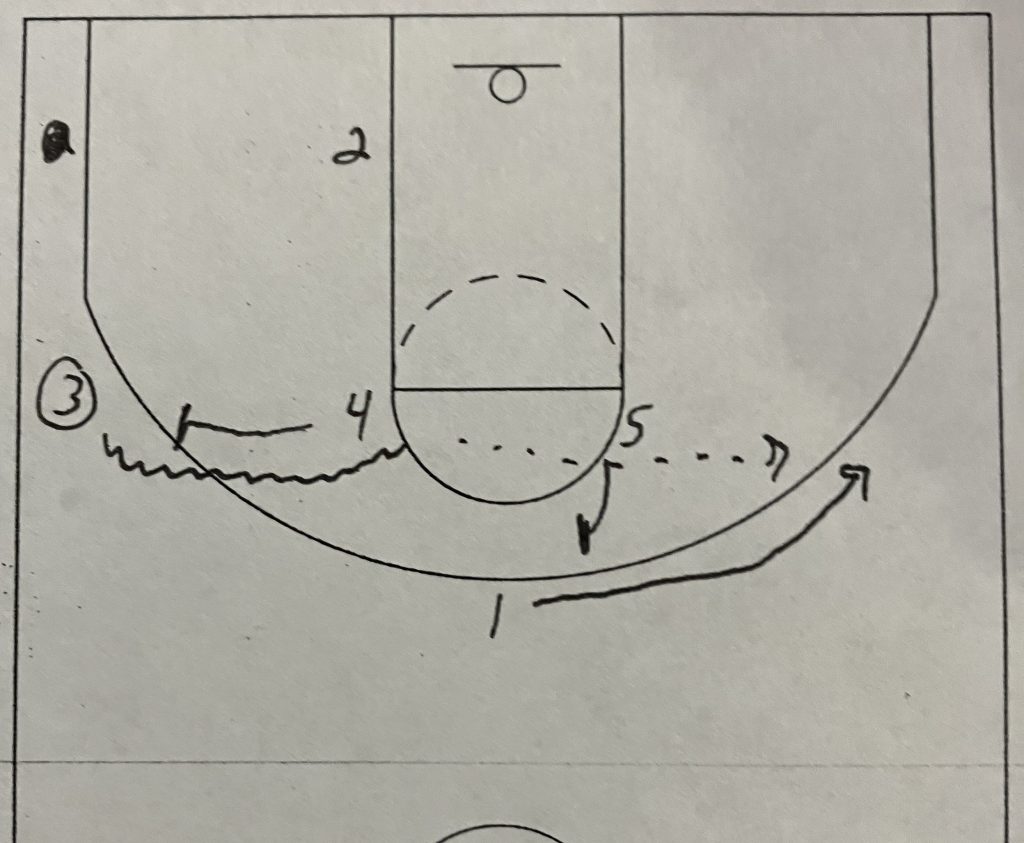
The movement of the play is a double action. On ballside, the big(4) is stepping out to a ball screen. The forward(3) is coming off of the ball screen and looking to attack and score. The lane could be wide open depending on how the defense is guarding the backside action.
The backside is a flare screen for the point(1). The guard(2) clears out the backside with the initial cut and that gives this flare screen all the space it needs to work. This puts the defense in a decision. If the backside defenders of the point(1) and center(5) help the ball screen, then that leaves the backside wide open for a kick out to either the center(5) or more likely the point(1) coming off of the flare screen. This gives the point(1) a chance for a wide open 3.
If the backside defenders stay out on the flare screen, then the forward(3) and big(4) have a wide open lane for the pick and roll. The defense either helps the ball screen and leaves the backside wide open. If the defense stays out on the flare screen, then the lane is wide open for the pick and roll to work.
The offense reads how the defense guards the multiple actions and attacks the open space. This gives a simple offensive execution but puts a ton of pressure on the defense on how to defend the action.