A good team is going to have multiple BLOB plays that are simple and others more complex. A BLOB play can have a lot of movement without ever having chances to score. Just because a play is complex does not necessarily mean it is a good play. BLOB plays with a lot of movement need to also have multiple scoring options to be a good play.
This BLOB play accomplishes having a lot of movement but also having scoring chances with each action. One action flows straight into the next scoring action so the defense never has a chance to reset. As soon as the defense makes a mistake, the offense will have a scoring option for the breakdown the defense has.
This is definitely a play to add to your playbook. Some BLOB plays can only be used a few times a game. This BLOB has multiple scoring options with multiple actions so it can be ran many times in the same game and still give the offense scoring options each time.
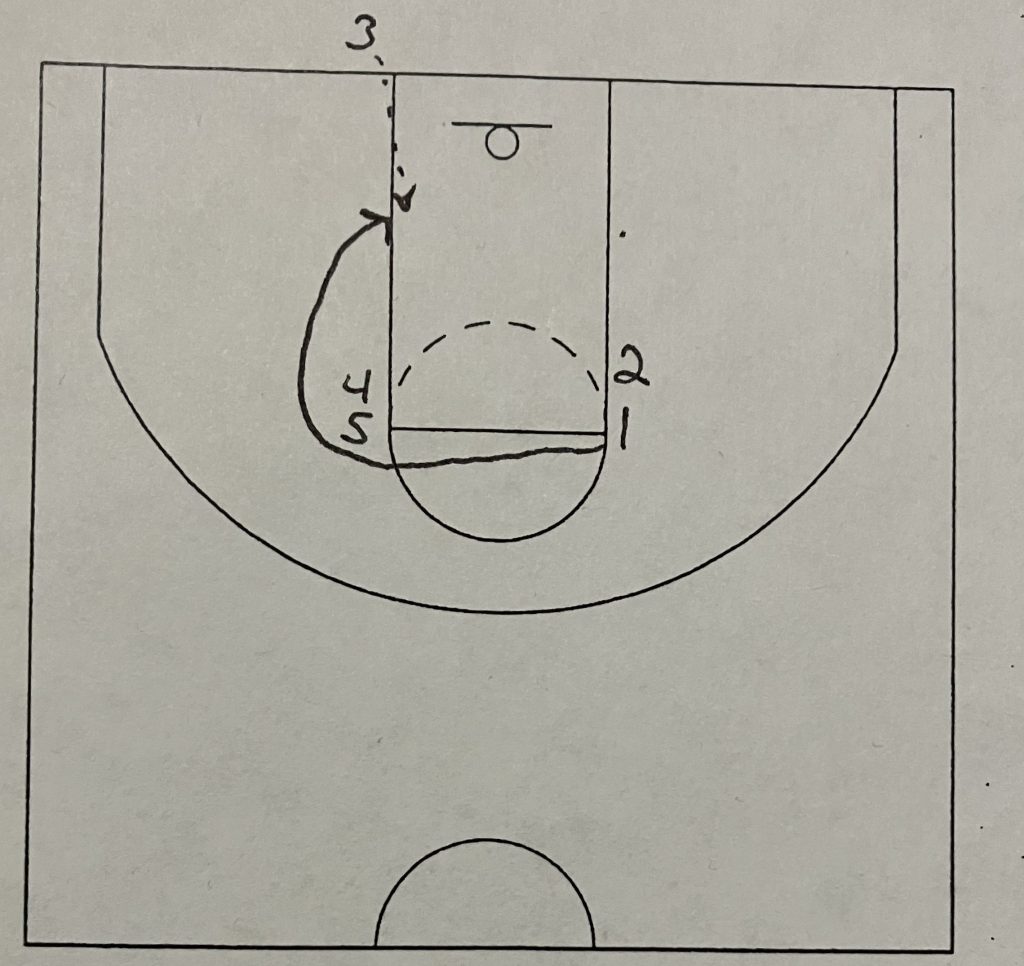
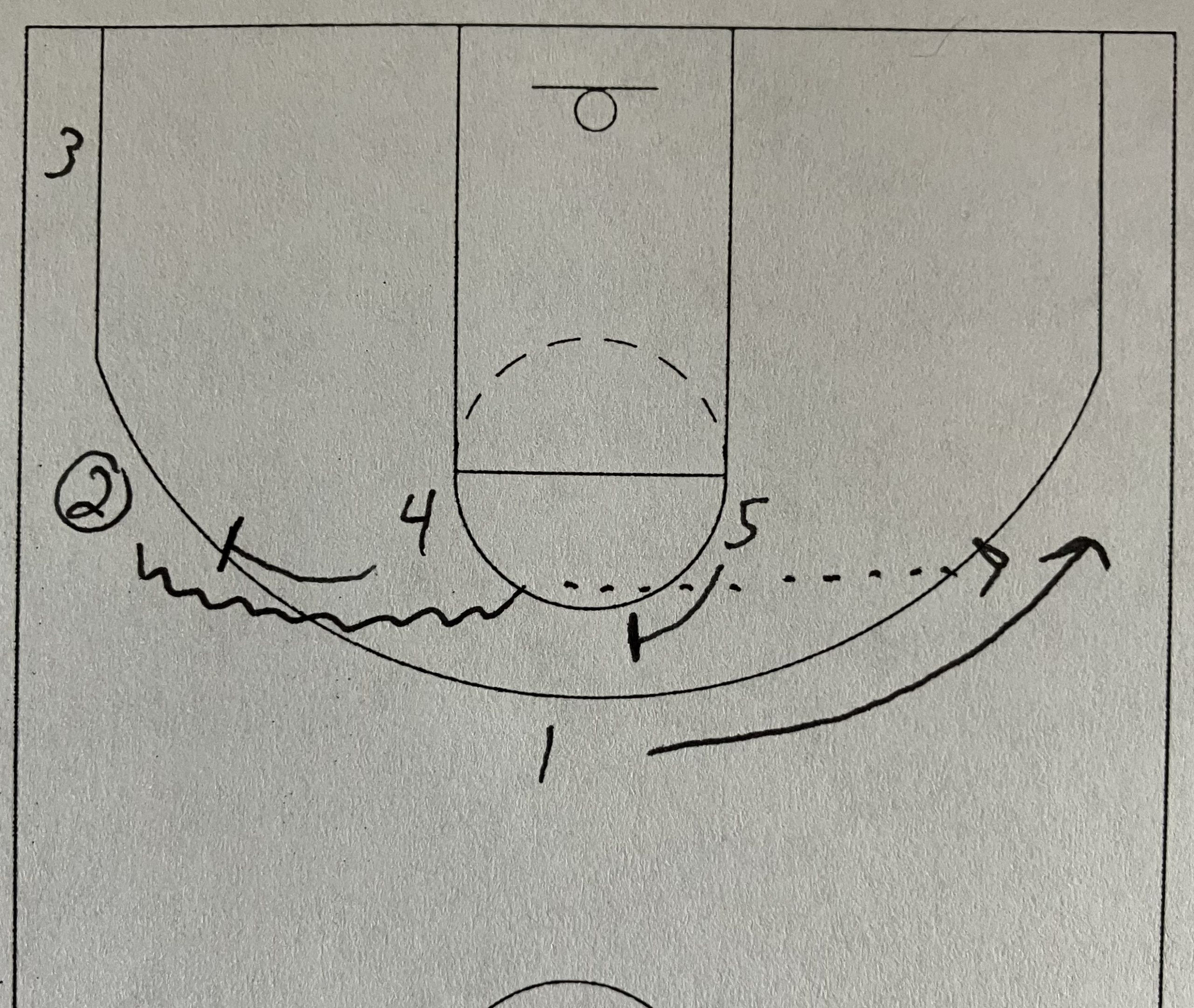
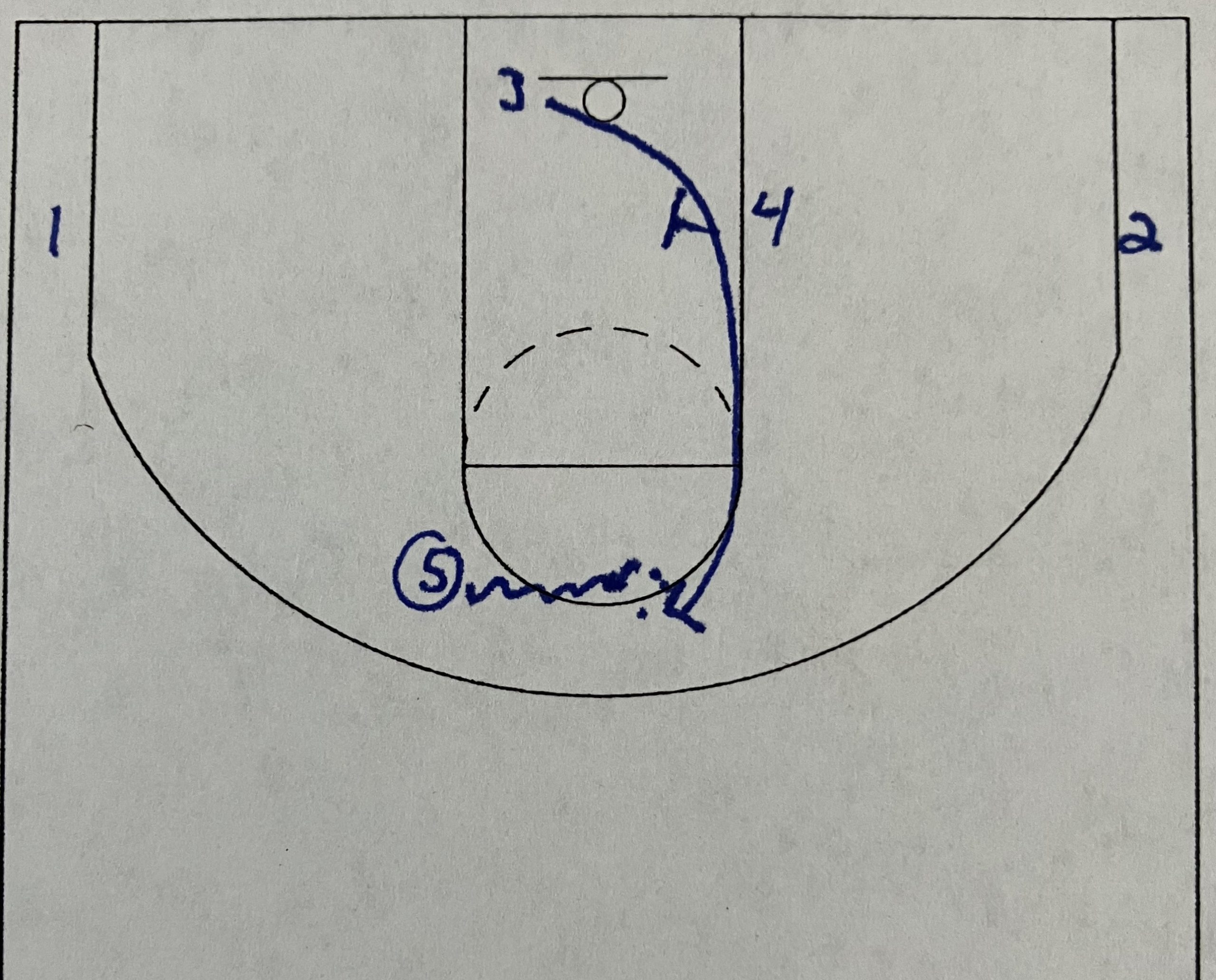
This BLOB starts in a double high stack with the post players on the ballside elbow and the guards on the backside elbow. The big(4) and center(5) are going to be screeners trying to get the other 3 players open. The point(1) and guard(2) will be using the 2 post players to get open and get an entry pass.
The initial scoring option is the point(1) curling around the double screen. The point(1) is coming around the double screen and looking for an opening right in front of the forward(3). If the point(1) comes open, then it is an entry pass and layup. This is the initial scoring option. If the point(1) defender is chasing then the point(1) should be open curling around the double.
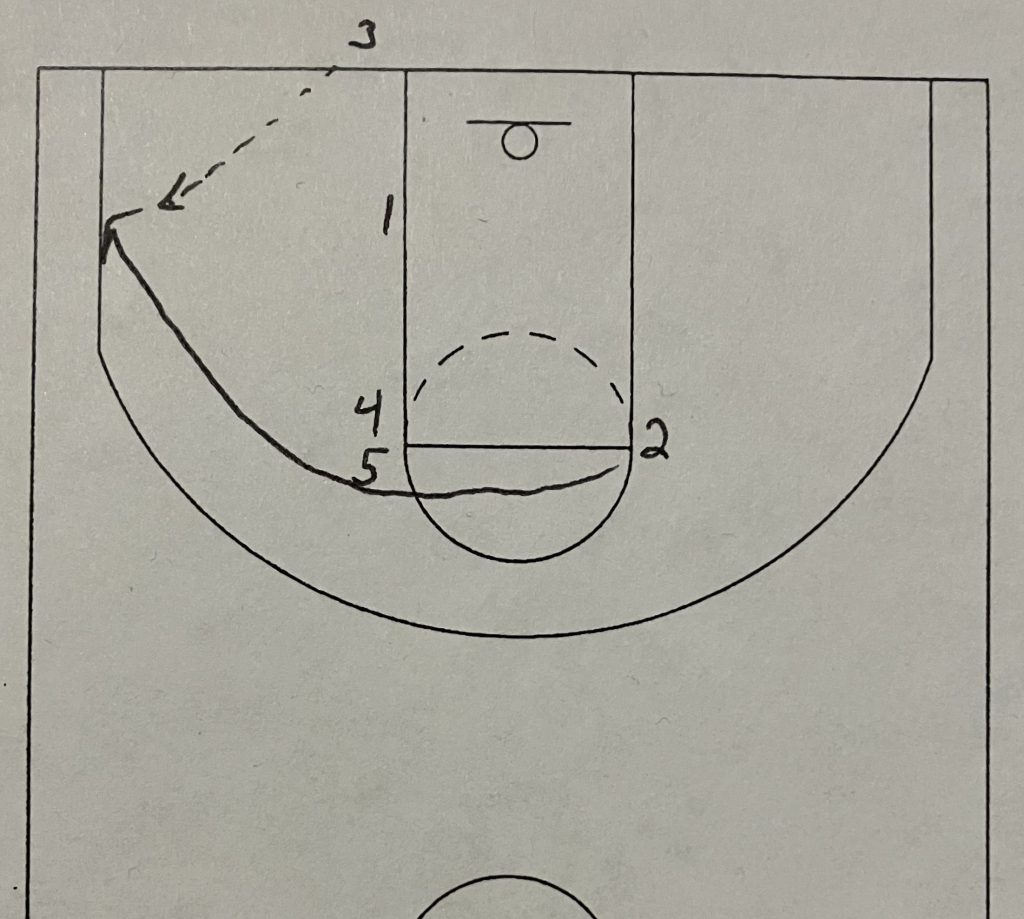
The 2nd option to score is the guard(2) following the point(1) around the double screen. As the point(1) curls around to the block, the guard(2) is following to the corner. If the defense stays in the lane then the corner will be open. The guard(2) is cutting around the double screen and filling the open space.
The guard(2) coming off of the double to the corner has the option to catch and shoot the entry pass. The guard(2) should be a good shooter. If the defense stays in the lane, then the guard(2) has a chance for a shot. If the defense is able to defend the corner, then the lane is more open for the next action.
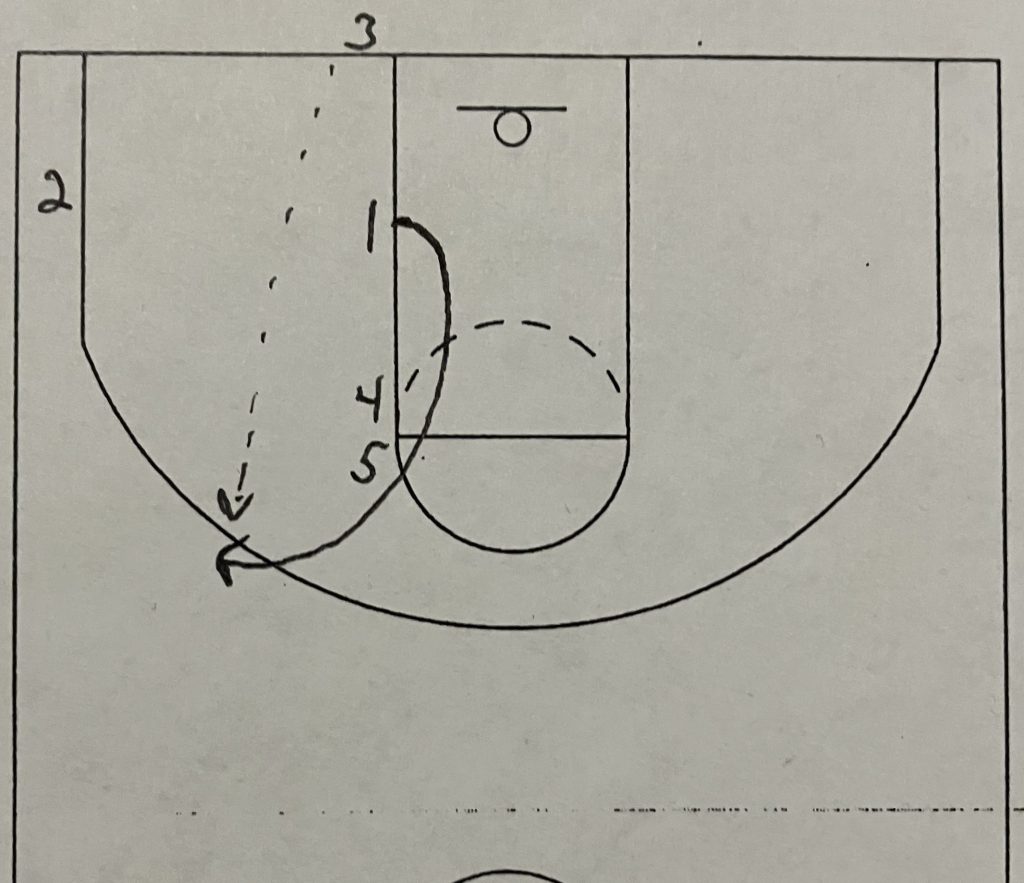
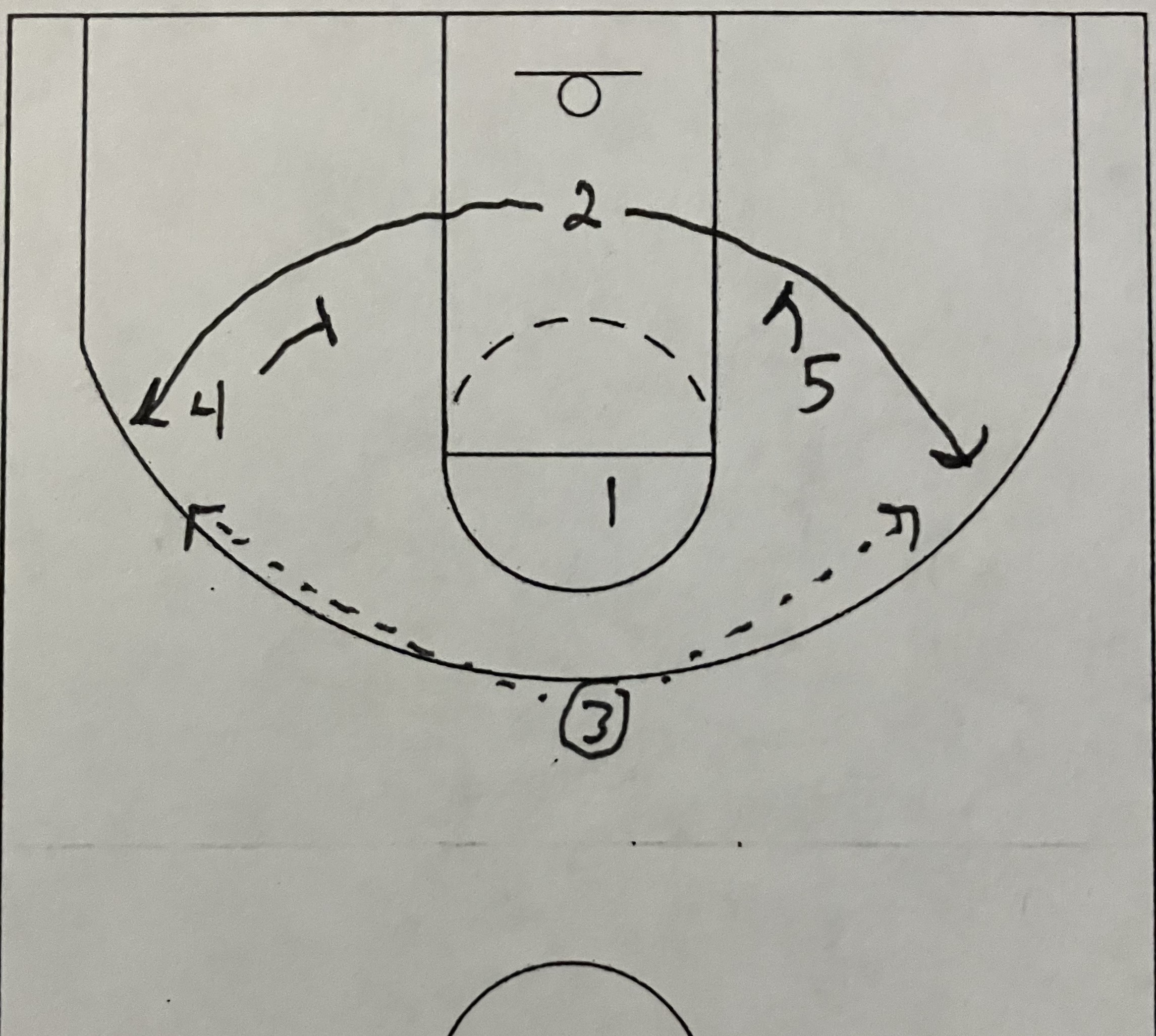
The point(1) continues their curl cut back through the lane and circles back around to the slot for the inbounds pass. This is the circle cut by the point(1) to start the play. The inbounds pass needs to get to the point(1) in the slot by any means necessary. This could be a direct pass by the forward(3) as shown. Or it can be a pass to the guard(2) and a 2nd pass to the point(1).
The point(1) has the chance for a catch and shoot if their defender gets lost during the circle cut. A defender may do a good job guarding the initial curl cut but then relaxes. The point(1) can continue on the circle cut with their defender staying in the lane and not rushing back around the double screen for the 2nd time. This can leave the point(1) wide open for a catch and shoot.
Again this BLOB has chances for open shots throughout the entire play. While this catch and shoot is not necessarily something the play is designed to get, there is a chance for the point(1) to be wide open on the circle cut. The point(1) needs to be aware they have a chance for a shot if they are working on getting rid of their defender on the circle cut.
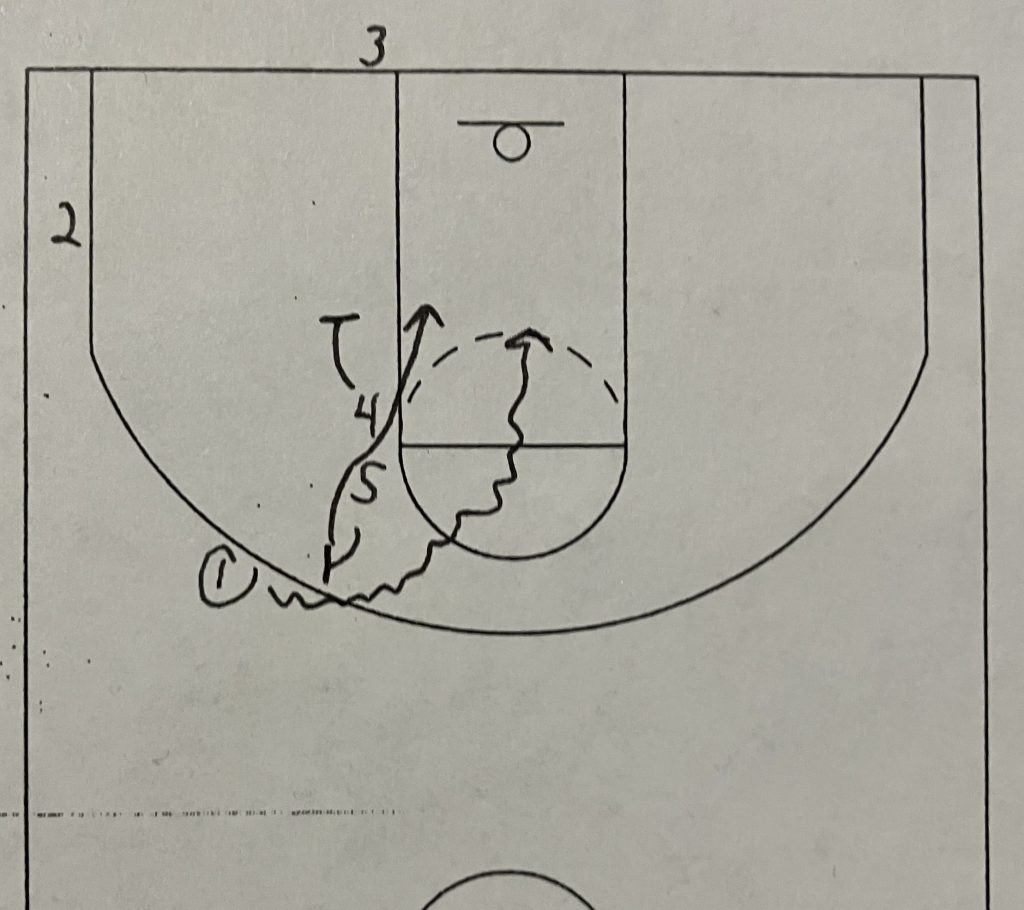
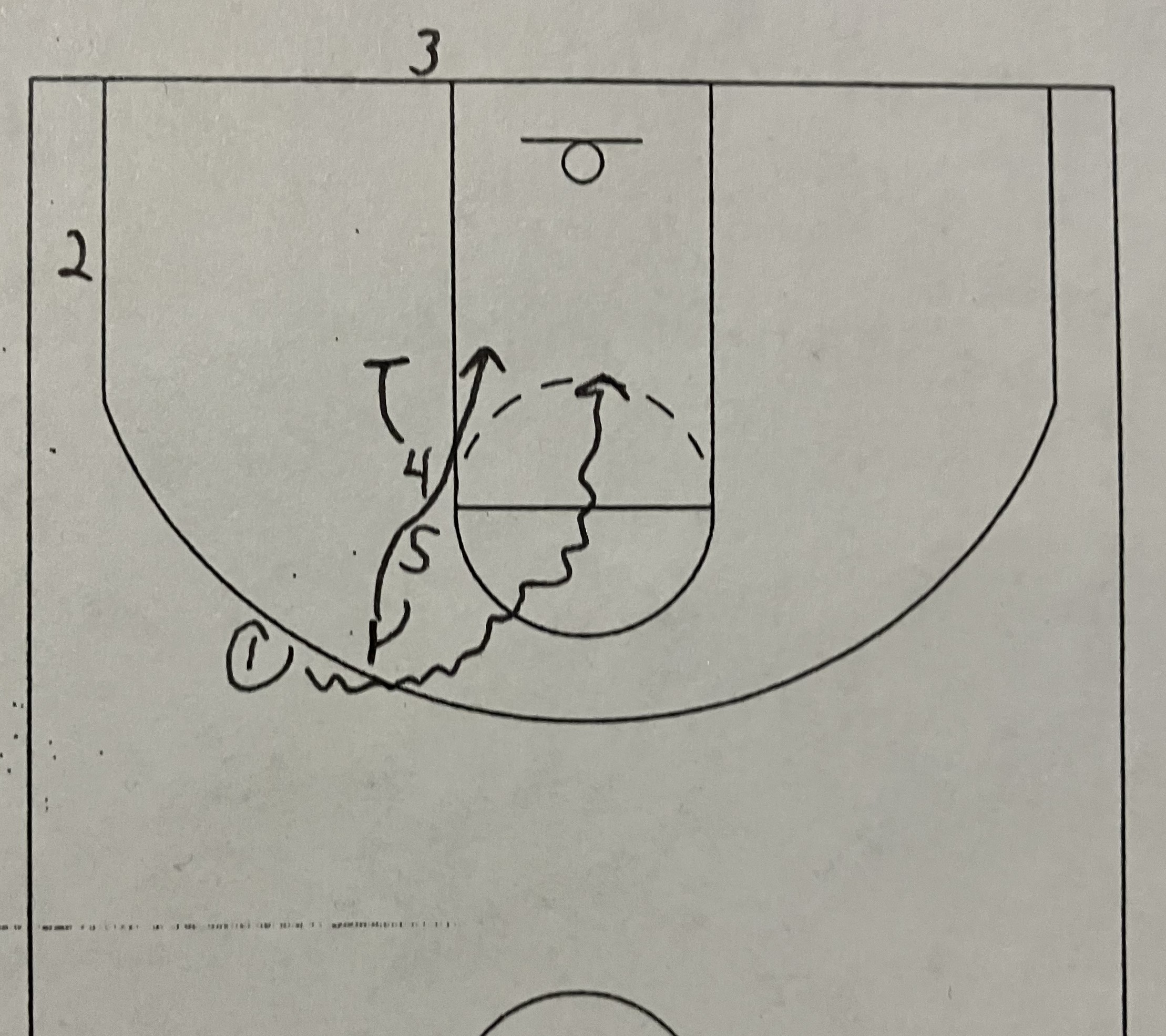
On the catch by the point(1), the top post player in the stack is setting a ball screen. In the diagram, this is the center(5). The entire right side of the floor is empty. This gives the point(1) all the space they need to create any shot they want.
The center(5) is rolling to the basket. This roll is probably not going to be open but it could. The amount of bodies around the ball side block with the forward(3), big(4), center(5) and their 3 defenders are going to create just a mass of people that a pass is not going to get through very often if at all. The roll by the center(5) is still important.
The point(1) has the freedom to attack and create any shot they want. This is where, as a coach, you give the player the freedom to play the game without restriction. The point(1) can do what they want. Hopefully, they have been coached on what is a good shot and what is a bad shot. As long as the point(1) is not taking bad shots, then the coach has to be ok with the playmaking ability of the point(1).
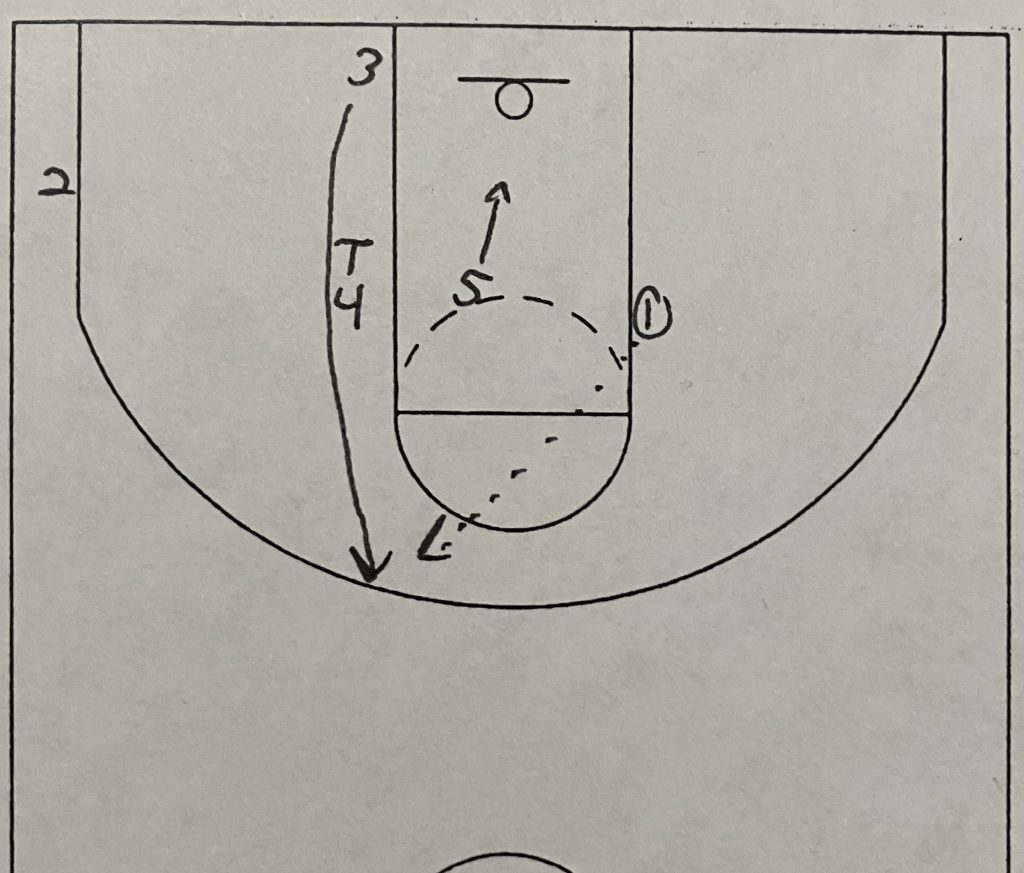
This last action is why the role by the center(5) on the pick and roll is so important. As the point(1) is attacking on the right side of the floor, the forward(3) is running an up cut with a screen by the big(4) to get them more open. The forward(3) defender has to decide whether to stay with the forward(3) and leave the basket area or stay near the basket to help with the pick and roll.
If the defender stays with the forward(3), then the point(1) and center(5) have more open space near the basket. If the defender stays near the basket, then the point(1) can stop and pass out to the forward(3) for an open 3. The defense has to decide what they are going to try and take away. The point(1) can read the defense and put the ball in the spot the defense leaves open.
Final Thoughts
This BLOB has a lot of movement for the defense to defend. There are multiple scoring options throughout the entire play. It puts pressure on the defense to constantly defend. If the defense has any breakdown then the offense will get an open shot.
This is a great play to have in the playbook because there are so many options to score that the defense can not overplay any one action. This BLOB play can be ran many times throughout a game and still have new options each time. This is the type of play that makes it hard on the defense to get a stop.