A good misdirection can really help a play get the defense moving in a direction only to attack from somewhere else. False actions can get a defense worried about a movement only for the original action to be followed by a secondary action that the defense was not ready for. Defenses can struggle when an offense is doing a lot of moving and cutting.
This play looks complicated for the defense because the offense has a lot of moving parts. But the actions are simple so the offense can run it easily. The one read is for the floppy action at the end. It has a lot of movement in the setup to get the defense out of position and chasing. One read is made and the offense should get a shooter coming off of a screen for an open shot.
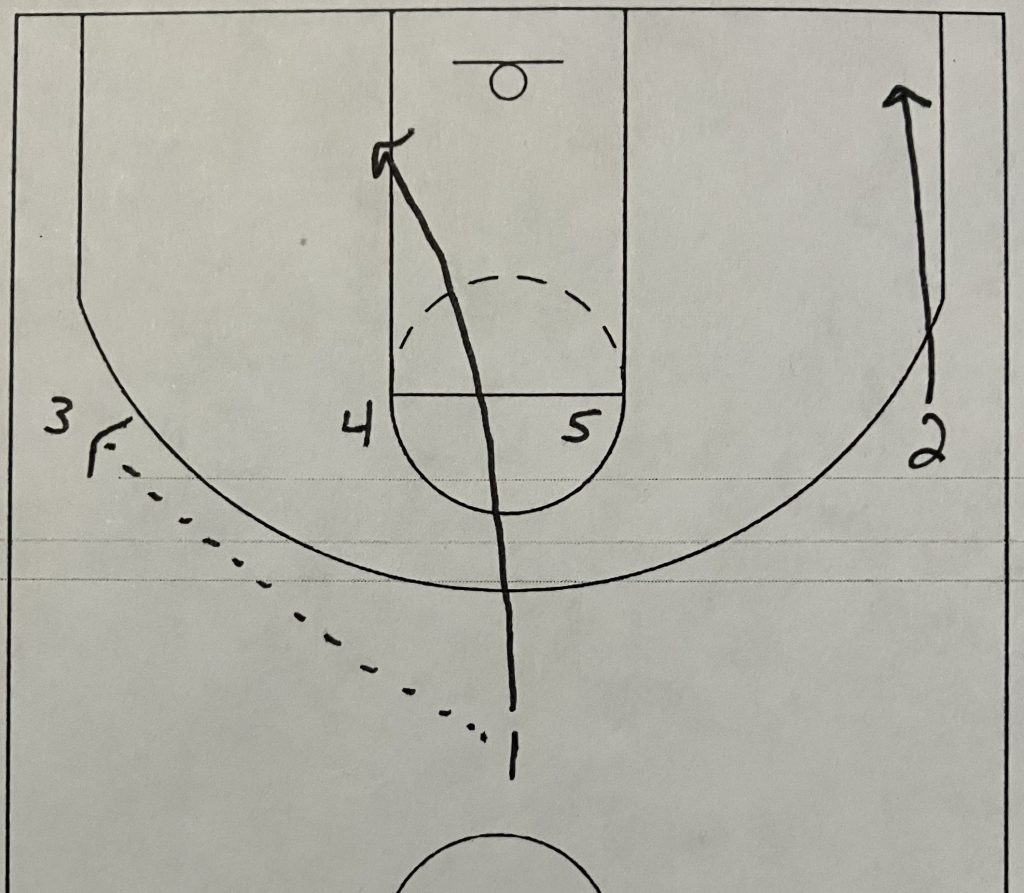
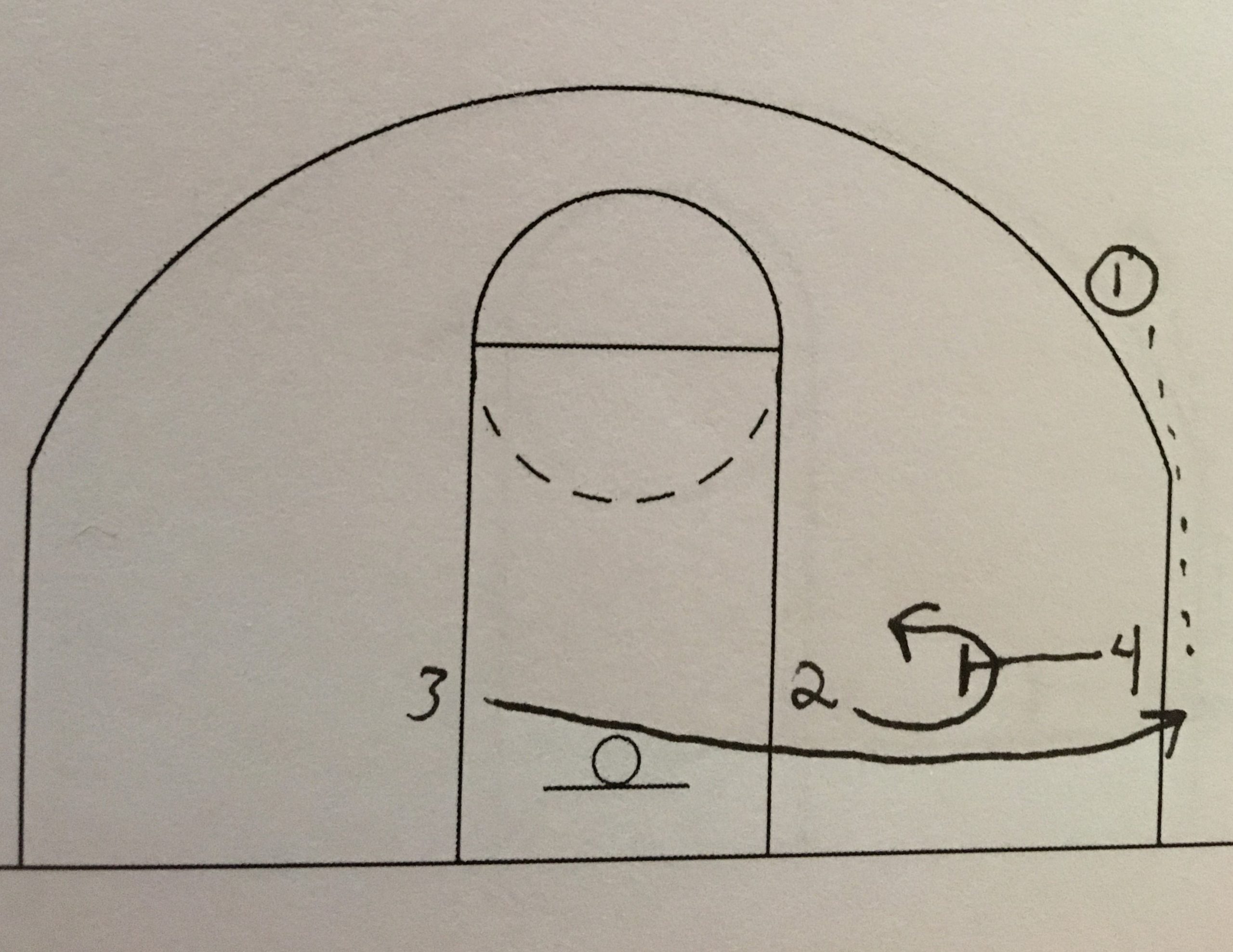
The play starts in a 1-4 High set. The point enters the ball to the wing. This can be to either side. The wing not receiving the entry pass will be the player in the end to get the shot so this should determine which side the pass is entered into. For this diagram, the point(1) passes to the forward(3) and smash cuts to the block.
As the smash cut is happening, the guard(2) walks down to get a better angle on the first cut and screen. This also helps the center(5) to get into the best position right off the initial screen for the last floppy screen to spring the guard(2) open at the end.
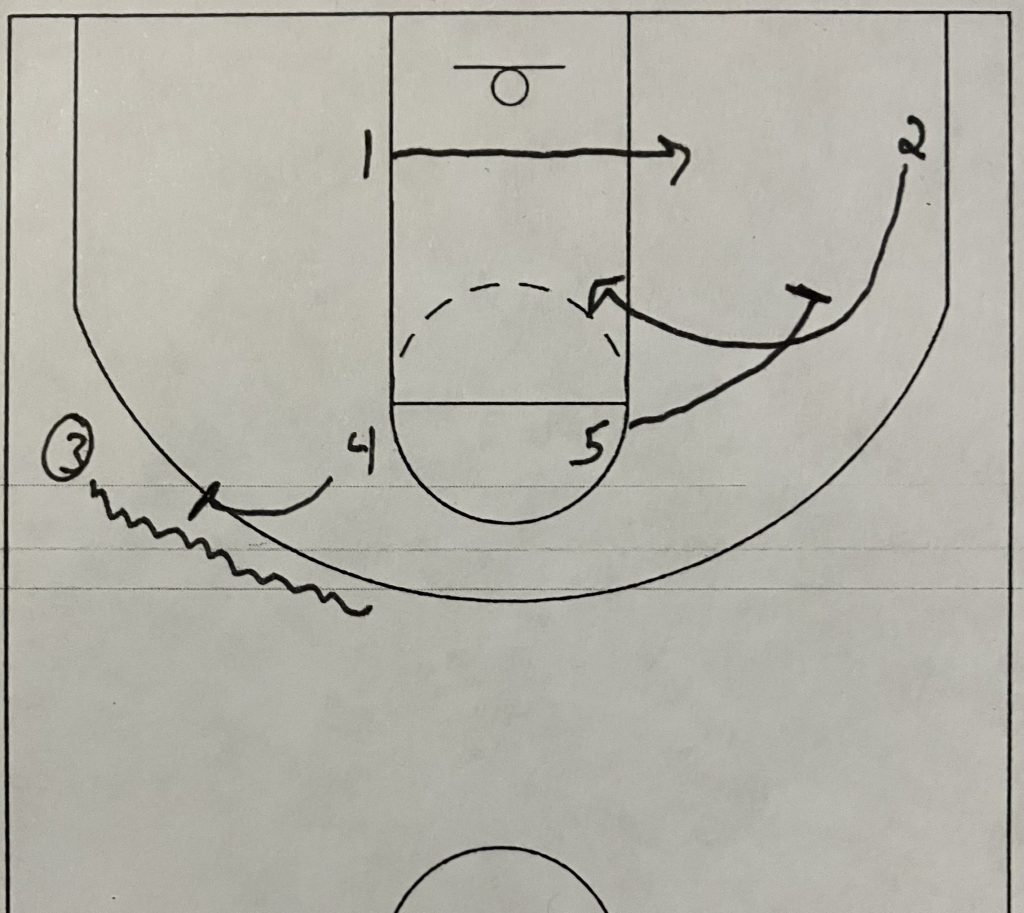
The 2nd and 3rd actions is getting the defense moving to setup the final action. Movements are going on both sides of the floor making it harder for the defense to overplay any 1 action. This gives the offense a chance to get something easy before the floppy action at the end. Help side defense is going to be much harder because of the backside actions.
The frontside action is the big(4) setting a ball screen for the forward(3). This gives a chance for a pick and roll to score the ball before anything else happens. The big(4) on the roll could be open because there is no help side defense because of the backside actions.
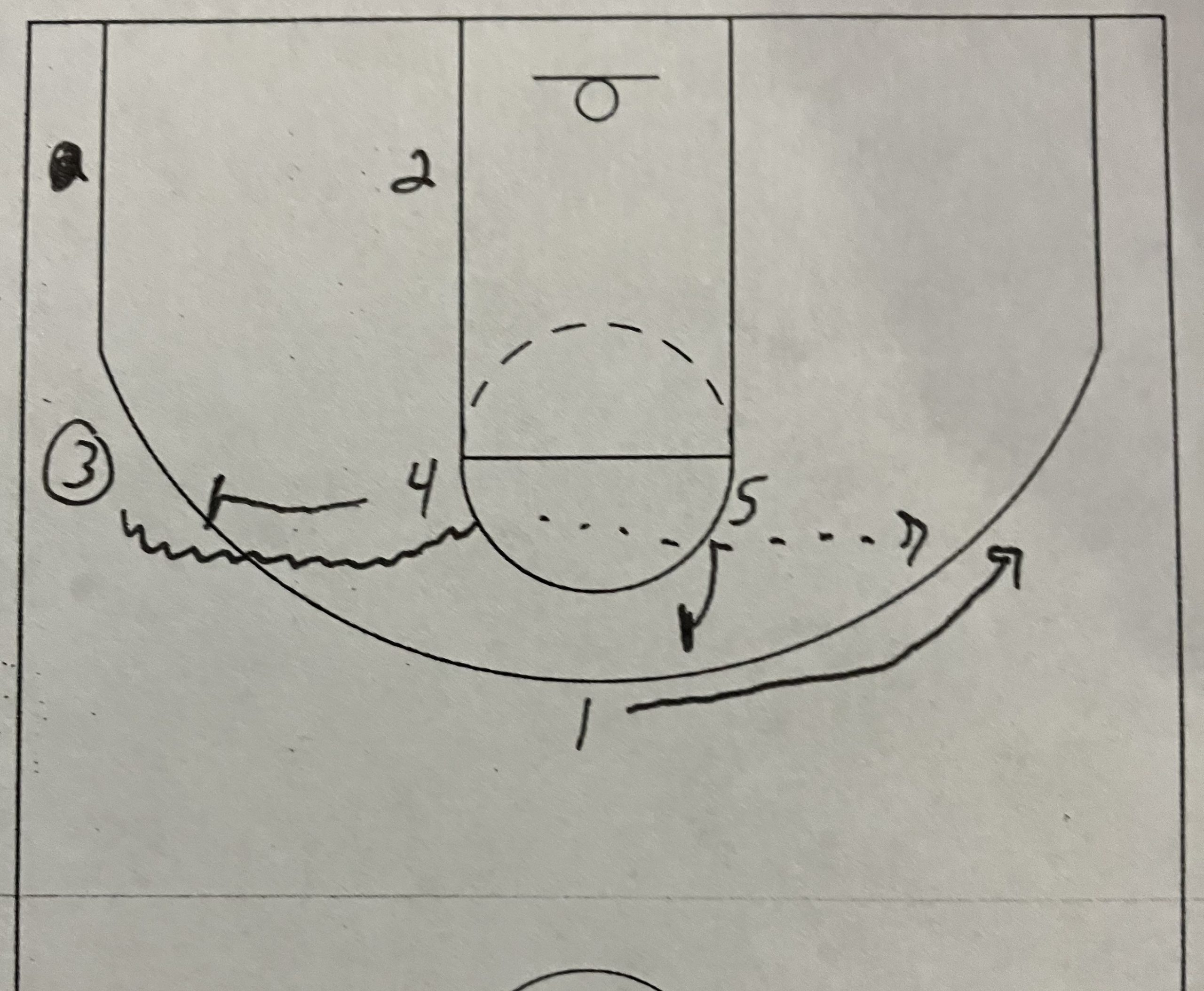
The 1st backside action is a curl cut by the guard(2) coming off of the screen by the center(5). As the guard(2) is moving around the screen the point(1) is moving across the lane because they are going to be following the guard’s(2) curl cut.
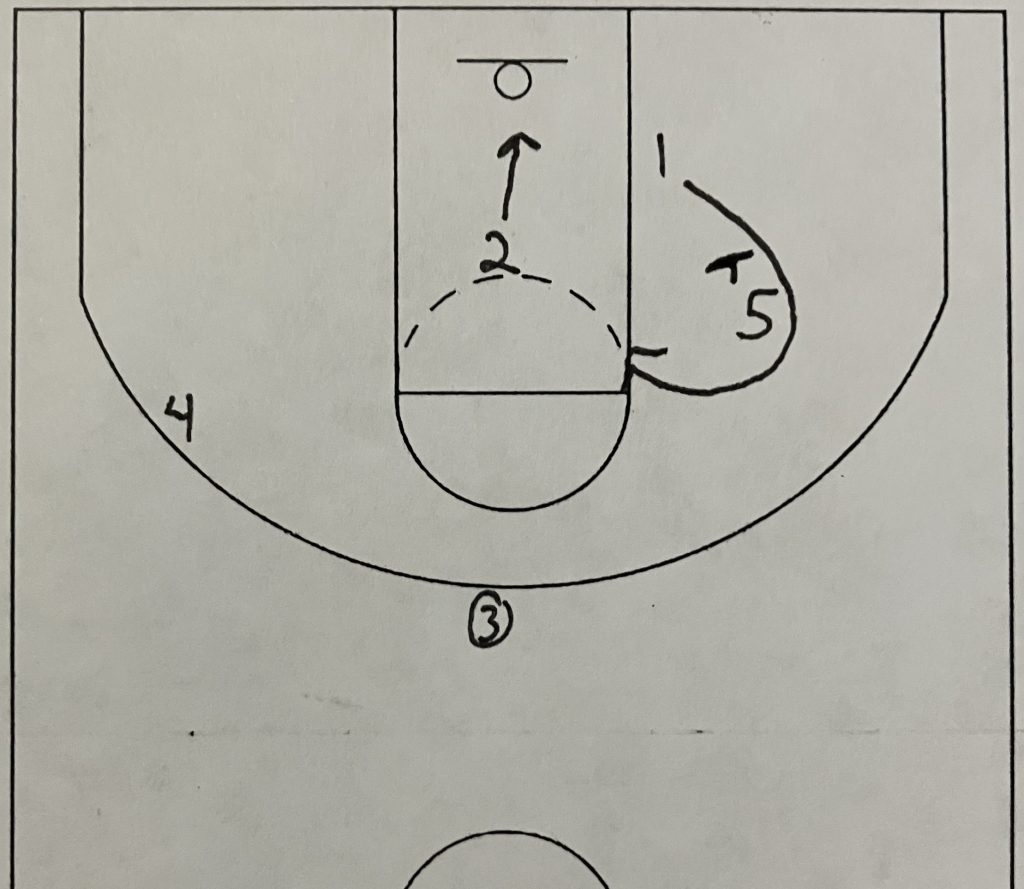
As the guard(2) clears the curl cut, they are stopping in the middle of the lane to read their defender. This read is what decides which way the guard(2) is going on the floppy action.
As the guard(2) clears, the point(1) is following right behind and doing their own curl cut around the center(5) screen. The defenders for the center(5) and point(1) are worrying about the curl cut which does not allow them to help on the floppy action. This frees up the outside area so the guard(2) will be open coming off the final screen.
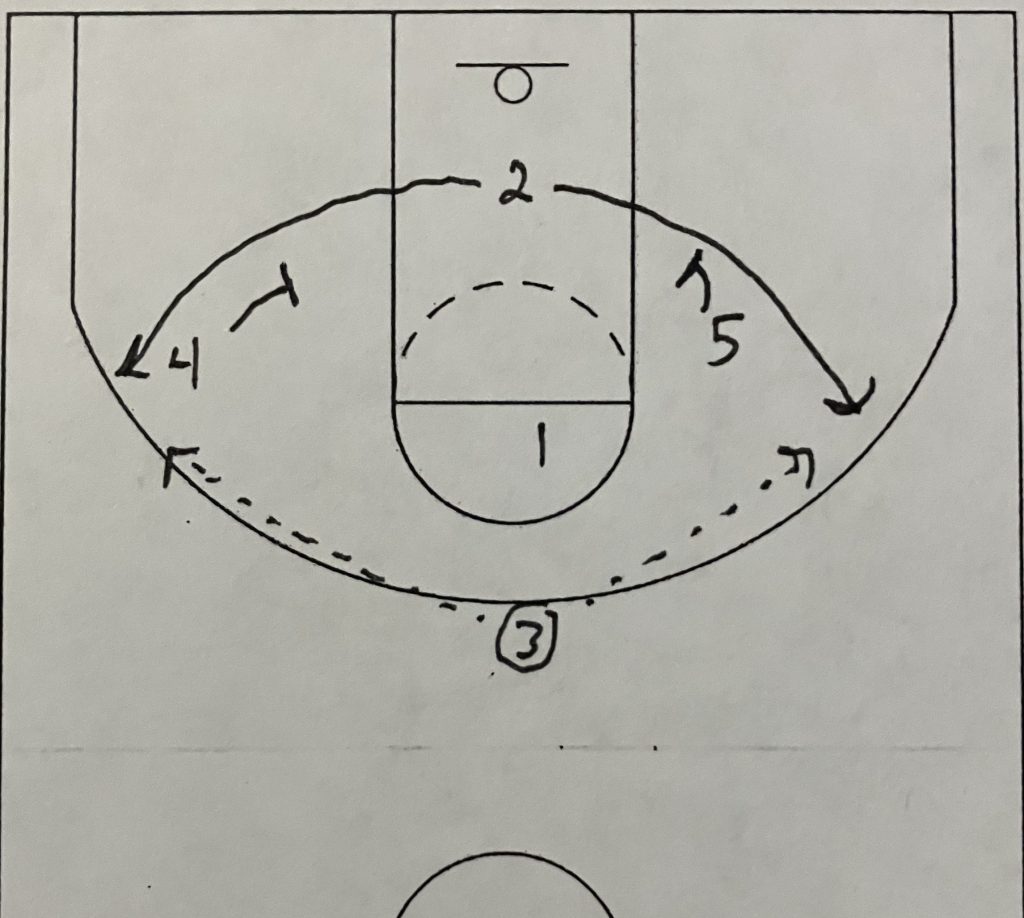
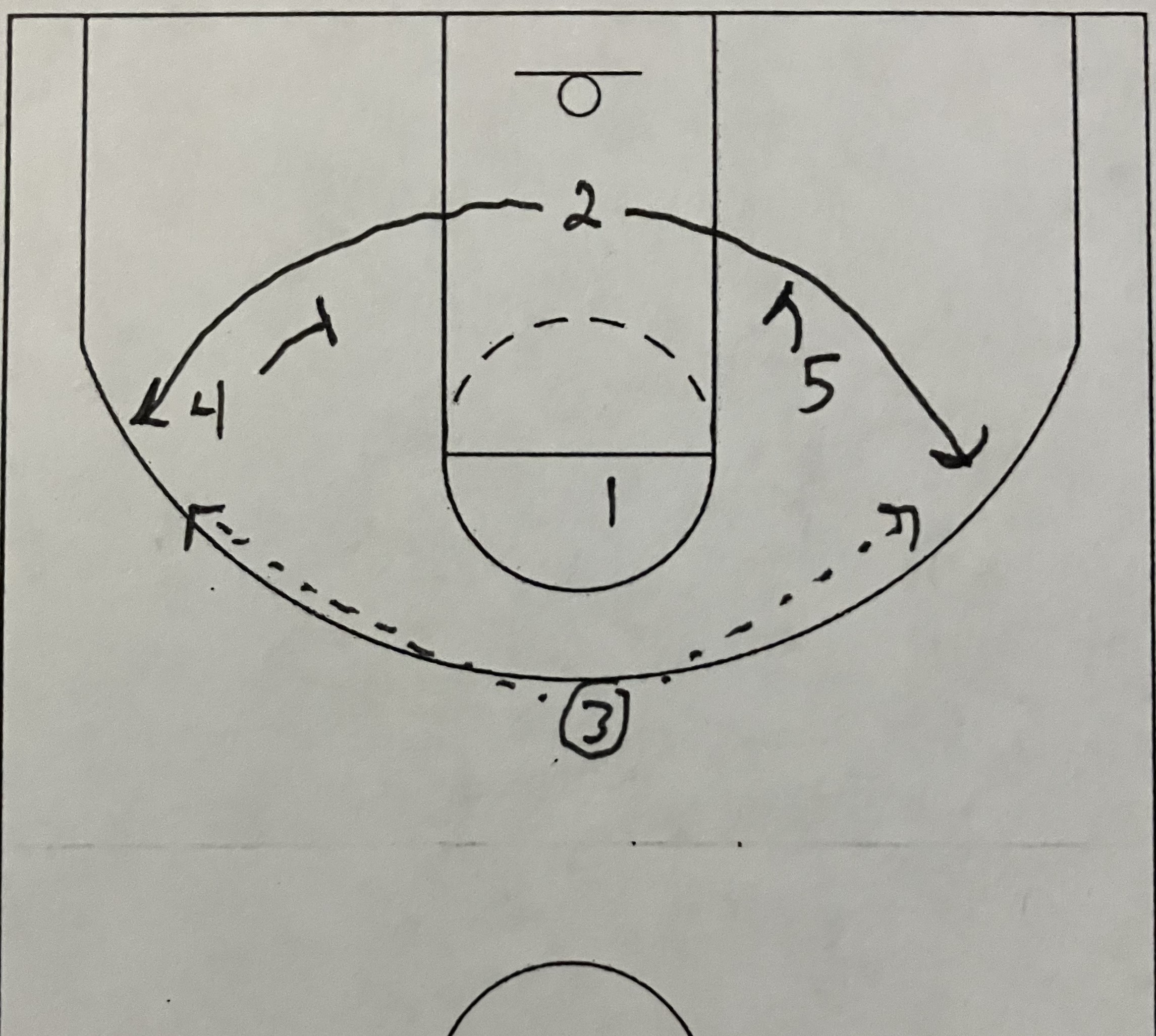
As the point(1) is coming around the center(5) on the curl cut, the guard(2) is reading their defender to decide which side to use the floppy screen. The big(4) and center(5) are both set up on either side and the guard(2) gets to choose whether to follow the point(1) back around the center(5) or go out the other side using the big(4) as a screener.
The guard(2) is reading their defender. If the defender is chasing around the center(5) screen then the guard(2) should go out to the big(4) side. If their defender goes around the screen and meets them on the other side of the curl cut, then they should push their defender as far across the lane as possible before coming back off of a 2nd center(5) screen.
The forward(3) is reading the guard(2) and moving to make the best possible pass for the guard(2) to get a catch and shoot. On the shot, the point(1), big(4) and center(5) are in good rebounding positions to get any missed shot.
Good precise offensive movement makes it hard on the defense to defend. A ball screen with 2 curl cuts are all a misdirection to get a floppy set up and give the guard(2) a chance to read their defender and cut to the side of the court to get them as open as they can.
Timing is key with this. Players need to be in sync so each screen and cut has a chance to get open. Rushed actions put the offense into smaller spaces making it easier for the defense to guard. The offense keeping their spacing and allowing each action to have a chance to succeed puts pressure on the defense and keeps the pressure on the defense.
If you are looking for a wrinkle to add to your offensive playbook, then take a serious look at this play. It is simple enough for the offense to execute but complex enough for the defense to struggle against it. A good shooter is going to love this play. The defense will not be able to jump the screens to get them open. The curl cuts give the offense a counter to jumping the screens. When they quit jumping then the shooter will be open at the 3-point line on the floppy action.