
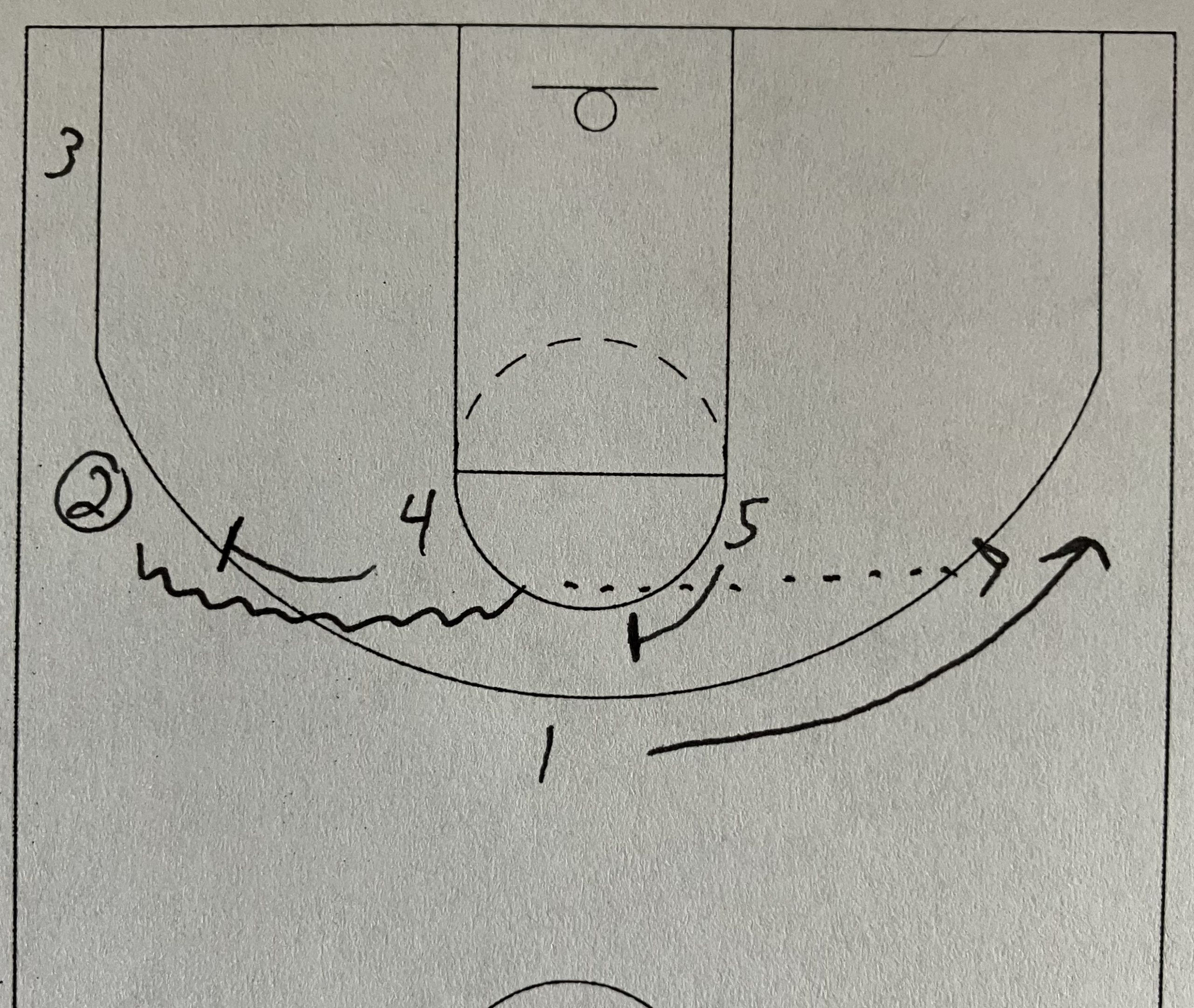
A good shooting point(1) needs chances to play off the ball and get into catch and shoot situations without having to be the player creating their shot or a teammate’s shot. The ability to turn a point(1) into a catch and shoot player during possessions can add another element to an offense that makes it that much harder to defend.
A lot of plays have the point(1) setting up the play and also creating the advantage through their dribble to get an open shot. This puts a lot of focus on the point(1) to be the main offensive player for a team. When the point(1) is a good shooter, some of the creation needs to move to the other guards so the point(1) has a chance to get open without the ball. These openings give the point(1) more chances to be a good shooter and not solely a creator.
This play is simple but attacks quickly. It uses defensive tendencies against the defense. The normal defensive keys are going to put the defense out of position when this play is ran against them. The normal help and rotations are being attacked so the point(1) can get their open shot.
Using the right defensive keys against the defense works well until the defense adjusts to the actions being used. This play should be good for an open shot or two for the point(1) every game.
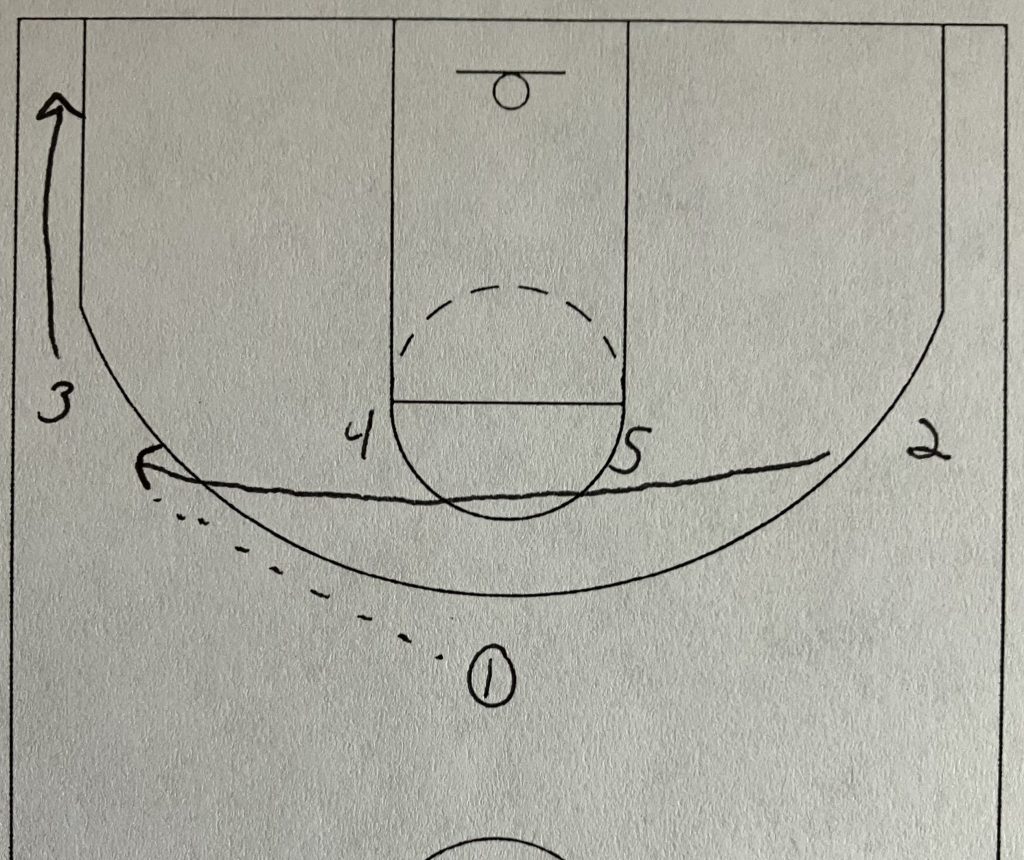
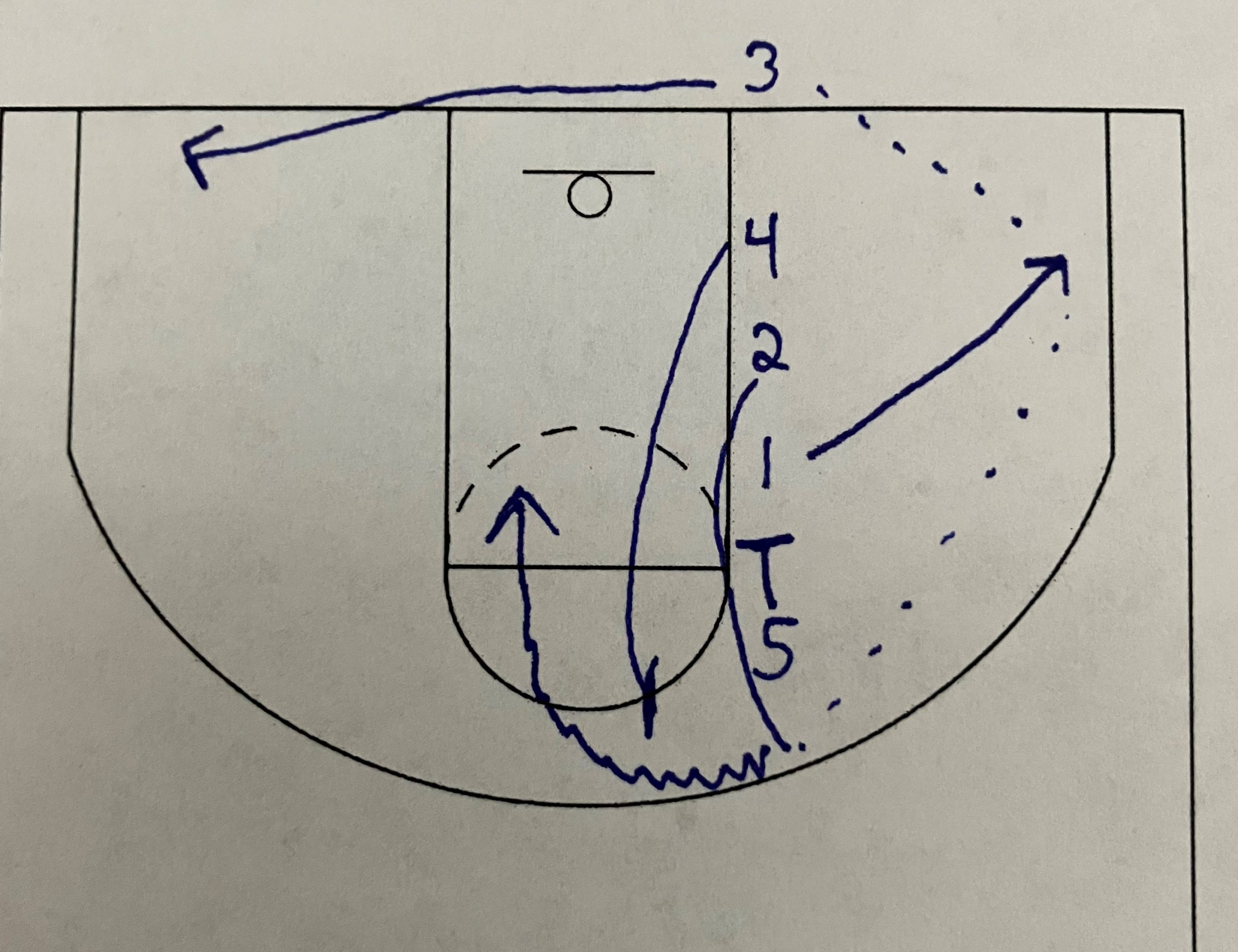
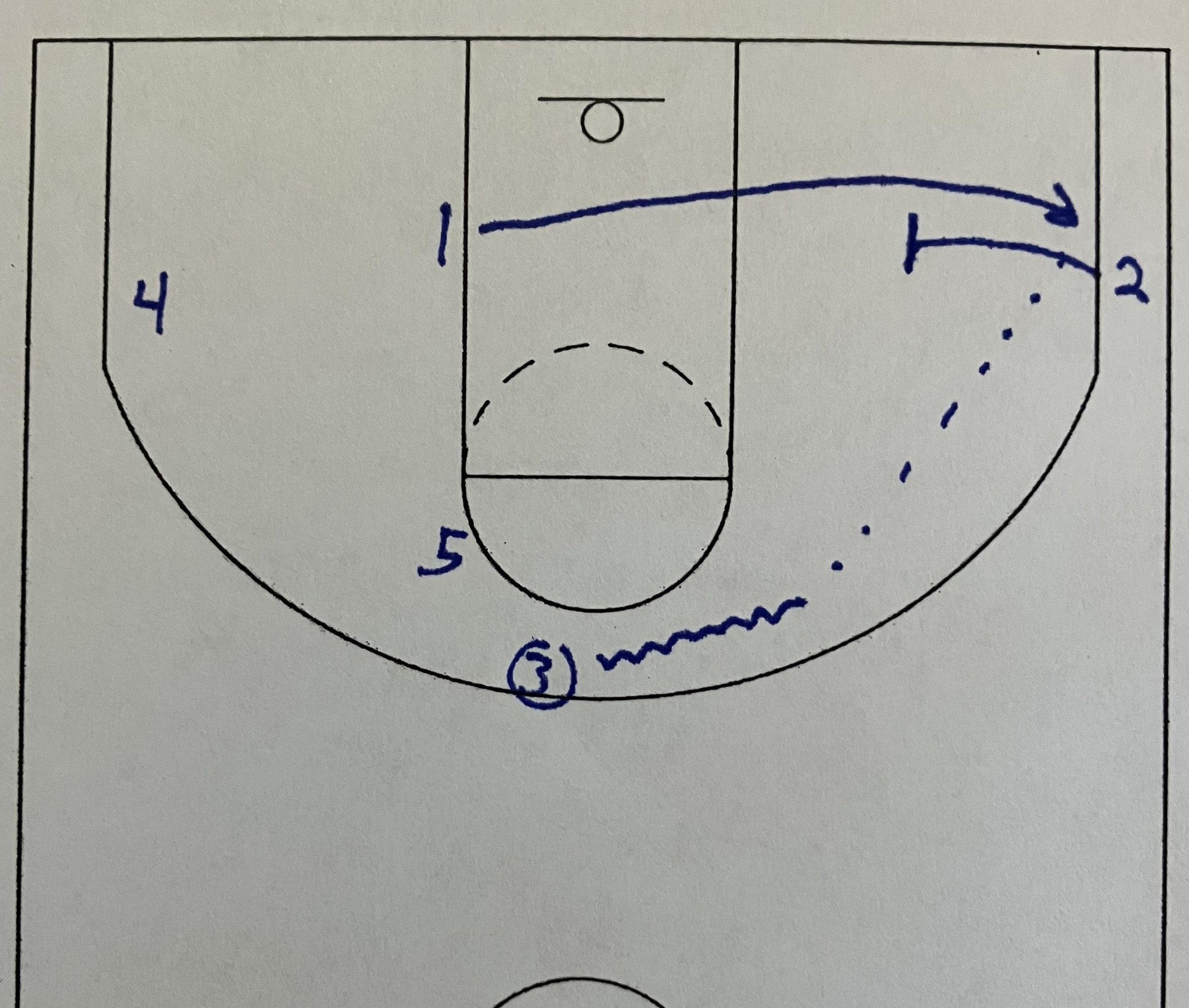
The quick hitter starts with an Iverson cut. The guard(2) cuts across the floor to get the entry pass. As the Iverson cut is taking place the forward(3) drops down to the corner. These two cuts clear out the backside of the court. Now everything is ready for the actions to get a shot.
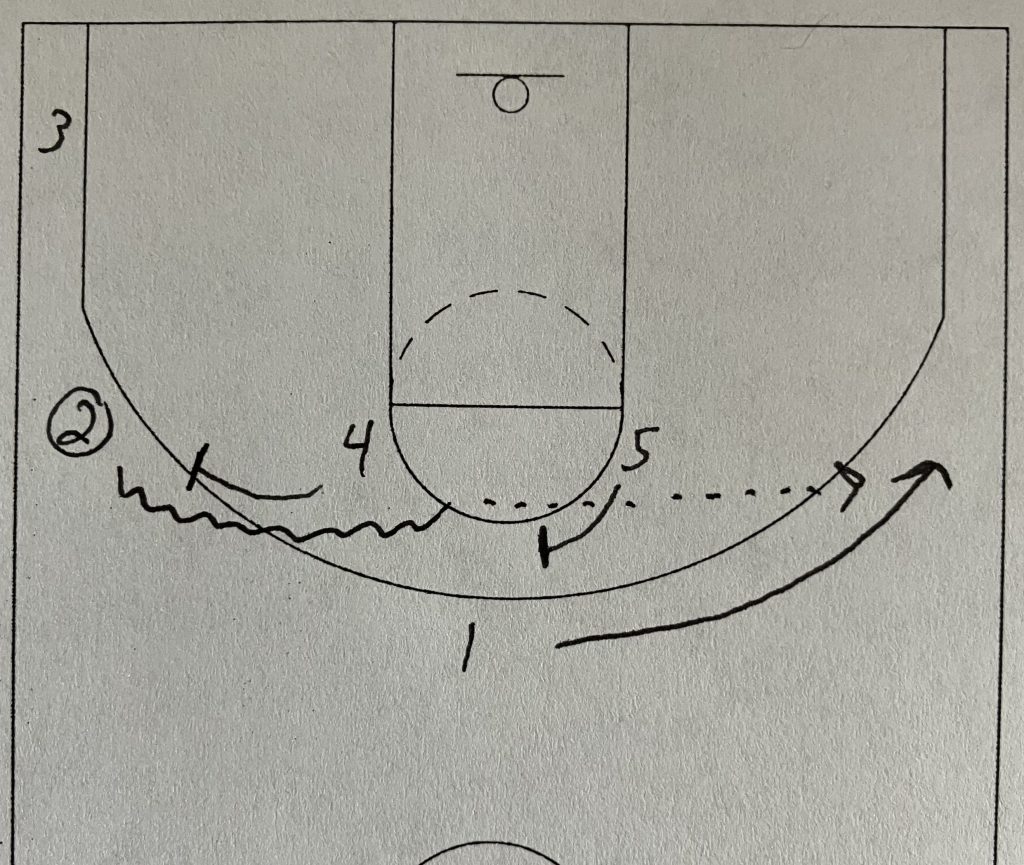
The big(4) is stepping out for a ball screen. As the big(4) is screening, the center(5) is also stepping up to set a flare screen for the point(1). The two screens should be happening at almost the same time. The guard(2) dribbling off of the ball screen should be synced up with the point(1) cutting to the wide open backside.
The guard(2) and point(1) need to moving together because this keeps the proper spacing for the offense. If either the guard(2) or point(1) move too quickly or too slowly, then the defense either has time to react or there is no space for the offense to move. The timing of the screens and the moving of the guard(2) and point(1) need to be together.
Once the timing is learned, the guard(2) comes off of the ball screen and passes out to the point(1) on the flare for a wide open shot. The point(1) defender is stuck in a very hard spot. If they step over to help on the ball screen, then the point(1) will be wide open on the backside with the flare screen. If the point(1) defender stays with the point(1), then the guard(2) has more room to turn the corner and attack the basket.
The initial shot should be for the point(1) off of the flare. But if a pass can not be made to them, then the guard(2) has the ability to attack off of the ball screen and still get a good shot somewhere in the lane.
This is a great ATO to use for a last second shot at the end of a shot clock or end of a quarter. The guard(2) knows to either pass the ball out to the point(1) on the flare screen or else get the ball up to the rim off of the ball screen.
End of game or end of quarter situations can be hard to get a good shot. This ATO can get the point(1) open quickly without it being an overly complex play. I like to keep this one tucked away in my back pocket for just the right time in a season when I need it.
1 thought on “Quick Hitter(ATO) #36-Iverson Ball Screen Flare”