What is a 2-3 Zone Defense?
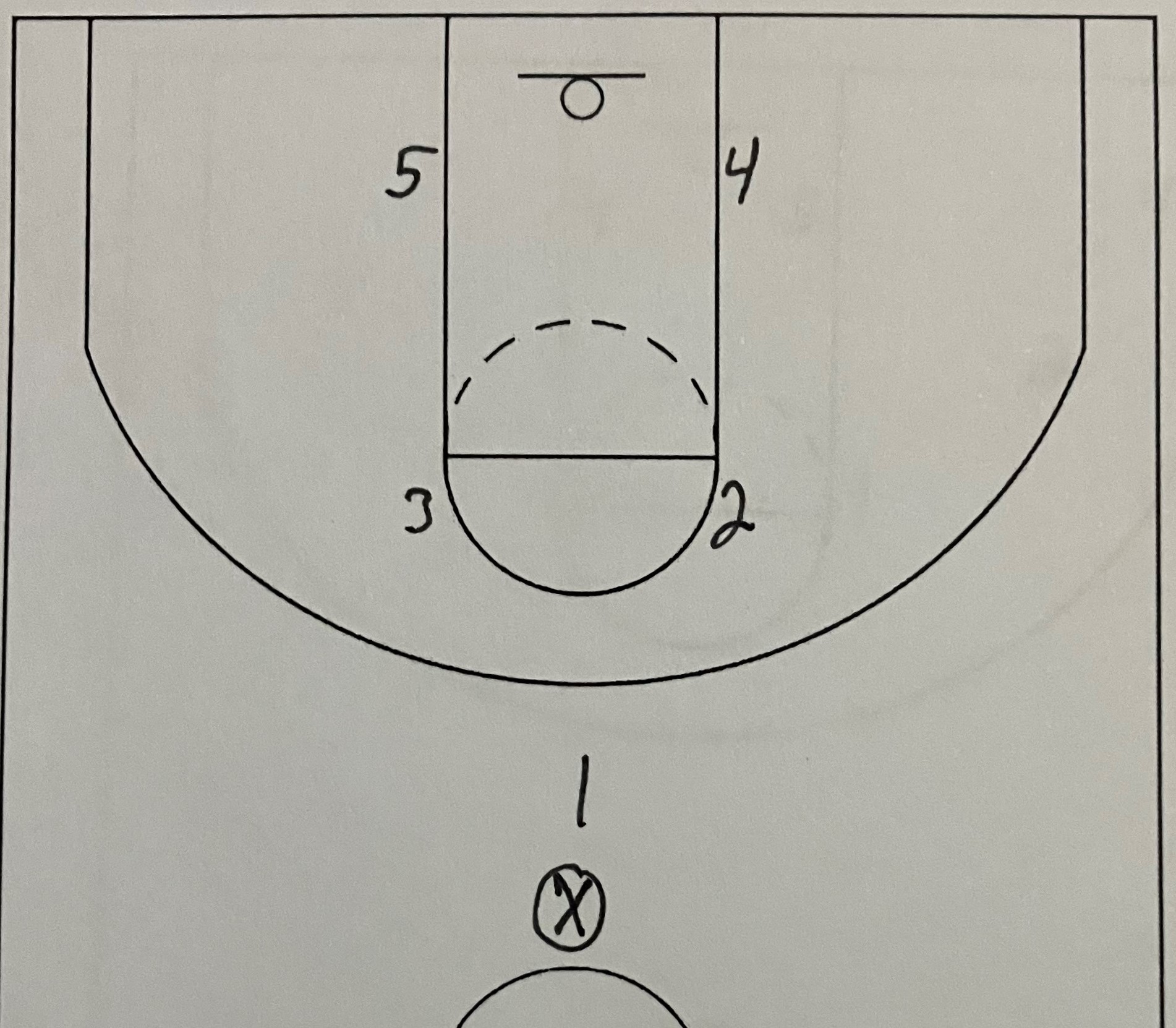
A 2-3 zone defense is a zone defense with a player on each elbow, a player on each block and one player in the middle of the lane. The defense has two players across the foul line and 3 players along the baseline. That is where the 2-3 gets its name.
The 2-3 zone defense is designed to get and keep a bunch of players around the lane. It tries to force the offense to take a bunch of outside shots by keeping every defender closer to the basket. This also has the added effect of trying to gain an edge in rebounding by having so many players around the basket.
The 2-3 zone is usually one of the first zone defenses a player learns growing up. It is also a defense that is used sparingly at the college level and at the pro level. The Syracuse Orangemen and Coach Jim Boeheim used the 2-3 zone for 40 years to great success. The Miami Heat used a 2-3 zone against the Boston Celtics in the 2023 Eastern Conference Finals to help them get to the Finals as an 8-seed. It can be effective at the highest levels of basketball.
What is a 1-3-1 Half Court Trapping Zone Defense?
A 1-3-1 half court trap zone defense is a defense set up in a 1-3-1 formation that is looking to trap the offense all over the floor. The setup is one player above the top of the key. One player around the foul line. One player is in front of the basket. And a player on each wing, foul line extended. This creates the 1-3-1 formation.
From this formation, the defense is looking to get the ball in between two defenders, preferably in one of the four corners of the half-court so the two closest defenders can converge on the offensive player and trap them. If the offense is able to get the ball out of the trap, then the defense is going to sprint back and converge again on the ball looking for another trap. The defense continues to try and trap the ball until they get a turnover or the offense shoots the ball.
The 1-3-1 trap is a very aggressive defense. The defense is looking to put a bunch of pressure on the offense. This pressure can lead to quick shots or turnovers by the offense. This is a good defense to fall back into for a team that is constantly pressing their opponent. It keeps the pressure of the press in a half-court setting.
It is also a good defense to use if a team is behind and needs to create turnovers to get themselves caught back up to their opponent. The 1-3-1 half court trap is going to speed the game up meaning both teams are going to be taking more possessions during the game.
Best Team Personnel for a 2-3 Zone Defense
There are usually 2 types of teams that run a 2-3 zone. The first is a small team that are trying to pack the lane. By packing the lane, the team should have an easier time rebounding missed shots because the number of players close to the basket. It also helps the defense in being able to surround a good post player with a bunch of defenders. This gives the defense the ability to double team a post player much easier than other defenses.
The other type of team is either a slow team or a tall team. A slow team runs a 2-3 zone because the players are not covering as much of the floor individually, so the lack of speed becomes less of a disadvantage. The players are not having to move much so quick offensive players are not going to be able to exploit their speed advantage.
Likewise, a tall team is going to benefit from the 2-3 zone because their length should cause problems for the offense. The zone is going to reduce the amount of movement for each player, so the size and length of the defense has a greater chance of causing problems for the offense.
The best team personnel for the 2-3 zone is a mixture of speed and length. The 2 guards at the front of the zone should be really quick so they can extend and pressure the ball as much as possible knowing they have help behind them. And the 3 bottom players of the zone should be tall and long. The taller those 3 players are, the harder it is for the offense to score on the inside of the zone.
If the offense cannot score inside the zone, then they have to score from the outside. This is where the quick guards come into play. The faster those 2 guards are the more floor they can cover thus preventing outside shots with their own closeouts. This is the best personnel for a 2-3 zone. Two quick guards and three tall forwards.
Best Team Personnel for a 1-3-1 Half Court Trapping Zone Defense
The best personnel for a 1-3-1 trap is having length. The longer the point and two wings are, the harder it is for the offense to pass the ball. Plus, those 3 players are going to be in the most traps, so having them also do the trapping will add to the number of deflections and steals a defense is able to get. A mobile post player is a great option for the top of the 1-3-1. The additional length of a post player guarding smaller guards can lead to bad decisions by those guards.
The flip side of this is having a lot of speed. In a trapping 1-3-1, every player is having to cover a lot of floor with the exception of the middle man. The players having the ability to cover a lot of floor quickly reduces the time the offense has to think about what they need to be doing. This reduced time leads to more effective traps because the offense does not have enough time to think about what they should be doing.
The 1-3-1 trap is a great defense to drop back into when a defense is pressing. And I am going to assume that a defense has some speed in order to extend up the floor on defense. Offenses usually do not go right from the press break straight into their offense. They need just a little bit of time to set up their offense out of the press break.
If the defense can transition from a 1-3-1 Press straight into a 1-3-1 trap, then those seconds the offense is using to set up is the time needed for the defense to drop and get into that first half-court trap. If a defense can get that trap, then the offense is going to be playing quickly for the rest of the possession and possibly game.
The last personnel and this is the absolute must have to run a 1-3-1 trap is a bottom player who is very fast. This spot is usually reserved for the fastest player(s). The bottom player in a 1-3-1 trap must cover corner to corner on two passes. Not every player has the speed to make that run without giving up an open shot. Without this player the 1-3-1 trap is not going to be effective.
The dream team for the 1-3-1 is the fastest player on the court playing the bottom spot. The tallest player playing the point. The two wings are tall and long and can move well. The middle man has size to take up space on the inside as well as rebound well from the middle spot. However, most teams are not going to have that.
A 1-3-1 trap should have a fast player on the bottom. Usually, the center is going to be in the middle. The 4-man playing the point up top if they can move well enough. And the two wings are going to be the 2 other guards.
When to Use a 2-3 Zone Defense?
There are several different reasons why a 2-3 zone should be used defensively. A couple of reasons are because of the defense and a couple of reasons are because of the offensive team the defense is playing against. Sometimes a 2-3 zone is a good choice because of the opponent.
The first reason to use a 2-3 zone is because the defense is unable to guard the opponent’s guards. If the defense cannot defend the guards of the opponent, then the defense is going to be helping constantly. By going to a 2-3 zone, the help side defense is simplified. The help is already behind the defenders making the defense easier and more effective.
The 2nd reason is because the defense is tall and long. Size can greatly influence the outcome of basketball games. A defense that is tall can cover more area than a team that is short. Having tall players and using a 2-3 zone gives the defense the ability to control the middle of the floor and make the offense shoot shots close to the basket over taller players. If the offense cannot shoot over the taller players, then they will be forced to take shots farther away from the basket. The farther away from the basket a team shoots will lead to a lower percentage of made shots which leads to a lower number of points scored.
The 3rd reason is because the opponent are bad outside shooters. If a team cannot shoot from the outside, then a 2-3 zone works because the defense is putting more players closer to the basket forcing the offense to play farther away from the basket.
This is why a 2-3 zone becomes much more effective the younger the players are. A 2-3 zone works great in youth basketball because youth players are usually not good outside shooters. The players are not strong enough yet. The 2-3 zone becomes less effective in high school and even less effective in college because so many players in high school and college are able to shoot from the outside. However, if a team does not have good outside shooters, then a 2-3 zone can still be effective in high school and college.
A coach can scout an opponent. If they see the opponent is not good at shooting outside shots, then they can play a 2-3 zone against them forcing them to do something they are not good at doing.
The 4th and final reason is because the offense has a really good post player. If an opponent has a post player that nobody on defense can guard, then a 2-3 zone can be used to surround that post player with more defenders. By moving into a 2-3 zone, the defense is creating a natural double team scenario anywhere the post player goes on the inside of the zone.
It also puts more defenders closer to the basket for rebounds to try and keep that dominant player from getting a bunch of offensive rebounds. The 2-3 zone should discourage teams from using the post player as much and make the offense use their guards more. The 2-3 zone is trying to force the offense to use other players besides their best post player to score.
When to Use a 1-3-1 Half Court Trapping Zone Defense
The 1-3-1 trap is used mainly in three cases.
- Pressure the Offense
- Speed the game up
- Create turnovers because defense is losing
The 1-3-1 trap can create and put a lot of pressure on an offense. If the offense does not have good guards or does not handle pressure well, then the 1-3-1 trap can exploit this weakness. This is a very aggressive defense and does not give the offense a lot of time to think about what to do. The offense must react to the trapping defense. This lack of time puts pressure on the offense aside from the trapping that can cause bad decisions.
The 1-3-1 trap is going to speed the game up. It is going to force the offense to play fast. If a game is moving at a slow pace, then the 1-3-1 trap can speed the game up. If an opponent wants to slow the game down and play a low scoring game, then a switch to a 1-3-1 trapping defense will force them to play faster. The faster pace will cause more possessions. The opponent will then be forced to play at a faster pace causing them to do something they do not want to do.
The 1-3-1 trap is an aggressive defense. So, it can be used when a team is behind and must get stops or turnovers to try and get back into the game. If a team does not want to press to try and catch up, then they need to do something in the half-court to make up the difference in points. But it also can create turnovers with the trapping defense giving the defense the ability to get easy layups off those turnovers.
Advantages of a 2-3 Zone Defense Over a 1-3-1 Half Court Trapping Defense
1)Easier to Rebound
One of the biggest advantages of the 2-3 Zone Defense is the 3 defenders across the back line. These 3 defenders being around the basket gives the 2-3 zone a better chance of getting a rebound. The more defenders around the basket will give the defense a better chance of getting a rebound.
The 2-3 Zone Defense should always have a defender on each side of the basket on every shot. The rotations of the 2-3 Zone Defense should not have a block defender ever move across the lane to the opposite side of the court. The lack of rotation should leave at least an above average rebounder on the backside. All of these things give a good chance for the defense to rebound any missed shot.
The 1-3-1 Half Court Trapping Defense can be problematic when it comes to rebounding. First, the closest defender to the basket is normally the point guard and is one of the shortest if not the shortest player on defense. This puts the shortest and smallest defender in the best position to rebound a missed shot.
Second, the point defender on the 1-3-1 Trapping Defense is normally a taller forward. This puts one of the tallest if not the tallest defender farthest away from the basket. The setup of the 1-3-1 Trapping Defense puts a tall player out front and a short player in the back closest to the basket. This can have an adverse effect on rebounding the ball.
Lastly, the backside rebounder is the wing who has to drop. Most missed shots come off on the other side of the basket. This makes the backside rebounder a vital player in the 1-3-1 Trapping Defense. There are a couple of common issues with the setup of the 1-3-1 Trapping Defense.
The first common issue is the wing defender who has to drop to the backside rebounder position can be the 2nd guard. This is normally one of the shortest and smallest players on the court. This puts the point guard and the 2nd guard in key rebounding positions. That can be very hard on the defense to rebound when they are counting on those two players to do the rebounding.
The 2nd common issue is the wing defender rotating down to the block too slowly. A slow rotation can put the defender behind the offensive player and in a bad rebounding position. And sometimes the wing defender can get too aggressive going for a steal and get themselves out of position leaving the backside wide open for the offense. These common issues can lead to big rebounding problems.
2) Better Rim Protection
The 2-3 Zone Defense packs the lane with defensive players making it hard on the offense to get the ball close to the basket for shots. The alignment of the 2-3 Zone Defense forces the offense to take more outside shots. The farther away a player shoots from the basket the less likely the shot will go in.
Good rim protection can really help a defense and bad rim protection can really hurt a defense. The 2-3 Zone Defense should have good rim protection. This can cause the offense to shoot more outside shots. If an offense is struggling to make outside shots, then the defense will be able to keep the score lower making it easier to win the game.
The 1-3-1 Trapping Zone Defense wants to push defenders farther away from the basket to trap. The trapping 1-3-1 Defense wants defenders outside the lane to put as much pressure as they can on the offense. This pressure leaves only 1 or 2 defenders around the basket at times. So, there is space around the basket for the offense to move into and attack.
The 1-3-1 Trapping Zone Defense will leave space open around the basket because the trapping by the defense will make it difficult for the offense to pass the ball in towards the basket. The 1-3-1 Trapping Defense substitutes good rim protection for more ball pressure. This exchange can be good if the traps are working. But if the traps are not causing problems or turnovers then the offense will get open shots around the rim.
3) Forces More Outside Shots
The 2-3 Zone Defense puts every defender in and around the lane. This packed in style leaves little room for the offense to get the ball inside towards the basket for shots. If the offense can not get the ball inside to shoot, then they have to take shots farther away from the basket. The 2-3 Zone Defense gives the offense more outside shots but tries to take away any shots around the basket.
A poor shooting offense can really struggle to score the ball against a 2-3 Zone Defense. The offense will get open space to shoot outside shots but if nobody on offense can make outside shots, then it becomes just miss after miss after miss. This is why a 2-3 Zone Defense at the youth level can be the best defense and one of the worst defenses in high school and beyond. At the youth level, kids are not strong enough to shoot consistently from the outside. As the kids get older and stronger, they develop into better outside shooters making the 2-3 Zone Defense not as effective at the high school level and beyond.
The 1-3-1 Trapping Zone Defense wants to put a lot of pressure on the ball. This pressure prevents the offense from getting open outside shots. The defense is constantly rushing the ball forcing the offense to either pass or dribble. The pressure defense forces the offense to make quick decisions. Quick decisions can lead to a lot of dribbling and pull up shots from inside the 3-point line.
The best place to attack a 1-3-1 Trapping Zone Defense is inside the 3-point line. Good passes by the offense will get the ball past the traps and into the lane. The pressure and trapping should actually force the offense to take more inside shots and less outside shots. Now whether the defense can create turnovers with their pressure and trapping is what determines who is winning the matchup. Turnovers by the offense will give the defense the advantage. An offense that does not turn the ball over and can pass through the traps will get good scoring chances and gain the advantage over the defense.
Advantages of a 1-3-1 Half Court Trapping Zone Defense Over a 2-3 Zone Defense
1) Better Ball Pressure
The 1-3-1 Trapping Zone Defense wants to apply ball pressure and trap every chance it can. The ball can be out front or in the corner. The defense can rotate to trap the ball and pressure the offense into making mistakes. The offense should never have any time or space to execute their offense. The 1-3-1 Trapping Zone Defense should be pressuring the offense at all times.
The point defender can even extend past half court to start early ball pressure. Or the entire defense can move into a 1-3-1 Press to start pressuring the ball farther up the floor. The 1-3-1 Trapping Defense is wanting to create as much chaos as they can with good ball pressure turning into traps. The key to the entire defense is getting good ball pressure so the trap can get there before the offense can pass the ball.
The 2-3 Zone Defense does not care about ball pressure until the ball gets into a scoring position. The offense can dribble and pass as much as they want when they are outside of scoring range. Once the ball enters into a scoring position then the defense should be there to guard the ball. But the 2-3 Zone is only focused on guarding the ball once it gets close to the 3-point line.
Ball pressure in the 2-3 Zone Defense is focused around the basket leaving the outside area more open for the offense to move and pass the ball on the outside. The objective of the 2-3 Zone Defense is to protect the basket and keep the ball on the outside as much as possible. The defense will not extend out away from the basket so the offense will always be able to go back to half court to get rid of any ball pressure.
2) Forces More Turnovers
The 1-3-1 Trapping Zone Defense is an aggressive defense. It is trying to put the ball into good defensive traps to force the offense to play in uncomfortable situations. When offensive players become uncomfortable they tend to make mistakes. These mistakes are usually turnovers. Turnovers can allow the defense to control the ball and convert it into easy points on the other end.
Turnovers are a key stat in the outcome of most games. A team that has a substantial positive turnover margain can win a lot of games. Each turnover is a possession taken away from the offense and given to the defense. A +10 turnover margain can equate to 20-30 lost points from the offense and a possible 20-30 gained points for the defense. That +10 turnover margain can change a game by 40-60 points. That is a massive problem for a team to overcome if they are on the wrong end of the turnover battle.
The 1-3-1 Trapping Zone Defense works in getting good traps set on the ball. It also works on getting deflections and steals as well. Deflections and steals can disrupt an offense and it can help a defense to get out in transition. All of this makes the 1-3-1 Trapping Zone Defense a good defense when the offense is struggling to make good passes and shots. Bad passes and missed shots can also help a defense get the ball and convert it into points with a good transition offense.
The 2-3 Zone Defense is not working on getting a lot of turnovers. A turnover is nice but the 2-3 Zone Defense is more concerned with forcing contested shots and rebounding those misses.
A 2-3 Zone Defense will give up some turnover chances to increase the ability to contest all shots. The main focus of the 2-3 Zone Defense is to force outside shots and to rebound every missed shot. An aggressive 2-3 Zone Defense can leave openings on the court for the offense to get wide open shots. Defenders going for steals that miss leave the 2-3 Zone Defense vunerable to another pass or two and a wide open shot.
The 2-3 Zone Defense trades turnovers for contested shots. The 2-3 Zone Defense plays more conservative by not gambling. By being conservative, the defense will reduce the number of turnovers it gets. But the defense is able to stay in front of the offense better and contest more shots in hopes of forcing more misses.
3) Dictates a Faster Tempo
Tempo can play a huge part in high school basketball games. A fast tempo or a slow tempo can heavily favor one team over another. The ability of teams to get the game played at a certain tempo can influence the outcome of many games. Team defenses can help to speed up the tempo of a game or it can help to slow the tempo of the game down.
The 1-3-1 Trapping Zone Defense is going to speed up the opponent. If they do not speed up, then they will always be playing out of a trap. The offense has to play quicker if they want to be ahead of the trapping defense. An offense who wants to play slow has no choice but to speed up or they will deal with traps all game long.
The 1-3-1 Trapping Zone Defense gives the defense a chance to dictate tempo without needing to press. While pressing can dictate tempo, teams need to be able to influence the tempo of the game without having to extend the defense all the way up the court. A half court trapping defense will speed up the game without forcing the defense to cover more of the court.
The 2-3 Zone Defense allows the offense to dictate tempo. The 2-3 Zone Defense can slow a game down but it can not raise the tempo of the game unless the offense plays a certain way. The offense can choose to play fast or slow and the 2-3 Zone Defense will adjust with the choices of the offense. This leaves the defense in a completely reactionary position. The offense will dictate tempo and the defense will have to play at that speed.
Which is Better? A 2-3 Zone Defense or a 1-3-1 Half Court Trapping Zone Defense
The 2-3 Zone Defense and the 1-3-1 Trapping Defense are two of the more common zone defenses. The 2-3 Zone Defense is one of the first zone defenses that is taught and installed at the youth level. The 1-3-1 Trapping Defense is one of the next zone defenses installed once the kids have a better understanding of how to play. Both defenses are used quite a bit at the high school level. Which one is better?
I am going to give the edge to the 1-3-1 Trapping Defense over the 2-3 Zone Defense. The 1-3-1 Trapping Defense is more aggressive. It causes the offense to make more mistakes. It dictates the pace of the game which I think is a massive key at the high school level and below. The amount of good things the 1-3-1 Trapping Defense gives it the advantage over the 2-3 Zone Defense.
The main problem I have with the 2-3 Zone Defense is how the offense counters it. At the youth level the 2-3 Zone Defense is very effective. As the players get older and bigger and stronger, it becomes less effective. The reason for this is the outside 3 point shot. The 3-point shot is open a lot against a 2-3 Zone Defense. And when an offense makes 3’s, then the defense has to get out of the 2-3 Zone Defense and into something else.
The 2-3 Zone Defense weakness is a good outside shooting team. There is nothing the 2-3 Zone Defense can do to prevent outside shots. When an offense can make outside shots, there is nothing the defense can do.
The 1-3-1 Trapping Zone Defense does not have a glaring weakness. It can be used more often and against more teams. While offenses can beat the 1-3-1 Trapping Defense in a number of ways, there is not one major weakness that the offense can always use against the 1-3-1 Trap to beat it. That is why I would pick the 1-3-1 Trapping Defense as being better than the 2-3 Zone Defense.